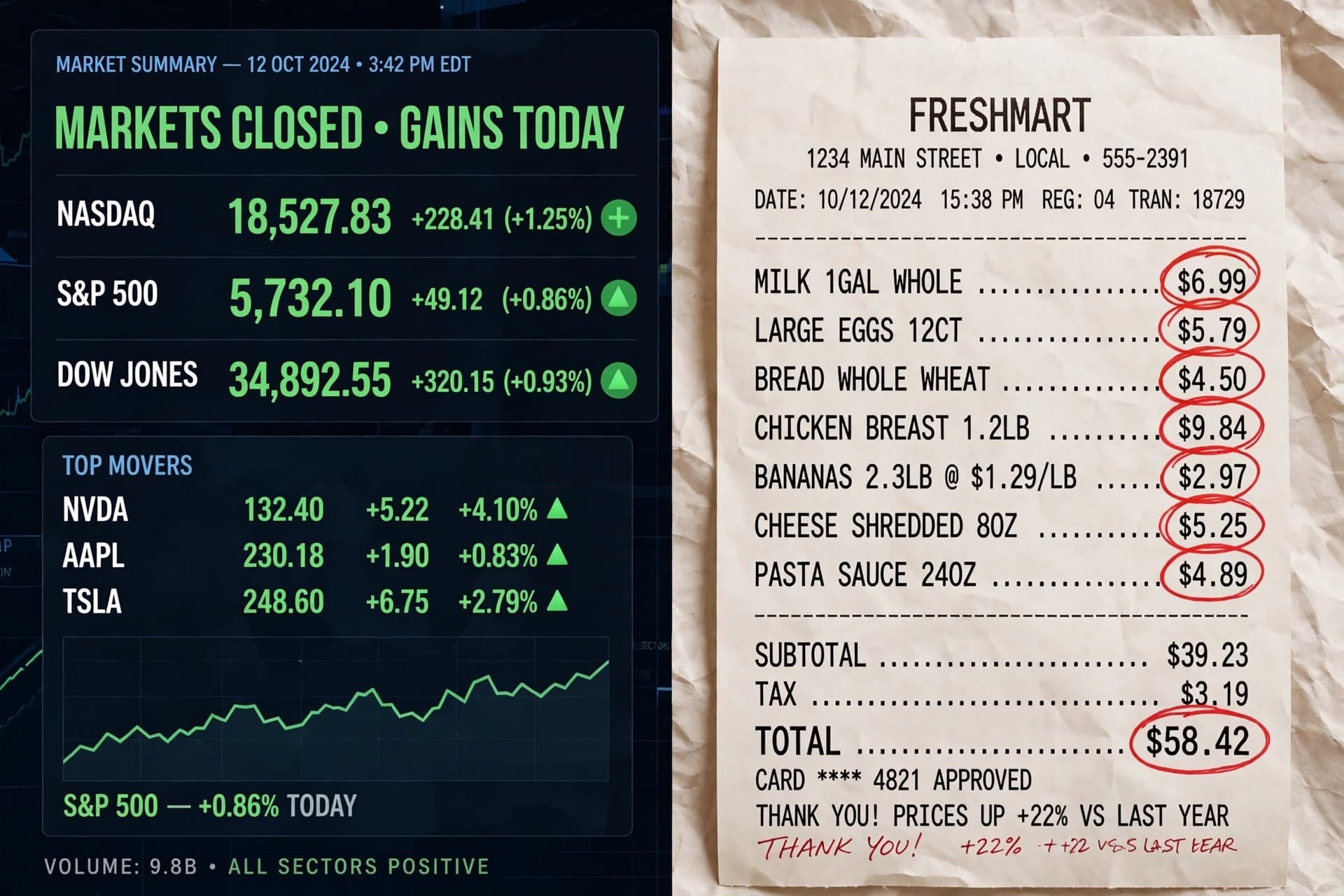
There is a particular discipline required to look at an economy not as a story of triumph or failure but as a set of numbers that tell a more complicated truth. With the midterm elections less than two weeks away, President Donald Trump has been telling voters that the American economy is rocketing upward. The data suggests something more uneven: an economy that is neither as strong as the president claims nor as weak as consumer sentiment surveys imply, but one that is unsatisfying to most of the public and has not lived up to the promises made .
The most politically potent number is inflation. When Trump returned to the White House in January 2025, the consumer price index was rising at an annual rate of 3 percent. Inflation continued to slow until April 2025, when sweeping tariffs were announced and prices began to climb again. The pressures were compounded this year by the Iran war. The last CPI report before Election Day showed inflation at 3.7 percent over the past twelve months . That is not the peak seen under President Biden, but it is a jagged upward movement under a president who promised to defeat inflation and later told a crowd in Ohio that the country has "almost no inflation" .
Economic growth has been solid but unspectacular. Gross domestic product has been expanding at a bit more than 2 percent annually under Trump, according to the Associated Press, a figure that is respectable but slower than the growth seen under his predecessor . The Federal Reserve expects real GDP to remain steady, with a 2.3 percent increase for the full year in 2026 . The unemployment rate stands at 4.2 percent, which is low, but job growth has slowed considerably. Employers added an average of nearly 39,000 jobs a month during Trump's second term, compared with more than 121,000 a month in the year before he returned to office . The immigration crackdown is one factor: fewer people are looking for work, and the unemployment rate for U.S.-born workers has held largely steady.
Borrowing costs have risen, and that rise is felt in ordinary lives. The interest on the 10-year Treasury note is above 5 percent, its highest level since 2002. The 30-year fixed mortgage rate averaged 7.40 percent as of mid-October, up from 7.04 percent when Trump took office . Home prices have increased 6.2 percent since January 2025, and higher rates are making it harder for buyers to afford what is already expensive . These are the numbers that determine whether a family can buy a house, whether a small business can expand, whether a car loan is manageable or not.
The stock market tells a different story, one the president prefers. The S&P 500 is up about 12 percent this year, and it rose about 16.4 percent last year. But the increase in 2024, before Trump became president, was 23.3 percent . The market is a function of many forces beyond presidential politics, and its gains do not reach everyone. Since Trump returned to the White House, the wealth of the top 0.1 percent of households has increased by $5.5 trillion, while the bottom 50 percent saw their net worth improve by $380 billion. That means the bottom half gained an average of $5,600 per household, while the richest 0.1 percent gained an average of $40.8 million, a sum more than 7,000 times greater .
Consumer sentiment remains stubbornly low. The University of Michigan's Index of Consumer Sentiment was 46.3 in October, far below its level of 71.7 in January 2025 and lower than its pandemic-era low during Trump's first term . People are not feeling what the stock market and the GDP numbers suggest they should feel. They are feeling the grocery bills, the mortgage rates, and the uncertainty of a trade war that has not produced the promised boom.
The president will continue to tell voters that the economy is strong, and in some measures it is. The question before Nov. 3 is whether voters will weigh the numbers they see in their bank accounts more heavily than the ones they see on television. The data does not answer that question. It only sets the terms of the argument.
---
Image Disclaimer: The visuals in this article are AI-generated and are not actual photographs of the president, the events, or the data cited.
Sources: AP News, FactCheck.org, New York Daily News, Economic Times
Published by Banx Network. This article is part of the Banx decentralized media programme, powered by the BXE token on the XRP Ledger.