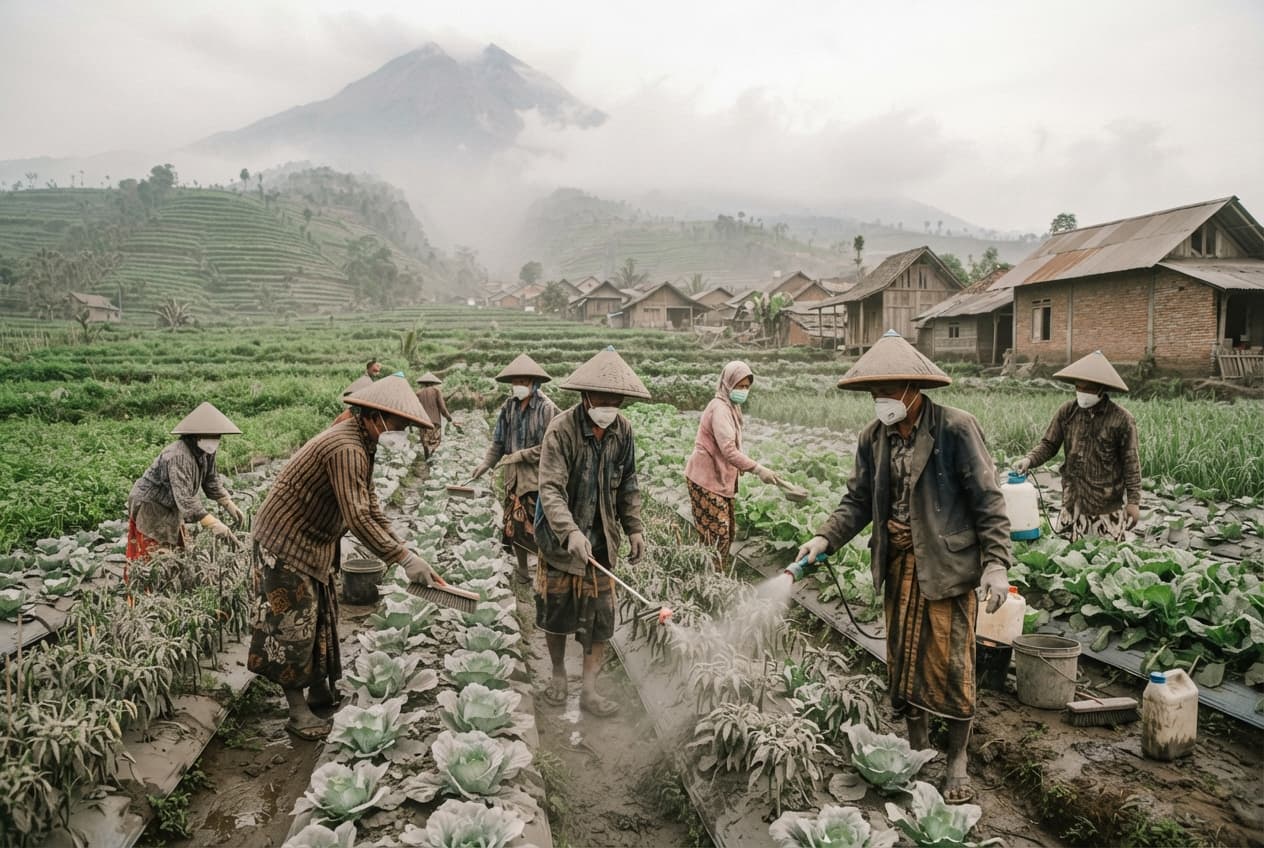
Boyolali, Indonesia—The gray cloud blotted out the midday sun across the northern slopes. Mount Merapi cleared its throat with a deep, subterranean rumble that rattled windowpanes. A towering column of hot ash billowed thousands of meters into the stratosphere. Prevailing winds carried the dense particulate matter directly over vulnerable agricultural settlements. Vegetable fields and tobacco crops turned the color of concrete within a single hour. Farmers working the high-altitude terraces stopped to wrap damp cloth around their faces.
Volcanology observation posts recorded continuous tremor activity throughout the morning hours. Seismographs registered repeated pressure releases from the central dome complex. Authorities maintained the alert status at level three, warning residents to stay clear of designated river valleys. Pyroclastic material tumbled down the western ravines toward abandoned ravine channels. Sulfur dioxide levels spiked across monitoring stations located near the upper timberline. Local emergency units prepared evacuation routes for vulnerable livestock owners living within the danger radius.
Agricultural extension workers distributed thousands of N95 respiratory masks to villagers tending greenhouses. Fine volcanic grit coated leaves, threatening to suffocate staple crops before harvest season. Farmers hosed down delicate greenhouse structures with meager water supplies pumped from shallow wells. Respiratory clinic visits surged as elderly residents reported severe coughing and eye irritation from the grit. Local health officials urged populations to remain indoors until the ash plumes drifted away.
Scientific teams analyzed fresh ash samples collected from rooftops to determine mineral composition shifts. Corporate tea plantations suspended outdoor harvesting operations to protect field laborers from inhalation hazards. Livestock feed supplies left uncovered in pastures became contaminated with toxic minerals, forcing emergency fodder imports. Regional transport authorities issued low-visibility warnings to motorists driving along winding mountain passes.
The rumble from the summit subsided slightly as afternoon winds shifted toward the east. Ash continued drifting over neighboring districts, leaving a persistent gray haze hanging in the humid air. Farmers swept accumulation off corrugated tin roofs with long wooden brooms to prevent structural collapse. The mountain remains an unpredictable neighbor, dominating the lives of those who farm its rich volcanic soil. Geological monitoring stations will track the crater's pulse throughout the coming night.
Published by Banx Network. This article is part of the Banx decentralized media programme, powered by the BXE token on the XRP Ledger.