
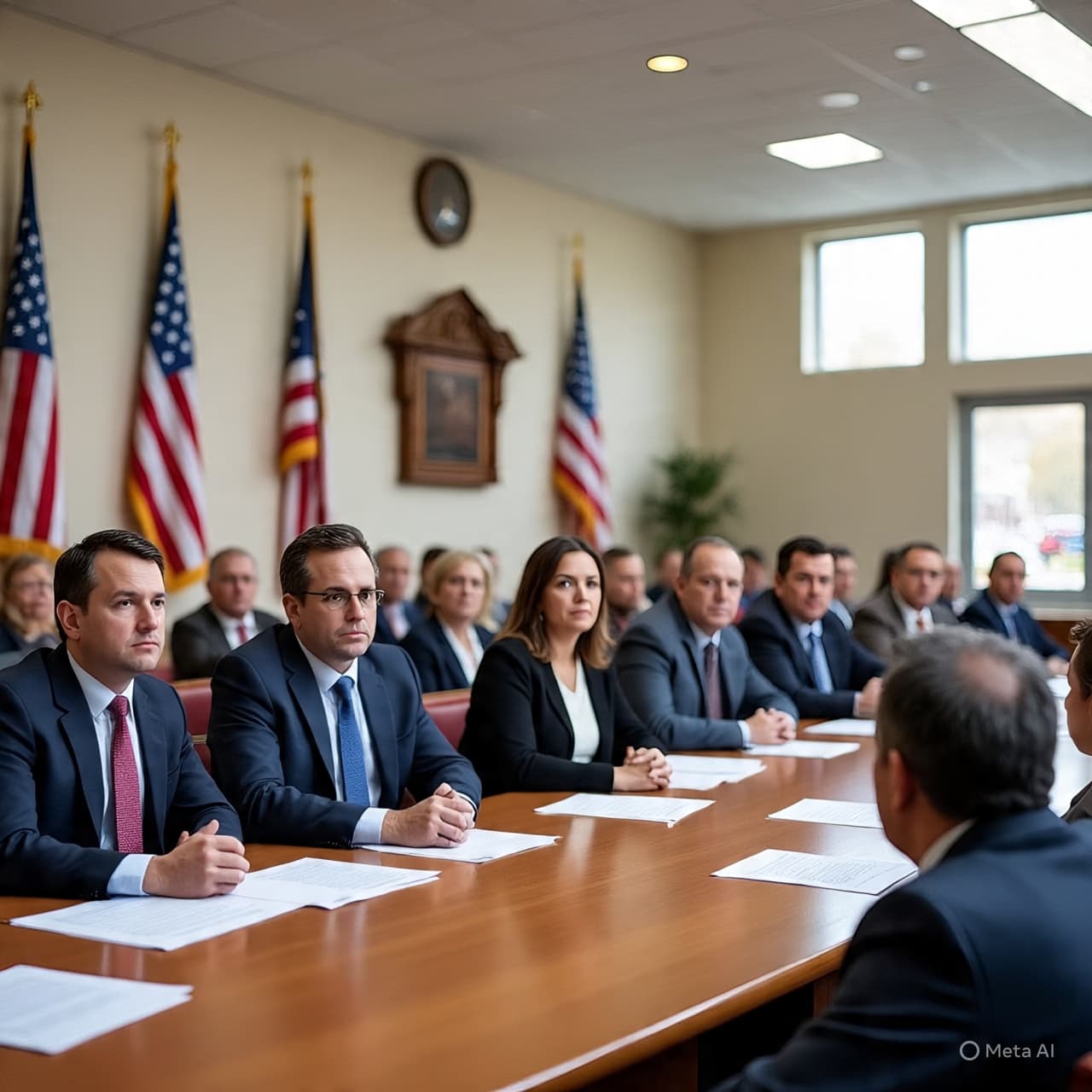
There are moments when public life seems to pause, not in silence, but in a kind of attentive listening. Words are spoken carefully, positions taken with measured intent, and beneath it all runs a quieter current—the sense that something unresolved is moving toward the surface.
In this space, the Afrika Mayibuye Movement has stepped forward, offering its support to Nhlanhla Mkhwanazi. The gesture, while expressed in direct terms, carries with it a broader resonance, reflecting not only alignment but a call for movement within institutions tasked with maintaining accountability.
Mkhwanazi, a figure long associated with law enforcement in South Africa, has recently found himself at the center of allegations linked to corruption. The specifics remain under examination, shaped by claims and counterclaims that have yet to settle into definitive conclusion. In such moments, support from civic bodies can both amplify and complicate the unfolding narrative.
The Afrika Mayibuye Movement has framed its position as one rooted in concern for transparency and integrity, urging authorities to act with urgency in addressing the allegations. Their call is not framed as judgment, but as insistence on process—a reminder that allegations, once raised, require careful and timely attention.
In the broader landscape, such interventions are not uncommon. Civil society organizations often occupy a space between public sentiment and institutional response, translating concern into organized voice. Their involvement can serve as both pressure and participation, encouraging movement within systems that are sometimes slow to respond.
The language used by the movement reflects a balance between support and expectation. To back an individual in a moment of scrutiny is also, implicitly, to place trust in the processes that will determine the outcome. It is a position that acknowledges uncertainty while resisting inaction.
For Mkhwanazi, the support arrives within a context that is already layered. His career, marked by various roles within the police service, brings with it both experience and visibility. Allegations, in such cases, do not exist in isolation; they are read alongside past actions, reputations, and the broader climate in which they emerge.
The call for urgent action, meanwhile, speaks to a wider public sensitivity around issues of corruption. In South Africa, where questions of governance and accountability have long been part of the national conversation, such calls resonate beyond individual cases. They echo into a shared expectation that institutions will respond with clarity and purpose.
Yet, as with many such moments, the path forward is unlikely to be immediate. Investigations unfold in stages, shaped by evidence, procedure, and the careful calibration of legal standards. What is asked for urgently is often delivered gradually.
For now, the movement’s voice joins others in a growing chorus—one that does not yet resolve the matter, but ensures that it remains in view.
The Afrika Mayibuye Movement has publicly backed Nhlanhla Mkhwanazi and called for urgent action regarding corruption allegations. Authorities have not yet announced any final findings, and investigations are ongoing.
AI Image Disclaimer
These images are AI-generated and are intended as visual interpretations, not real-world depictions.
Sources
News24 TimesLIVE IOL SABC News Daily Maverick
Published by Banx Network. This article is part of the Banx decentralized media programme, powered by the BXE token on the XRP Ledger.


.jpg&w=3840&q=75 "Blake Lively Awarded $400,000 in Legal Fees After Justin Baldoni Lawsuit Dismissed")