
Key Highlights
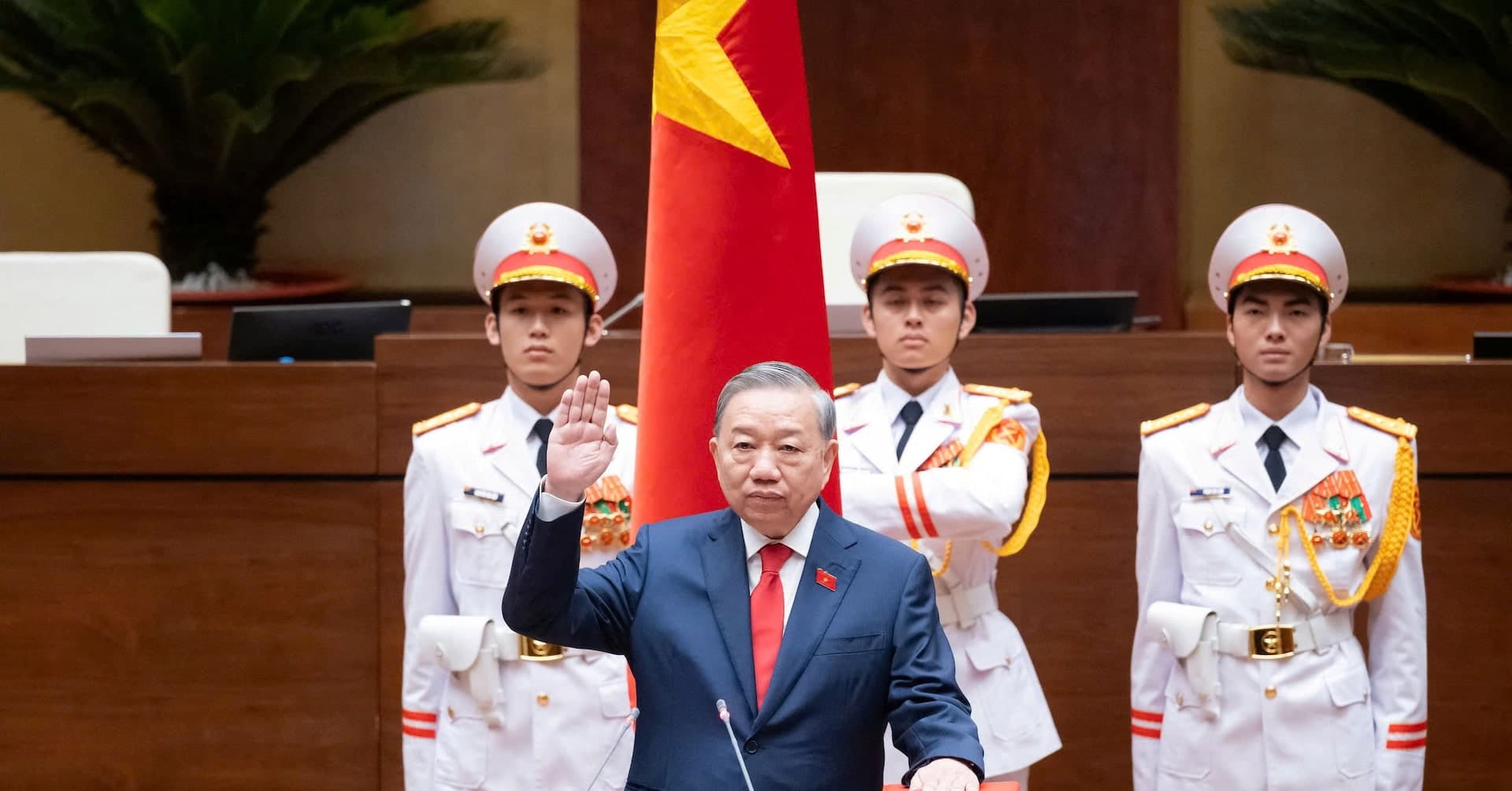
- To Lam has been elected as Vietnam's state president, marking a significant political shift.
- His governance style is expected to mirror China's centralized approach.
- Analysts predict a more assertive Vietnam in international relations, particularly regarding the South China Sea.
To Lam's recent election as Vietnam's state president represents a pivotal moment in the country's political landscape. This development not only alters the leadership dynamics but also signals a potential shift towards a governance model reminiscent of China's centralized authority. As the former Minister of Public Security, To Lam is recognized for his strong focus on security and his deep-rooted connections within the Communist Party, which may influence his approach to both domestic and international policies.
The implications of To Lam's presidency are significant, particularly in the context of Vietnam's assertiveness on the global stage. Observers are closely watching how his leadership will impact Vietnam's stance on territorial disputes in the South China Sea, an area where tensions with China have been escalating. With To Lam at the helm, there is a growing expectation that Vietnam may adopt a firmer position in these disputes, reflecting a more strategic and assertive foreign policy.
Domestically, To Lam's election comes at a time when public expectations for effective governance are on the rise. His administration is likely to prioritize pressing issues such as economic inequality and environmental sustainability, which have become increasingly important to the Vietnamese populace. The new president's strong security background may also lead to enhanced measures aimed at improving national security and economic management, further shaping Vietnam's internal policies.
As To Lam embarks on his presidency, analysts suggest that his leadership could steer Vietnam towards a more prominent role in regional and global affairs. The balance of relationships with major powers, particularly China and the United States, will be crucial as Vietnam navigates its national interests in a complex geopolitical landscape. The international community will be closely monitoring the developments under To Lam's leadership, particularly how he balances Vietnam's aspirations with the realities of its relationships with neighboring countries.
In conclusion, To Lam's election as state president marks a significant turning point for Vietnam, with potential ramifications for both domestic governance and international relations. His governance style, influenced by China's model, may redefine Vietnam's approach to various challenges, positioning the country for a more assertive role in the region.
Published by Banx Network. This article is part of the Banx decentralized media programme, powered by the BXE token on the XRP Ledger.



