Key Highlights
- Funding:The Victorian government pledges $420 million for additional train services.
- Increase:550 extra V/Line services will be added weekly, a 24% increase.
- Impact:The plan aims to improve transport for commuters in Melbourne's outer west.
The Victorian government has announced a significant investment in public transport, pledging $420 million to add 550 extra V/Line train services each week. This initiative, which represents a 24 percent increase in services, is particularly focused on the Melton and Wyndham Vale lines, which are set to receive the largest share of the new services. Starting next year, commuters can expect trains every 20 minutes throughout the day on the Wyndham Vale line, with the Melton line gaining 162 additional services.
Premier Ben Carroll's announcement comes at a crucial time, with elections approaching and public transport issues at the forefront of voter concerns. The funding will cover staffing and maintenance for the new services over a four-year term, following a separate $400 million bus upgrade for the same region. This dual investment reflects the government's recognition of the growing demand for reliable public transport in Melbourne's outer west, an area that has seen rapid population growth.
However, the political landscape complicates the promise of these new services. Melbourne's western suburbs are traditionally Labor strongholds, yet the party faces increasing pressure from conservative opponents. Past failures to deliver on transport promises, such as the electrification of the Melton and Wyndham Vale lines, have left many commuters skeptical. Originally promised in 2018 and again in 2022, the completion of these projects is now not expected until at least the 2030s, leading to a cautious reception of the latest announcement.
Experts in the field have offered a mixed response to the government's plan. John Hearsch, former chief operating officer of V/Line and current president of the Rail Futures Institute, noted that while the government has focused heavily on infrastructure, the lack of service improvements has been a significant oversight. He expressed cautious optimism that the new upgrades would effectively fill existing gaps in the timetable. Similarly, Daniel Bowen from the Public Transport Users Association described the plan as a positive step, emphasizing the separation of suburban and regional passengers to enhance service delivery.
Despite the cautious praise, the underlying concern remains the relationship between promises and actual delivery. The additional train services hinge on a Labor victory in the upcoming November 28 election, and the history of unmet commitments raises questions about the feasibility of this latest pledge. Hearsch poignantly remarked that the announcement would have been more impactful had it occurred earlier, when there was a greater chance of successful implementation.
For commuters in Melton and Wyndham Vale, the promise of more trains translates to less waiting time and a more efficient daily routine. However, the opposition has countered with its own $1.7 billion proposal for hybrid diesel-electric trains, indicating that the region's transport needs have become a competitive political issue rather than a settled policy. While competition can lead to improved outcomes, it also risks prioritizing headline-grabbing promises over practical solutions.
As the government asserts that the new services will commence next year, with off-peak frequencies improving first, the real test will be whether these trains materialize as promised. The history of the Melton and Wyndham Vale lines suggests that the necessary staffing and maintenance infrastructure may take time to establish. Commuters, who have long advocated for more reliable train services, will be watching closely, not just the press conferences, but the platform indicators, eager to see if the promised trains will finally arrive.
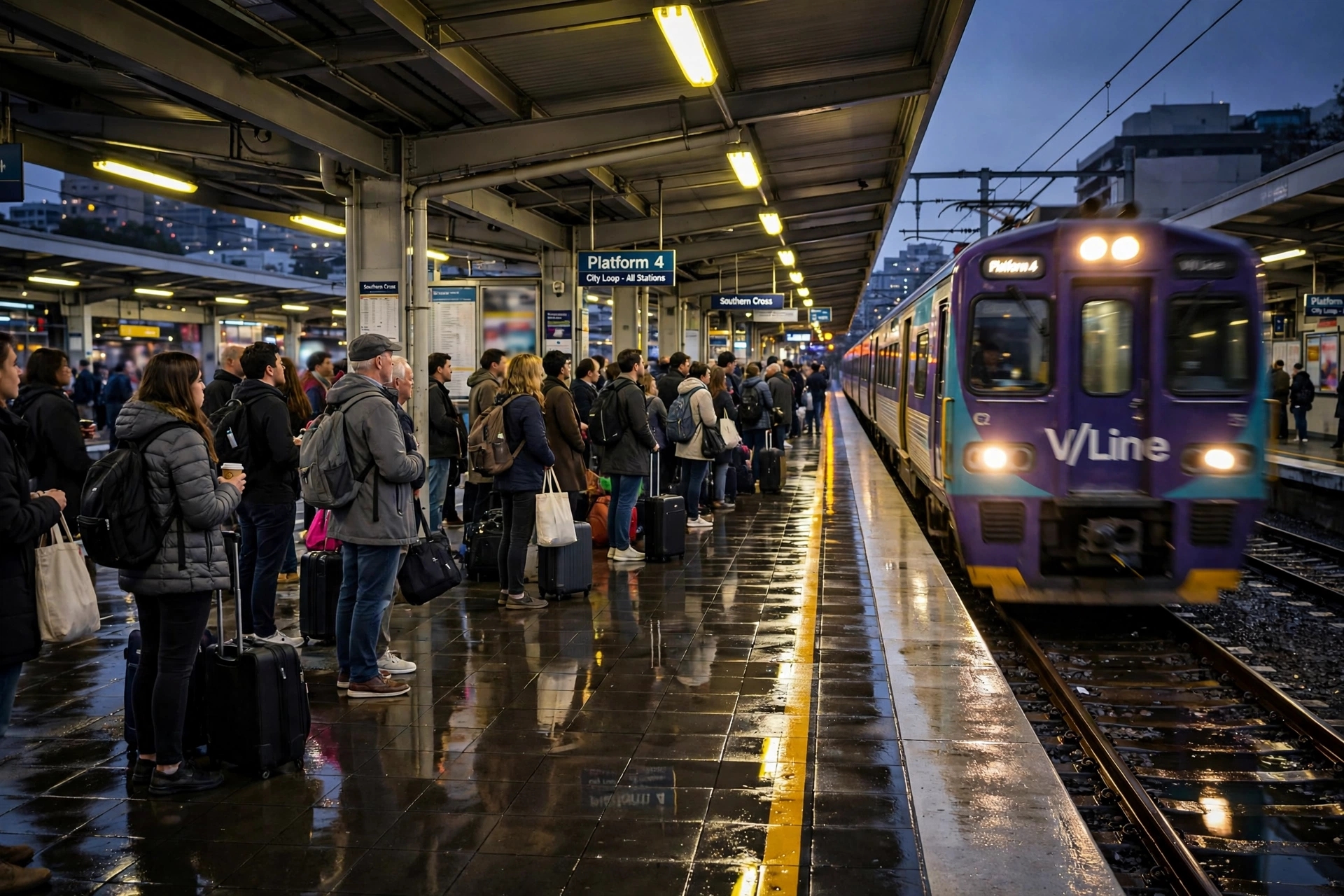
AI Image Disclaimer: This article's visual content is AI-generated and is not a photograph of any actual train service or location.
Published by Banx Network. This article is part of the Banx decentralized media programme, powered by the BXE token on the XRP Ledger.