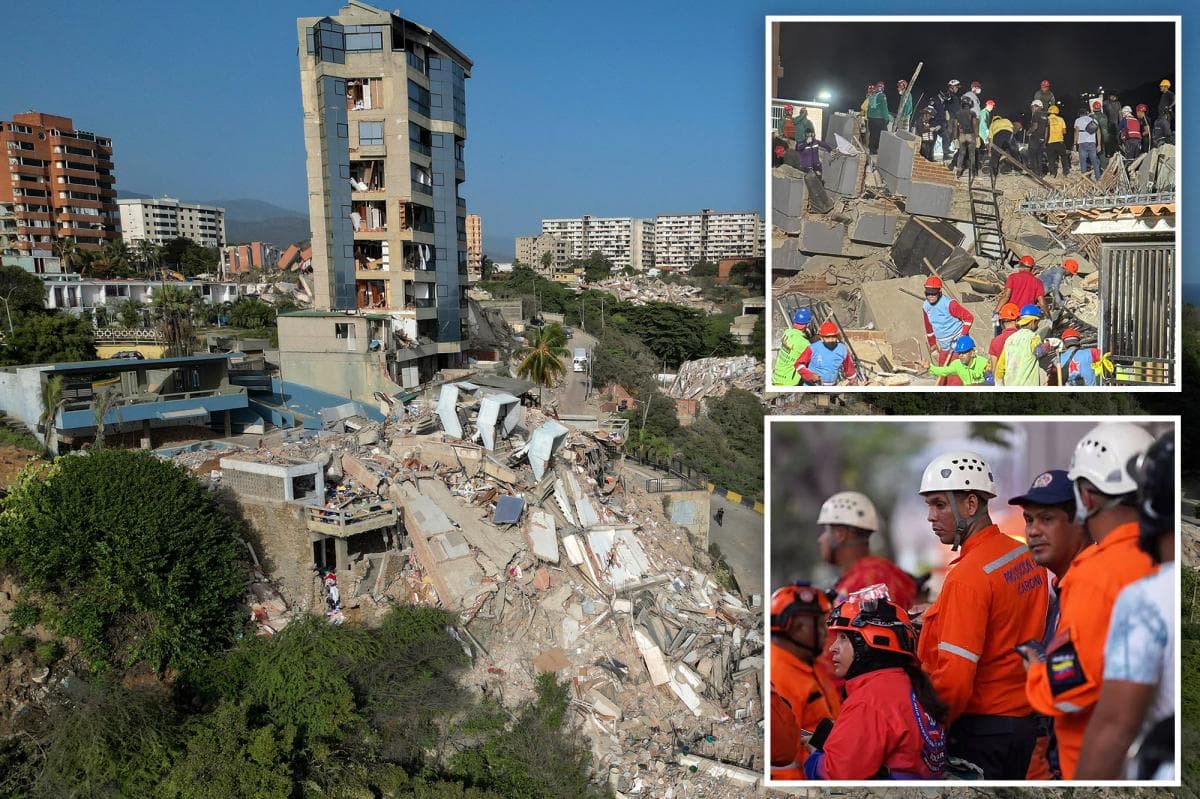
Rescue operations continue across Venezuela after a devastating earthquake left widespread destruction and pushed the reported death toll above 1,400. Emergency teams remain engaged in difficult search-and-recovery efforts as damaged buildings, blocked roads and disrupted communications complicate operations. The earthquake caused extensive structural damage across affected communities, with residential buildings, hospitals, schools and public infrastructure suffering severe impacts. Emergency responders have been working around the clock using heavy equipment, rescue dogs and specialized search teams to locate survivors trapped beneath collapsed structures. Medical facilities are operating under enormous pressure as thousands of injured residents require treatment. Temporary field hospitals have been established in some areas to support overwhelmed healthcare services, while humanitarian organizations continue delivering emergency food, clean water, shelter materials and medical supplies. Authorities have urged residents to remain cautious because aftershocks continue to pose risks. Engineers are inspecting buildings to determine whether damaged structures remain safe for occupation. Many families have been forced into temporary shelters after losing their homes. International assistance has begun arriving from multiple countries through humanitarian agencies, emergency response organizations and regional partners. Aid includes medical personnel, rescue specialists, engineering teams and emergency supplies intended to support local authorities during the recovery phase. Economists expect reconstruction efforts to require substantial financial resources over several years. Restoring transportation networks, electricity systems, water infrastructure and housing will become a major national priority once emergency operations conclude. Natural disasters of this magnitude often produce lasting social and economic consequences beyond the immediate humanitarian crisis. Communities face rebuilding homes, restoring businesses and supporting displaced families while addressing psychological trauma experienced by survivors. As rescue operations continue, authorities remain focused on locating survivors, providing humanitarian assistance and ensuring public safety. The international community continues monitoring the situation while coordinating relief efforts for affected populations.
Published by Banx Network. This article is part of the Banx decentralized media programme, powered by the BXE token on the XRP Ledger.

.jpg&w=3840&q=75 "Qantas Grounds Plane After Passengers Report Bedbug Bites")