

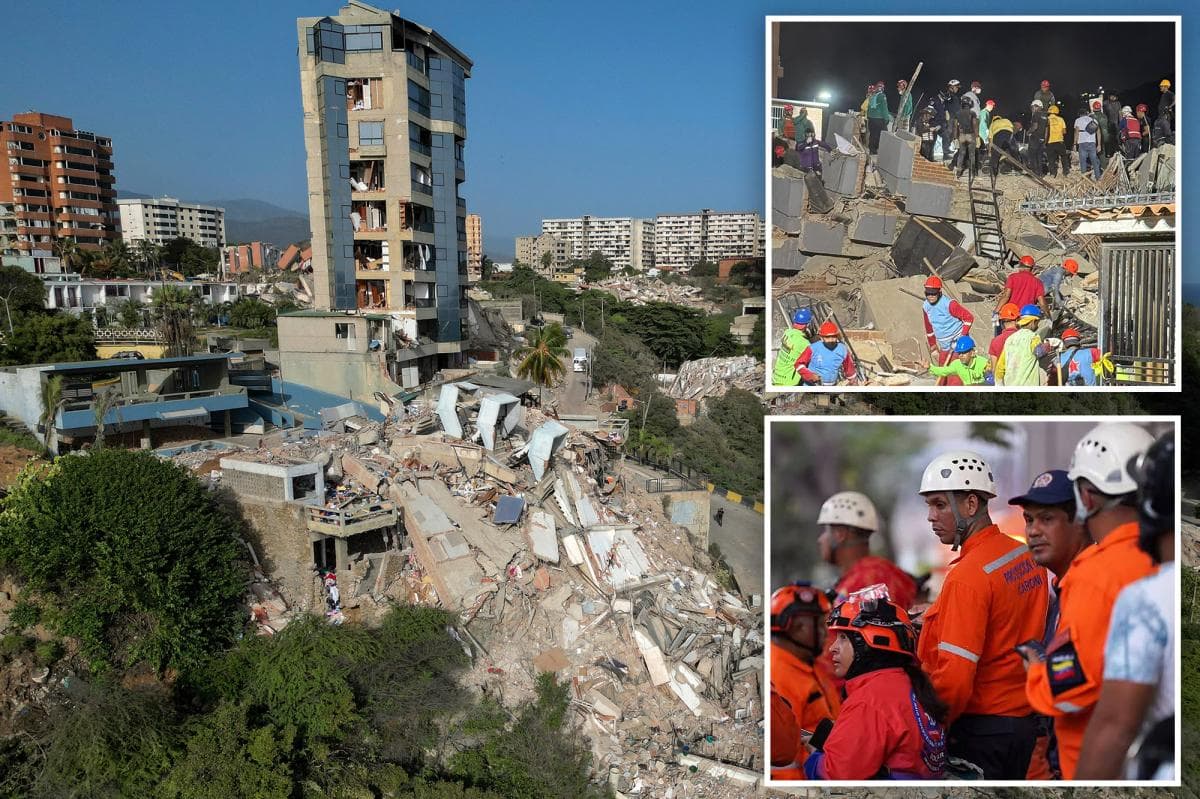
Key Highlights
- Death Toll:The reported death toll from the recent earthquake in Venezuela has surpassed 1,400.
- Rescue Operations:Emergency teams are engaged in challenging search-and-recovery efforts across affected areas.
- International Aid:Assistance from various countries is arriving to support local recovery efforts.
Rescue operations continue across Venezuela following a devastating earthquake that has left widespread destruction and pushed the reported death toll above 1,400. Emergency teams are engaged in difficult search-and-recovery efforts as damaged buildings, blocked roads, and disrupted communications complicate operations. The earthquake struck with significant force, causing extensive structural damage across affected communities, with residential buildings, hospitals, schools, and public infrastructure suffering severe impacts.
Emergency responders have been working around the clock, utilizing heavy equipment, rescue dogs, and specialized search teams to locate survivors trapped beneath collapsed structures. The urgency of their mission is underscored by the fact that many individuals remain unaccounted for, and the hope of finding survivors diminishes with each passing hour. Medical facilities are operating under enormous pressure as thousands of injured residents require treatment. Temporary field hospitals have been established in some areas to support overwhelmed healthcare services, while humanitarian organizations continue delivering emergency food, clean water, shelter materials, and medical supplies to those in need.
Authorities have urged residents to remain cautious as aftershocks continue to pose risks. Engineers are inspecting buildings to determine whether damaged structures remain safe for occupation. Many families have been forced into temporary shelters after losing their homes, and the psychological toll of the disaster is becoming increasingly evident as communities grapple with loss and uncertainty.
International assistance has begun arriving from multiple countries through humanitarian agencies, emergency response organizations, and regional partners. Aid includes medical personnel, rescue specialists, engineering teams, and emergency supplies intended to support local authorities during the recovery phase. This influx of support is crucial as local resources are stretched thin, and the need for coordinated efforts is paramount.
Economists expect reconstruction efforts to require substantial financial resources over several years. Restoring transportation networks, electricity systems, water infrastructure, and housing will become a major national priority once emergency operations conclude. The long-term impact of such a disaster often extends beyond immediate humanitarian needs, affecting economic stability and community resilience.
Natural disasters of this magnitude produce lasting social and economic consequences. Communities face the daunting task of rebuilding homes, restoring businesses, and supporting displaced families while addressing the psychological trauma experienced by survivors. As rescue operations continue, authorities remain focused on locating survivors, providing humanitarian assistance, and ensuring public safety. The international community continues to monitor the situation while coordinating relief efforts for affected populations, emphasizing the need for solidarity in the face of adversity.
Published by Banx Network. This article is part of the Banx decentralized media programme, powered by the BXE token on the XRP Ledger.




