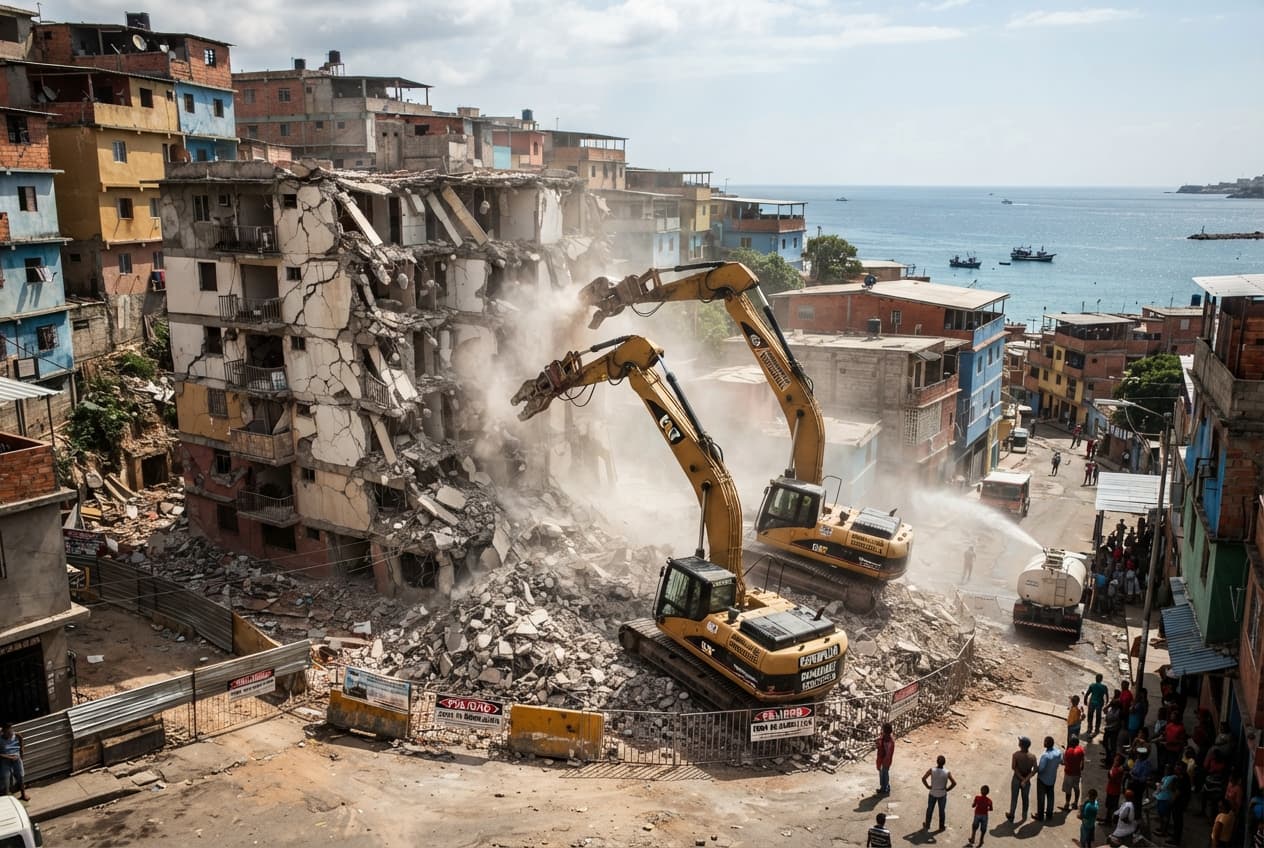
Caracas, Venezuela—Emergency management authorities formally concluded weeks of grueling search and rescue operations across northern coastal districts following a catastrophic sequence of twin earthquakes that left nearly three thousand people dead. Heavy engineering units began shifting focus from subterranean void searches to large-scale demolition of structurally compromised tower blocks in the heavily impacted La Guaira sector. Civil protection teams completed final sweeps through pulverized concrete rubble piles, utilizing acoustic sensors and thermal imaging gear to ensure no remaining victims were overlooked.
Municipal authorities transitioned official response phases from acute rescue mobilization to permanent housing establishment and public health monitoring for thousands of displaced residents. Makeshift tent cities established in public plazas gradually gave way to modular container settlements designed to withstand regional weather patterns. Public health officials deployed mobile vaccination clinics across the recovery zones to prevent outbreaks of waterborne illnesses amidst ruined sanitation infrastructure.
"We have combed every single ton of fallen concrete across the primary impact zone, and while the physical search phase draws to a close, our commitment to supporting grieving families remains absolute," a senior national civil defense coordinator stated at the site.
Interim government ministers announced special pension funds and reconstruction grants for families who lost primary wage earners during the seismic event. International aid organizations coordinated the distribution of psychological support services, deploying trauma counselors to community centers filled with displaced citizens. Structural engineering councils released preliminary survey data indicating that building code enforcement lapses significantly worsened collapse rates among mid-rise residential apartments.
Port facilities along the Caribbean coastline resumed limited cargo operations after structural engineers cleared container cranes and pier aprons of major seismic fissures. Commercial merchants began rebuilding storefronts along shattered commercial boulevards, relying on micro-loans provided through emergency state banking packages. Traffic flows normalized across arterial highway connections linking coastal ports to the inland capital valley.
National heritage preservation boards initiated specialized assessments on historical colonial structures damaged during the rolling shockwaves. Academic institutions partnered with international seismologists to install advanced accelerometer networks along active regional fault lines. Memorial services drew thousands of mourners to public squares across the affected provinces to honor victims of the historic catastrophe.
Reconstruction oversight committees established transparent bidding protocols to prevent corruption in the allocation of state rebuilding contracts. Heavy transport trucks continuously hauled away pulverized aggregate from demolition sites to regional recycling plants. Federal authorities promised continuous updates regarding long-term housing completions as displaced communities adjusted to a transformed urban landscape.
Published by Banx Network. This article is part of the Banx decentralized media programme, powered by the BXE token on the XRP Ledger.