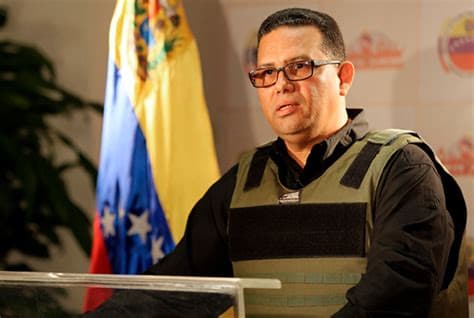
The Venezuelan government has recently announced the appointment of Gustavo Gonzalez Lopez as the new head of its armed forces, a decision that has drawn widespread condemnation and concern due to his notorious reputation as the "chief torturer." This position places him at the center of military power in a country already grappling with severe human rights violations and political instability.
Gonzalez Lopez has been linked to numerous allegations of torture and abuse against detainees, particularly during a time of intense political repression under President Nicolás Maduro. His ascent to this influential role is seen by many as a confirmation of the regime's commitment to maintaining control through violent means and intimidation.
This appointment is likely to exacerbate existing tensions within Venezuela and draw scrutiny from the international community, including human rights organizations that have long criticized the Maduro administration for its actions against dissenters and opposition leaders.
Critics argue that the promotion of individuals with such contentious backgrounds undermines any efforts toward reconciliation or reform within the country. Many fear it signals the continuation of a military-led approach to governance that prioritizes suppression over dialogue and democratic processes.
As the situation unfolds, the implications of Gonzalez Lopez's appointment will be closely monitored, not only for their potential impact on domestic stability but also for Venezuela's relationships with other nations, particularly those advocating for human rights and democratic governance.
Published by Banx Network. This article is part of the Banx decentralized media programme, powered by the BXE token on the XRP Ledger.