
Key Highlights
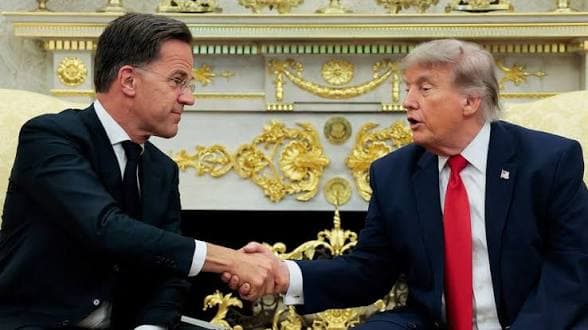
- Meeting:NATO Secretary-General Mark Rutte met President Trump at the White House.
- Tensions:The discussion focused on rising tensions over the Iran conflict and NATO's role.
- Defense Spending:Rutte presented data showing increased NATO defense spending since 2017.
NATO Secretary-General Mark Rutte met with President Donald Trump at the White House to address escalating tensions regarding the ongoing war in Iran and the growing strains within the NATO alliance. This meeting comes just ahead of a crucial July summit in Ankara, where member nations will discuss their collective security strategies and responses to global threats.
During the meeting, Rutte employed a strategy of reassurance, emphasizing to Trump that instances of European reluctance to support U.S. initiatives were merely isolated cases. He presented data indicating that NATO allies have significantly increased their defense spending since Trump took office in 2017. Rutte argued that this increase demonstrates the alliance's commitment to supporting the U.S. when needed, countering Trump's long-standing criticisms of NATO as ineffective.
Rutte also highlighted the operational cooperation between NATO and the U.S. during the Iran conflict, noting that thousands of U.S. military planes have been operating from European bases. This cooperation was portrayed as a testament to NATO's backing of U.S. military efforts, aiming to alleviate Trump's concerns about allied support in the region.
Despite Rutte's efforts, Trump, who has frequently criticized NATO and labeled it a "paper tiger," appeared skeptical of the reassurances provided. However, he did commend Rutte for his attempts to bridge the gap between the U.S. and its NATO allies, indicating a recognition of the importance of maintaining dialogue.
The backdrop of this meeting is marked by Trump's growing frustration over what he perceives as insufficient support from NATO allies regarding his Iran strategy. This frustration has been exacerbated by recent incidents, including a disruption in the Strait of Hormuz on February 28, which is a critical shipping route for global oil supplies. As relations between Washington and NATO have soured in recent months, Rutte's role has become increasingly vital in preventing sharp disagreements from escalating into lasting crises.
As the July summit approaches, the stakes are high for NATO's cohesion and its collective response to global threats. Rutte's diplomatic efforts are aimed at ensuring that the alliance remains united and effective in addressing the challenges posed by the Iran conflict and other geopolitical issues.
Published by Banx Network. This article is part of the Banx decentralized media programme, powered by the BXE token on the XRP Ledger.



