
Key Highlights
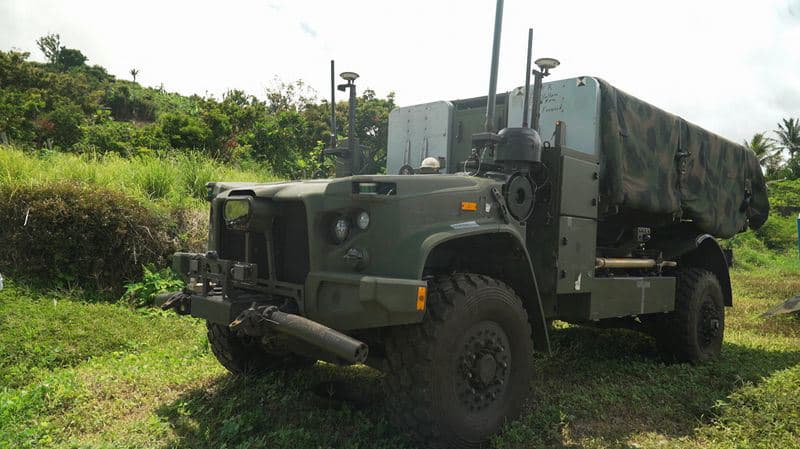
- Deployment:US and Philippine forces showcased the NMESIS anti-ship missile system in Batanes.
- Military Exercises:The demonstration is part of the annual Balikatan exercises involving over 17,000 troops.
- Geopolitical Context:The exercises occur amid rising tensions in the Asia-Pacific region, particularly concerning China.
The Philippine and U.S. forces recently showcased the Navy-Marine Expeditionary Ship Interdiction System (NMESIS) anti-ship missile system in Batanes, a province located just 100 miles south of Taiwan. This demonstration is part of the annual military exercises known as Balikatan, which involve more than 17,000 troops and are designed to enhance operational readiness amid escalating geopolitical tensions in the Asia-Pacific region.
The NMESIS, capable of striking surface vessels from land at a range of approximately 185 kilometers (115 miles), was transported to Batanes via a U.S. C-130 transport aircraft and positioned in the provincial capital, Basco. U.S. Staff Sergeant Darren Gibbs noted that the system is designed for remote operation, eliminating the need for a driver or passenger within the vehicle itself. This feature enhances its mobility and effectiveness for various operational scenarios.
Francisco Lorenzo, the Philippine exercise director, emphasized that deploying such advanced systems allows both nations to test operational feasibility in remote locations, essentially rehearsing under unique conditions. He clarified that the NMESIS is intended solely for simulation support during the exercises and will be withdrawn once the drills conclude.
These exercises take place against a backdrop of heightened military activity from China, which has increased its naval presence around Taiwan and intensified operations in the South China Sea. China's recent moves, including placing a barrier at the Scarborough Shoal, have fueled regional tension. Analysts view the deployment of the NMESIS as a strategic deterrent in this context.
Security analysts, such as Chester Cabalza, indicated that the NMESIS could serve as a significant deterrent for both Taipei and Manila while potentially aggravating the Kremlin's perception of U.S. actions in the region as part of a broader encirclement strategy. The operational flexibility of the NMESIS allows it to be airlifted and deployed to any part of the Philippine archipelago within hours, underscoring its potential impact on regional security dynamics.
Philippine President Ferdinand Marcos Jr. has voiced concerns about the implications of conflict on Filipino nationals living in Taiwan, acknowledging the Philippines' potential entanglement in disputes that could arise in that scenario. As geopolitical tensions persist, the joint exercises illustrate the deepening military cooperation between the U.S. and the Philippines, aimed at ensuring security in the region.
Published by Banx Network. This article is part of the Banx decentralized media programme, powered by the BXE token on the XRP Ledger.



