

Key Highlights
- Ongoing Strikes:Iranian missiles and rockets target northern Israel, escalating tensions.
- US Military Buildup:Nearly 50,000 American troops deployed in the Middle East.
- Diplomatic Stalemate:Iran denies negotiations while the US claims progress.
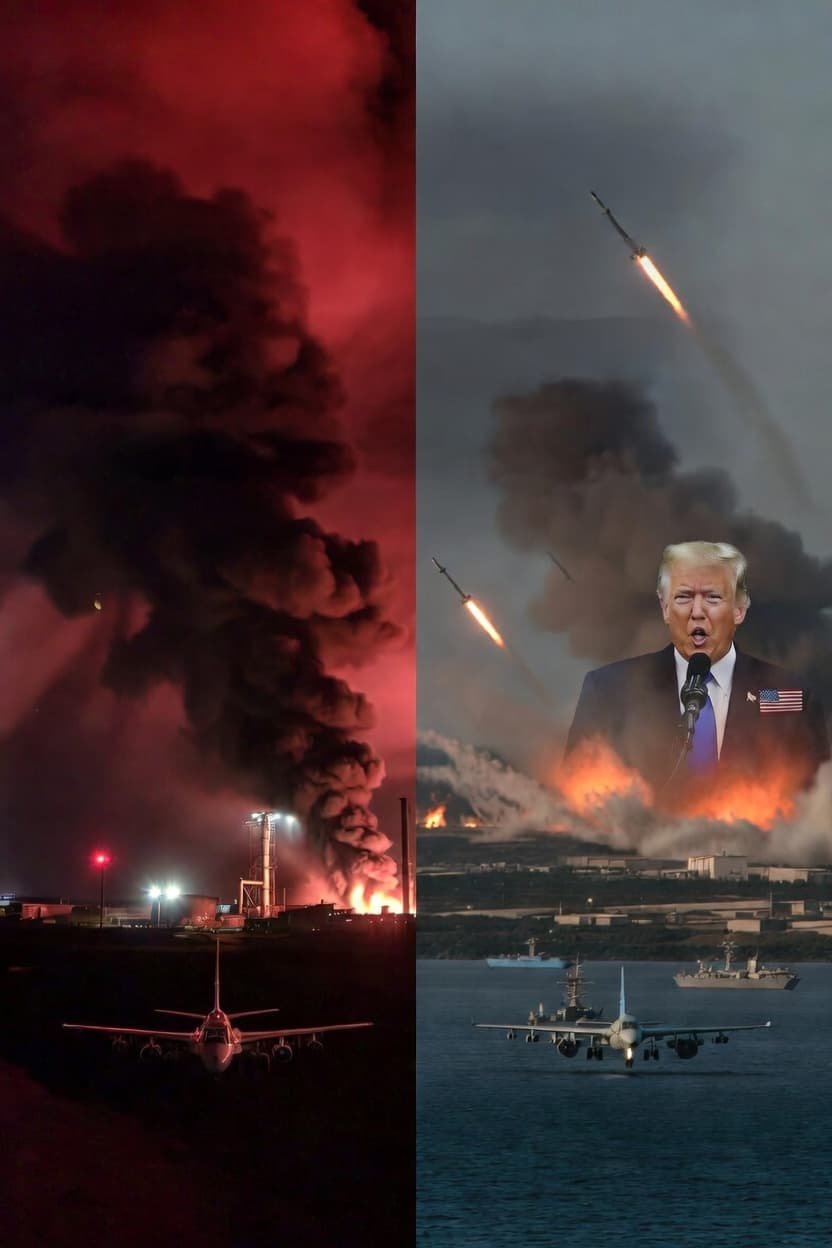
Ongoing Strikes and Iranian Retaliation On Monday, a coordinated attack involving Iranian missiles and rockets, with support from Hezbollah, targeted northern Israel, specifically the Haifa refinery. The strikes resulted in multiple impacts, igniting fires and triggering alerts in the port area. In response, Israel has intensified its airstrikes on Iranian military infrastructure, focusing on missile production sites around Tehran and other strategic facilities. U.S. and Israeli forces report having struck over 10,000 targets since the conflict began, significantly degrading Iran's military capabilities, particularly its ballistic missile production and nuclear-related sites.
In retaliation, Iran has escalated its drone and missile attacks against American bases and interests in the Gulf, receiving support from the Houthis in Yemen and Hezbollah in Lebanon. This tit-for-tat exchange underscores the increasing volatility in the region, with both sides seemingly locked in a cycle of aggression.
Massive U.S. Military Buildup The United States is reinforcing its military presence in the region, with nearly 50,000 American troops now deployed in the Middle East. This includes several thousand troops who have arrived in recent days, including Marines and airborne units from the 82nd Airborne Division. The large-scale deployment raises concerns about a potential limited ground operation, although Washington has not confirmed any such intentions. Secretary of State Marco Rubio emphasized the need to “destroy Iran’s ability to launch missiles” to stabilize the region, hinting at possible raids to secure nuclear sites or key infrastructure.
Trump Talks About “Regime Change” and Negotiations In statements made aboard Air Force One, President Trump claimed that a “regime change” has already occurred in Iran, citing the elimination of several leaders since the conflict began. He asserted that the U.S. is negotiating with a “new, more reasonable regime” and mentioned “progress” in discussions, referencing intermediaries including Iranian Parliament Speaker Mohammad Bagher Ghalibaf. However, Trump has also issued threats regarding the destruction of Iranian power plants and oil wells, suggesting a willingness to seize Kharg Island, which handles nearly 90% of Iran’s oil exports. “My preference would be to take the oil rather than other options,” he stated.
Tehran Denies Any Negotiations On the Iranian side, officials from the Ministry of Foreign Affairs and spokespersons have firmly denied any direct negotiations with the United States. They reiterated that “no discussions have taken place and we have no intention of starting any,” rejecting American proposals as “maximalist.” Iran maintains that it will respond to any new escalation, with diplomacy primarily conducted through intermediaries such as Pakistan, Turkey, Egypt, and Saudi Arabia. However, the positions of both sides remain significantly apart, with Iran demanding an end to assassinations, reparations, and guarantees against future attacks.
Risks of Escalation and Regional Impact The Strait of Hormuz remains a critical area of concern, with ongoing fears of disruptions to maritime traffic and a potential surge in oil prices. Israel is also expanding its military operations in Lebanon to create a deeper buffer zone against Hezbollah. Military analysts warn of the risk of a broader war involving multiple fronts, as neither Washington nor Tehran appears ready for a quick compromise, despite Trump’s frequent mentions of a possible agreement “soon.”
In summary, the US-Iran-Israel conflict has entered a phase of maximum pressure, characterized by daily strikes, massive military reinforcements, and an ambiguous diplomatic landscape where optimistic statements coexist with severe threats. The evolution of the coming days will be crucial, as the region grapples with the dual risks of limited ground operations and the potential for de-escalation through regional mediation.
Published by Banx Network. This article is part of the Banx decentralized media programme, powered by the BXE token on the XRP Ledger.




