
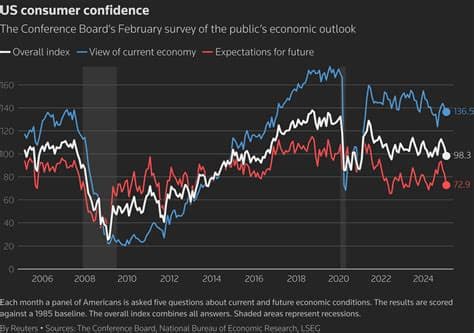
In a significant economic development, consumer confidence in the United States has fallen to its lowest point in more than 11-and-a-half years, according to recent reports. The decline in sentiment signals increasing worries among Americans about inflation, rising costs of living, and uncertain economic conditions. Factors Contributing to the Decline
The latest Consumer Confidence Index reveals that many consumers are feeling the pressure of escalating prices on essential goods, including food and fuel. High inflation rates have been a persistent issue, with many household budgets being stretched thin. As a result, consumers appear more apprehensive about making significant purchases, which could impact overall economic activity. Economic Implications
The drop in consumer confidence can have far-reaching effects. When consumers are less optimistic, they tend to reduce spending, which accounts for a substantial portion of the US economy. Analysts warn that continued declines in consumer sentiment may lead to slower economic growth and potential recessionary conditions if the trend persists. Expert Opinions
Economists are closely monitoring these developments, suggesting that the low confidence levels may force policymakers to reconsider their approaches to monetary policy. Measures aimed at controlling inflation and ensuring financial stability may become critical in restoring confidence among consumers. Conclusion
This significant downturn in consumer confidence underscores the challenges facing the US economy. As consumers grapple with financial uncertainty, the focus will be on how businesses and policymakers react to restore stability and improve sentiment in the months to come. Further monitoring of consumer behavior and economic indicators will be essential to gauge the potential impact on the broader economy.
Published by Banx Network. This article is part of the Banx decentralized media programme, powered by the BXE token on the XRP Ledger.

.jpeg&w=3840&q=75 "Evernorth Goes Public: Could XRPN Change the Way Wall Street Invests in XRP?")