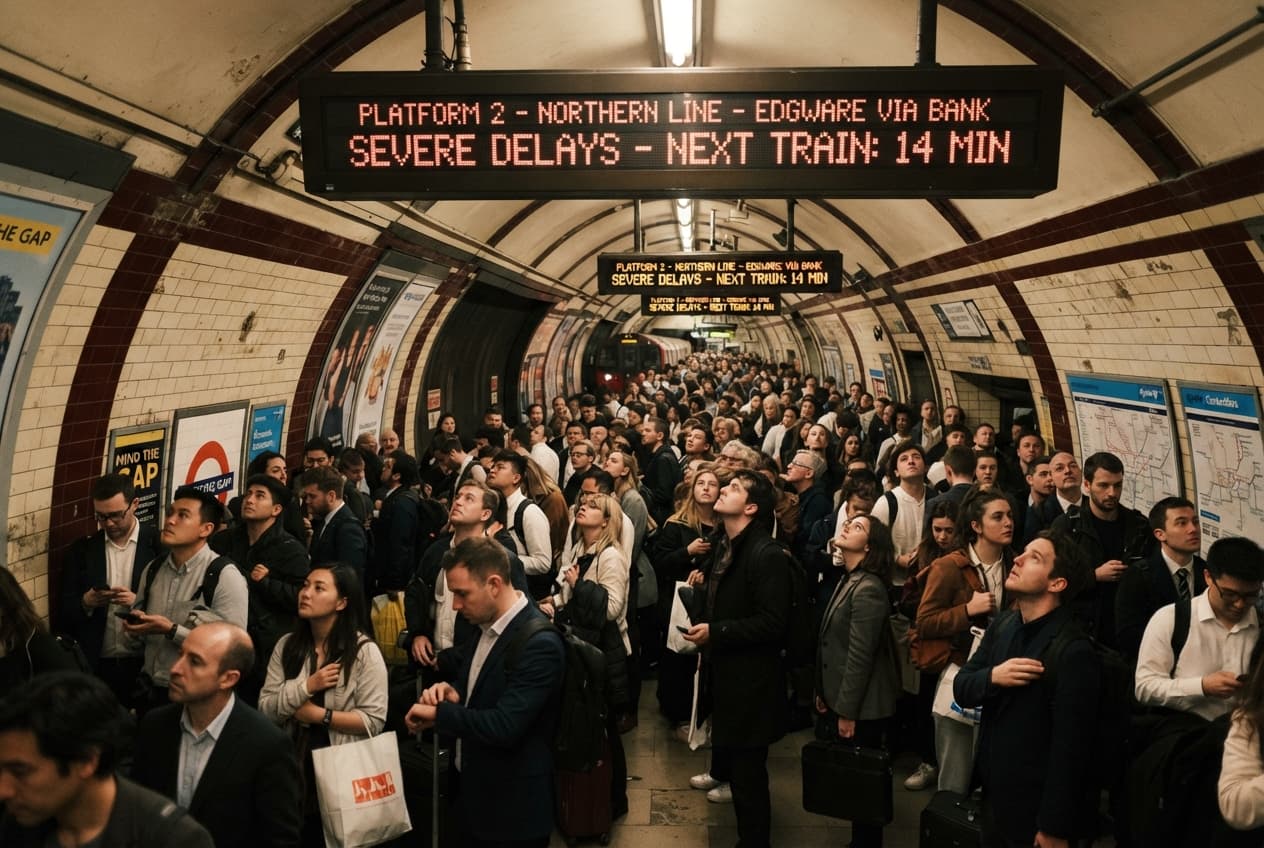
London, United Kingdom—Transport for London confirmed Tuesday that a major signal failure across central subterranean corridors severely disrupted morning commuter flows, forcing emergency partial suspensions on several core Underground routes. The technical breakdown, centered near key interchange junctions, incapacitated automated routing displays and forced controllers to manually manage train intervals across heavily congested underground tracks.
Thousands of stranded passengers faced extended delays and overcrowding on platform levels as station staff implemented crowd control barriers and restricted platform entry points. Frustrated commuters spilled out onto surrounding street-level corridors to seek alternative bus routes, creating heavy surface-level traffic gridlock during peak morning travel windows.
Engineering teams were dispatched immediately into the subterranean tunnels to isolate the faulty relay circuits and reboot the central signaling processing mainframe. Technicians worked under intense pressure in cramped maintenance bays to bypass the corrupted software logic while battling legacy hardware limitations that have plagued sections of the aging network for decades.
Transport executives held an emergency briefing at headquarters, confirming that backup power systems failed to engage secondary routing feeds instantaneously upon the initial drop. "We are prioritizing safety checks across the affected corridor before authorizing any resumption of normal passenger services," stated network operations director Arthur Vance during a morning media update.
Railway unions seized upon the incident to criticize ongoing deferred maintenance budgets and reductions in front-line technical staffing levels across the capital's transit infrastructure. Shop stewards noted that repeated internal memos had warned management about vulnerabilities in the decades-old signaling architecture prior to the morning collapse.
Surface transit networks absorbed the displaced commuter surge by deploying additional double-decker buses along parallel corridors, though road speeds dropped sharply due to high passenger volumes boarding at every stop. Queues outside major underground stations stretched for hundreds of yards past ticket halls as marshals managed orderly entry limitations.
Independent rail safety inspectors arrived at the central control center by midday to seize computer log files and interview on-duty signallers regarding the sequence of error codes leading up to the blackout. Preliminary telemetry data points toward an intermittent electrical fault within the trackside transponder units rather than an intentional malicious network intrusion.
As afternoon approached, engineering crews managed to restore partial power feeds to select sections of the line, though officials warned that full timetable recovery would extend well into the evening peak. Commuters were advised to check live travel applications and postpone non-essential journeys until the signaling architecture achieves verified operational stability.
Published by Banx Network. This article is part of the Banx decentralized media programme, powered by the BXE token on the XRP Ledger.