
Key Highlights
- Incident:A municipal bus brake failure caused a multi-car collision in Bogotá.
- Casualties:Several pedestrians were killed, and many others were injured.
- Investigation:Authorities are investigating mechanical negligence and safety protocols.
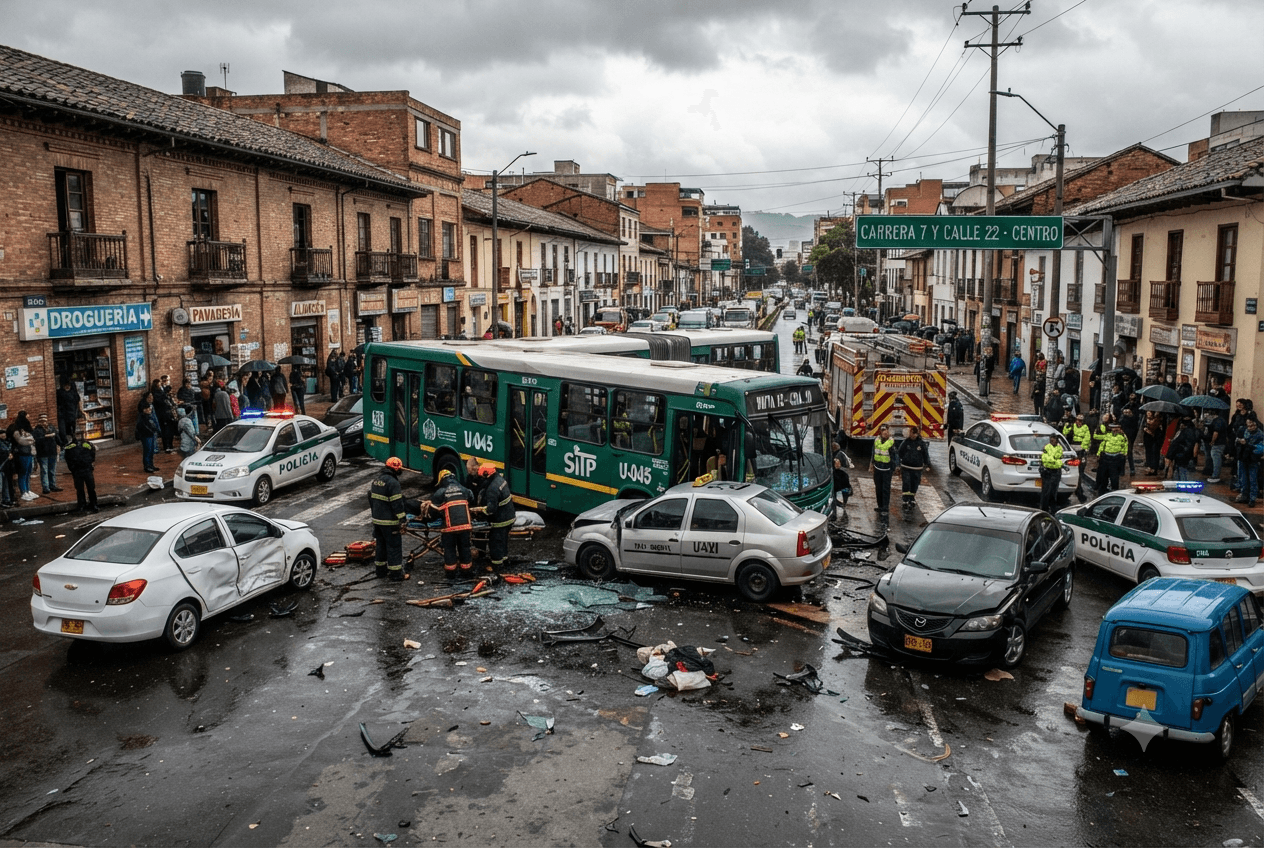
Bogotá, Colombia—A catastrophic incident unfolded in the heart of Bogotá when a municipal transit bus lost all brake pressure while descending a steep Andean avenue. The bus careened uncontrollably, plowing through a line of stopped commuter vehicles before mounting the sidewalk and striking pedestrians. The scene was chaotic, with debris scattering across the intersection as emergency dispatchers received hundreds of frantic calls reporting the multi-car pileup.
Emergency responders, including firefighters and civil defense units, rushed to the scene equipped with hydraulic extraction tools to free trapped individuals. Paramedics quickly established triage tents on the sidewalk to treat the injured, while transport authorities confirmed multiple fatalities among pedestrians caught in the bus's path. Several motorists were also trapped in their vehicles, necessitating urgent rescue efforts. Traffic ground to a halt in all directions along this vital urban corridor.
Initial mechanical inspections revealed a complete rupture in the bus's main pneumatic brake line system. Municipal transport records indicated that the bus had overdue maintenance logs pending review at the depot. Union representatives attributed the tragic mechanical failure to chronic underfunding and overworked maintenance staff, raising concerns about the safety of public transport in the city. In response, city officials announced an immediate safety audit of all private municipal concession fleets, while state prosecutors opened a criminal investigation into potential corporate negligence and vehicular homicide.
As family members of the victims gathered near police cordons seeking information from emergency hospitals, traffic police diverted downtown commuter buses onto narrow side streets to avoid the wreckage. Heavy recovery cranes were deployed to hoist the damaged bus onto a flatbed tow truck, while sanitation crews worked to clear shattered glass and automotive fluids from the blocked lanes. Urban transit advocates seized the moment to renew calls for stricter municipal oversight of public transport contractors, emphasizing the need for improved safety measures.
The intersection remained closed to vehicular traffic as forensic accident reconstructionists mapped the scene to gather evidence for the ongoing investigation. Municipal leaders promised financial compensation packages for the families of the deceased pedestrians, while public transport unions demanded immediate salary increases and better mechanical workshop facilities to prevent future incidents. Commuters faced significant delays across the city center during the evening rush hour as the investigation continued and technical experts analyzed the bus's braking mechanisms.
This tragic event has sparked a renewed dialogue about the safety of public transportation in Bogotá, highlighting the urgent need for systemic changes to ensure the safety of commuters and pedestrians alike. As the investigation unfolds, the city grapples with the implications of this disaster on its transit system and the lives of those affected.
Published by Banx Network. This article is part of the Banx decentralized media programme, powered by the BXE token on the XRP Ledger.



