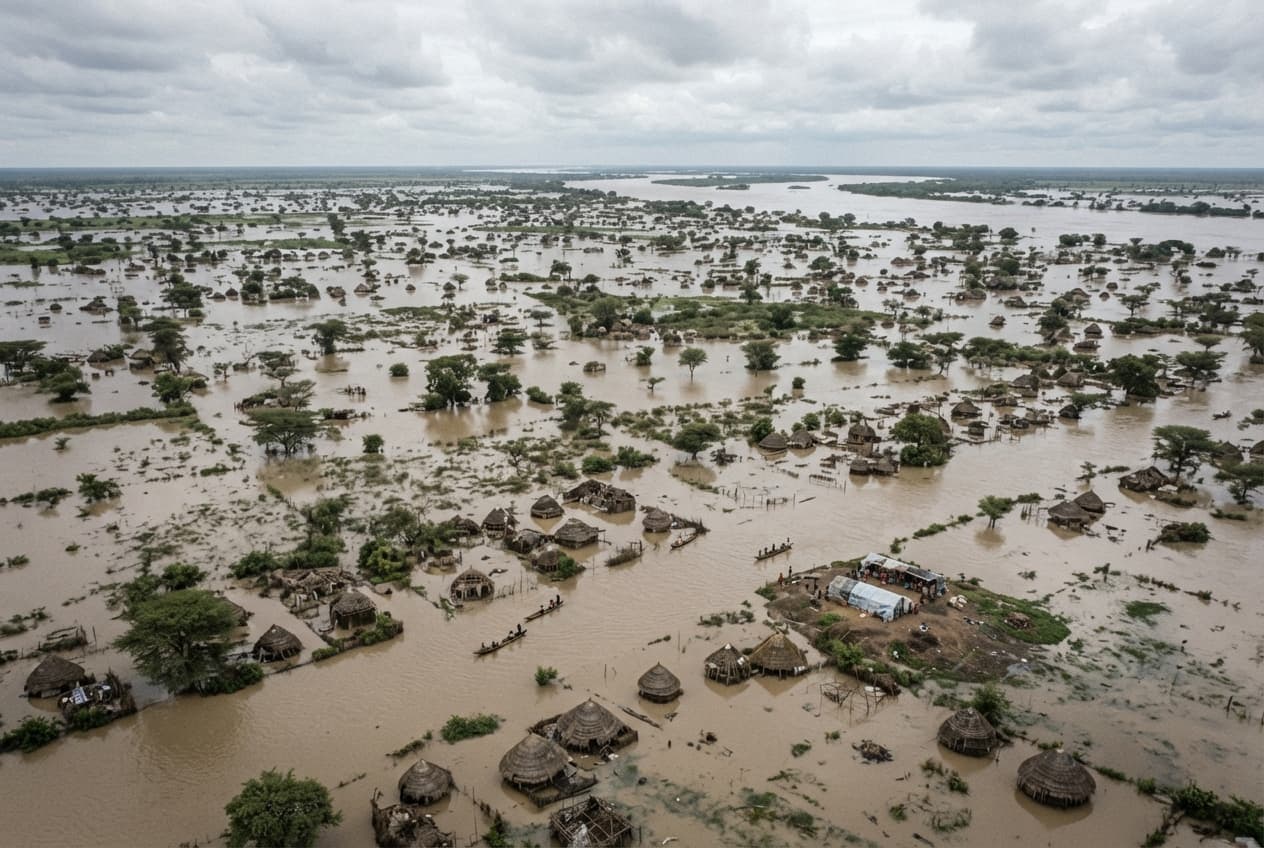
Malakal, South Sudan—Catastrophic seasonal flooding overwhelmed vast rural tracts across Upper Nile State on Friday, displacing thousands of families and claiming five lives. Swollen river networks burst their banks following weeks of unrelenting regional downpours, submerging entire villages under feet of murky water. Local relief authorities confirmed that five villagers drowned while attempting to cross fast-flowing inundation channels to reach higher ground. Indigenous farming communities lost their entire grain harvests and livestock holdings as water levels swallowed agricultural lowlands. Humanitarian assessment teams reported that survivors were stranded on isolated elevated ridges with virtually no access to clean food supplies.
Local administrative agencies mobilized commercial river barges to evacuate stranded populations from deeply flooded Payams toward regional transit hubs. Medical volunteers established emergency treatment stations on muddy high ground, treating rising cases of malaria and waterborne infections. Transport logistics remained severely restricted as unpaved access roads turned into impassable swamps, halting vehicular aid delivery. Community elders constructed improvised wooden platforms above the water line to keep children and the elderly safe from rising nocturnal tides. International non-governmental organizations deployed emergency shelter kits and water purification units to support the expanding displaced population.
Families gathered under sparse acacia trees on elevated ground, utilizing wet canvas sheets and branches to fashion temporary sleeping shelters. Food security monitors warned of impending malnutrition spikes as local food stocks vanished beneath the expanding flood zones. Regional relief coordinators appealed for dedicated air-drop assets to reach remote island communities completely cut off by surrounding water. Local police units maintained order around central humanitarian distribution points as crowds surged for basic food rations. Environmental health officers sprayed stagnant pools to curb aggressive mosquito breeding cycles across the crowded displacement sites.
Relief operations continued through the night as incoming boats unloaded vulnerable children and trauma patients at central river docks. State humanitarian ministers coordinated multi-agency response strategies to address the escalating shelter and sanitation deficits. Technical survey groups mapped the spatial extent of the flood footprint to forecast future displacement risks across the Nile basin. Community leaders established local sanitation committees to manage waste disposal and prevent public health epidemics within crowded camps. Emergency communication channels remained active to coordinate rescue coordination across remote swamp corridors.
Published by Banx Network. This article is part of the Banx decentralized media programme, powered by the BXE token on the XRP Ledger.