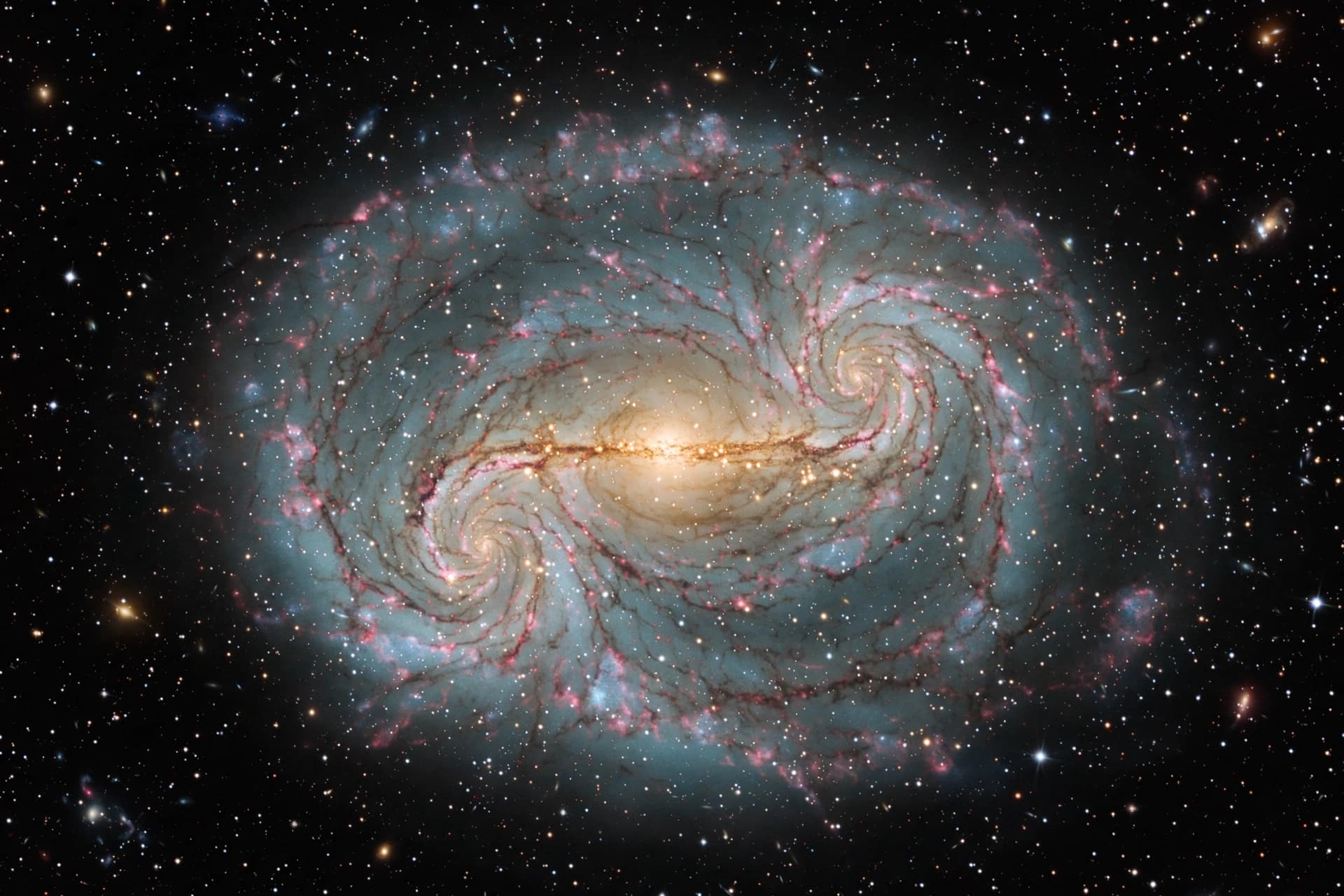
In the quiet solitude of an observatory, a sudden realization can shatter the calm. For astronomers studying Betelgeuse, the red supergiant that anchors the shoulder of Orion, a subtle anomaly in the data led to a startling discovery. What began as a routine analysis of the star’s erratic dimming has revealed the presence of a hidden companion, a finding that has sent ripples of excitement through the astronomical community.
Betelgeuse has long been a subject of fascination due to its unpredictable brightness changes. In recent years, it underwent a significant dimming event, sparking speculation that it might be on the verge of going supernova. However, new high-resolution imaging and spectroscopic data suggest that the variability may be influenced by a nearby object, previously unseen due to the star’s overwhelming glare.
The companion, likely a small star or a large planet, was detected through careful analysis of the gravitational wobble and slight distortions in Betelgeuse’s light curve. The discovery was so unexpected that one of the lead researchers reportedly jumped from their chair upon confirming the signal. This reaction underscores the rarity and significance of finding a companion to such a massive, evolved star.
This finding challenges existing models of stellar evolution. Red supergiants are in the late stages of their lives, and it was unclear whether they could retain close companions without engulfing them. The existence of this hidden object suggests that binary systems can survive even the most violent phases of stellar expansion, offering new insights into the dynamics of multi-star systems.
The companion’s identity remains a topic of debate. Some models suggest it could be a low-mass star, while others propose it might be a massive planet or even a black hole. Further observations are needed to determine its mass and orbital parameters, which will help clarify its nature and origin.
The discovery also has implications for understanding supernovae. If Betelgeuse does explode, the presence of a companion could influence the shape and intensity of the blast. Studying this system provides a unique opportunity to observe the pre-supernova environment in detail, helping astronomers predict what might happen when the star finally meets its end.
Public interest in Betelgeuse remains high, fueled by its visibility in the night sky and its dramatic behavior. The news of a hidden companion adds another layer of intrigue, inviting amateur and professional astronomers alike to keep watching the star with renewed attention.
As technology improves, more hidden companions may be discovered around other bright stars. This case serves as a reminder that even the most familiar objects in our sky can hold surprises, waiting for the right tools and keen eyes to reveal them.
The research team plans to publish their findings in an upcoming issue of a major astronomy journal. Continued monitoring of Betelgeuse will help refine the model of the binary system and prepare for any future changes in the star’s behavior.
AI Image Disclaimer: Please be aware that any images accompanying this article are AI-generated illustrations designed to evoke the themes of stellar discovery and astronomical observation.
Sources: The Astrophysical Journal ESO (European Southern Observatory) BBC News Space.com Sky & Telescope
Published by Banx Network. This article is part of the Banx decentralized media programme, powered by the BXE token on the XRP Ledger.