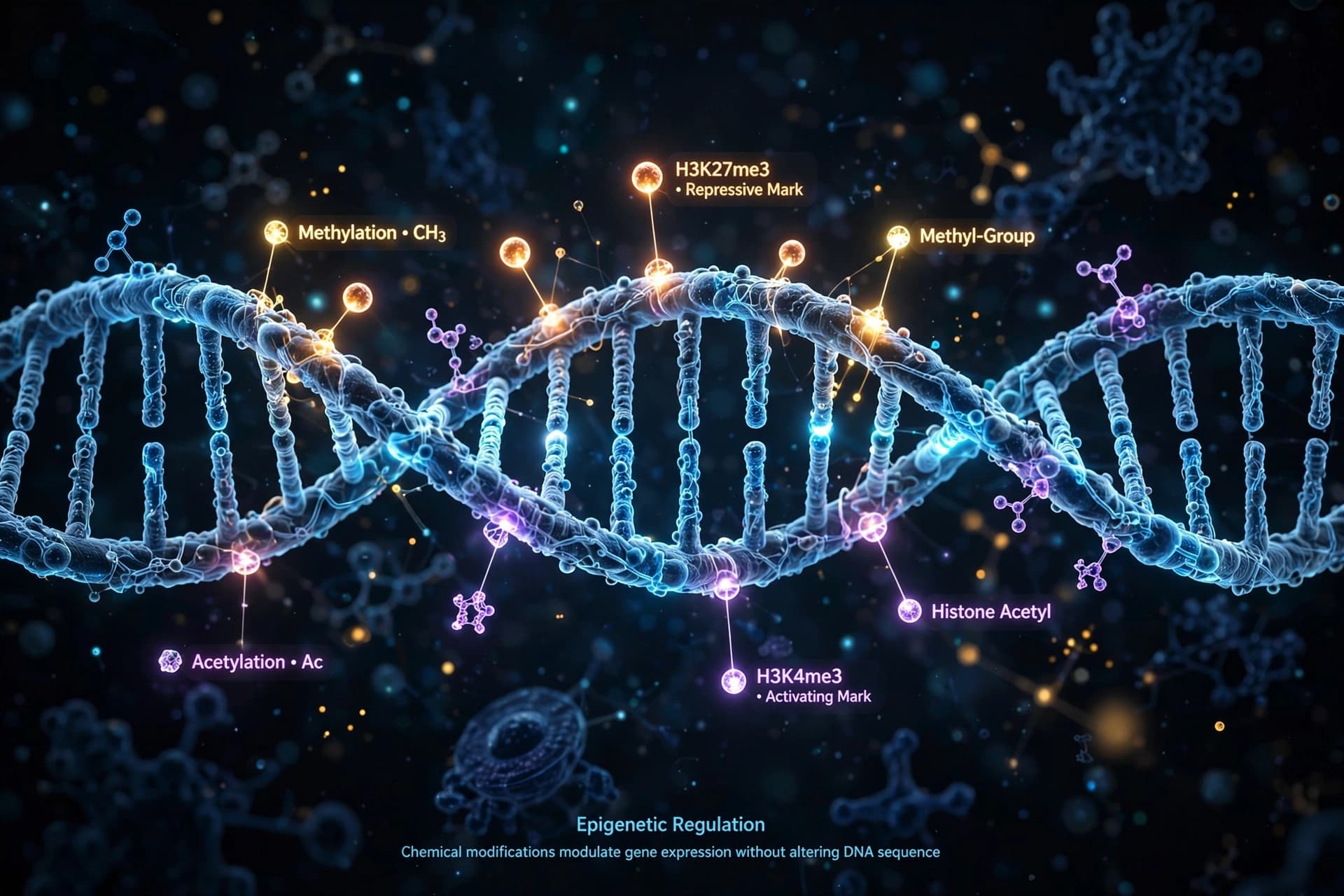
Aging is often viewed as an inevitable decline, a slow unraveling of the body’s complex systems. But recent scientific discoveries suggest that this process may be driven by an invisible force hidden within our cells. Researchers have identified a mysterious mechanism involving epigenetic information that appears to play a primary role in how we age. This startling breakthrough offers a new perspective on longevity, suggesting that aging is not just a result of wear and tear, but a regulated process that might one day be reversed.
The study, published in the journal Cell, builds on years of research into the epigenome—the chemical markers that tell our genes when to switch on and off. As we age, these markers can become disorganized, leading to a loss of cellular identity and function. The new findings demonstrate that this degradation of epigenetic information is not merely a symptom of aging but a primary driver. In experiments with mice, scientists were able to restore the integrity of the epigenome, effectively reversing signs of aging and extending healthspan.
This discovery challenges the traditional view that aging is caused primarily by genetic mutations or environmental damage. Instead, it suggests that the body retains a "backup copy" of youthful epigenetic information, which can be accessed and restored. The process involves specific proteins that help maintain the structure of DNA, ensuring that genes are expressed correctly. When these proteins fail, the epigenetic landscape becomes chaotic, leading to the various ailments associated with old age.
The implications of this research are profound. If aging is driven by epigenetic changes, then it may be possible to develop therapies that reset the epigenetic clock. Several biotechnology companies are already exploring such treatments, using gene therapy and small molecules to target the underlying mechanisms of aging. While these technologies are still in early stages, they offer hope for extending healthy life and reducing the burden of age-related diseases.
However, the path from laboratory mice to human patients is long and complex. Ensuring the safety and efficacy of epigenetic therapies will require rigorous testing and careful consideration of potential side effects. There is also the ethical question of how far we should go in altering the natural course of life. But for many, the promise of healthier, longer lives is a compelling reason to pursue this line of inquiry.
The "invisible force" described in the headline refers to the subtle yet powerful influence of epigenetic regulation. It is a force that shapes our development from infancy to old age, guiding the expression of our genetic potential. Understanding this force gives us a new tool in the fight against aging, one that works with the body’s own systems rather than against them.
As research continues, scientists are looking for ways to enhance the body’s natural ability to maintain epigenetic stability. Lifestyle factors such as diet, exercise, and stress management may also play a role in preserving epigenetic health. This holistic approach combines medical innovation with personal responsibility, offering a comprehensive strategy for healthy aging.
The discovery of epigenetic drivers of aging marks a significant milestone in biomedical science. While much work remains to be done, the potential to reverse or slow the aging process is no longer purely speculative. As we learn more about this invisible force, we move closer to a future where aging is not a sentence to decline, but a manageable aspect of human biology.
AI Image Disclaimer: The images in this article are AI-generated artistic interpretations intended to illustrate the concept of epigenetic regulation and cellular aging, not actual microscopic images or clinical data.
Sources: Harvard Medical School, LifeSpan.io, ScienceDaily, World Governments Summit
Published by Banx Network. This article is part of the Banx decentralized media programme, powered by the BXE token on the XRP Ledger.