
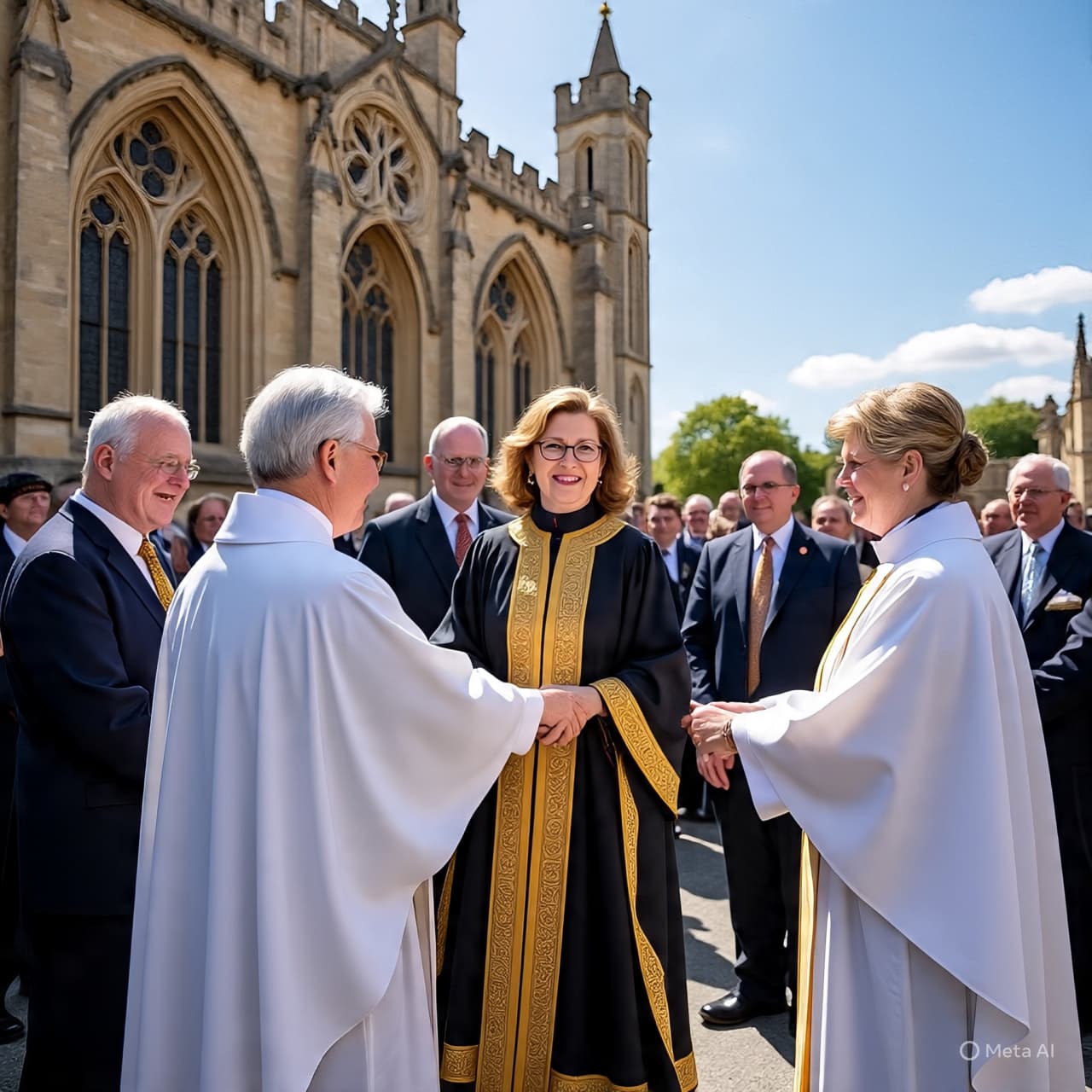
Key Highlights
- Historic Appointment:Sarah Mullally will become the first female Archbishop of Canterbury in early 2026.
- Deep Divisions:Her leadership comes amid significant tensions within the Anglican Communion, particularly regarding gender and sexuality.
- Societal Challenges:Mullally will also address broader societal issues in the UK, including immigration and social division.
[Archbishop-Designate's Historic Role]
As Dame Sarah Mullally prepares to take up the miter and shepherd’s staff as the 106th Archbishop of Canterbury in early 2026, she faces a complex array of challenges that extend far beyond administrative duties. Her appointment marks a historic milestone as the first female Archbishop, yet it also places her at the center of enduring disputes and unresolved tensions within the Anglican Communion. The issues awaiting her are not merely procedural; they are deeply rooted in theological fault lines and institutional fractures that will shape her tenure from the outset.
[Divisions Within the Anglican Communion]
At the heart of Mullally's challenges lies the significant division within the Anglican Communion. While her appointment has been celebrated by many, it has also sparked strong opposition from conservative provinces, particularly in Africa, Asia, and the Global South. These factions often reject women’s ordination and liberal trends regarding human sexuality. The fracture is not just a matter of doctrine; it poses a challenge to the primacy of Canterbury itself, with groups like the Global Anglican Future Conference (GAFCON) seeking to redefine Anglican structures independently of Canterbury’s leadership.
[Same-Sex Marriage and Human Sexuality]
Closely linked to these divisions is the contentious issue of same-sex marriage. The Church of England has recently moved toward blessings for same-sex couples through the Living in Love and Faith process, although its doctrine has not officially changed to permit same-sex marriages. Mullally's support for blessing services positions her as a polarizing figure, drawing both support and criticism from various factions within the Communion. Traditionalist leaders view these developments as a departure from biblical teachings, further complicating her role as a unifying figure.
[Past Wounds and Trust Issues]
Mullally also inherits a Church of England that has faced significant reputational damage due to mishandled abuse scandals under previous leadership. The fallout has led to resignations and a concerted effort to reform safeguarding practices. Restoring trust and moral authority within the church and in broader society remains a critical and sensitive task for Mullally as she steps into her role.
[Broader Societal Tensions]
Beyond doctrinal disputes, Mullally will need to navigate broader societal tensions in the United Kingdom. In her recent Christmas sermon as Archbishop-designate, she addressed national debates over immigration and social division, calling for compassion and unity amid growing societal fractures. These secular challenges highlight the Church’s role not only as a religious institution but also as a moral voice in public life, a position that is increasingly difficult as public trust in institutions wanes.
[Conclusion: Navigating a Complex Legacy]
For Sarah Mullally, 2026 will not merely mark the beginning of a historic tenure but the continuation of a long relay of leadership amid turbulence. The inherited debates over sexuality, unity, authority, and societal relevance are not issues that can be resolved with a single pronouncement; they require ongoing dialogue and pastoral sensitivity. The Archbishop’s in-tray is filled with complex challenges that demand wise stewardship. How she navigates these pressures will not only shape the future of the Church of England but also the identity and coherence of Anglican Christianity in an era of rapid change.
Published by Banx Network. This article is part of the Banx decentralized media programme, powered by the BXE token on the XRP Ledger.



