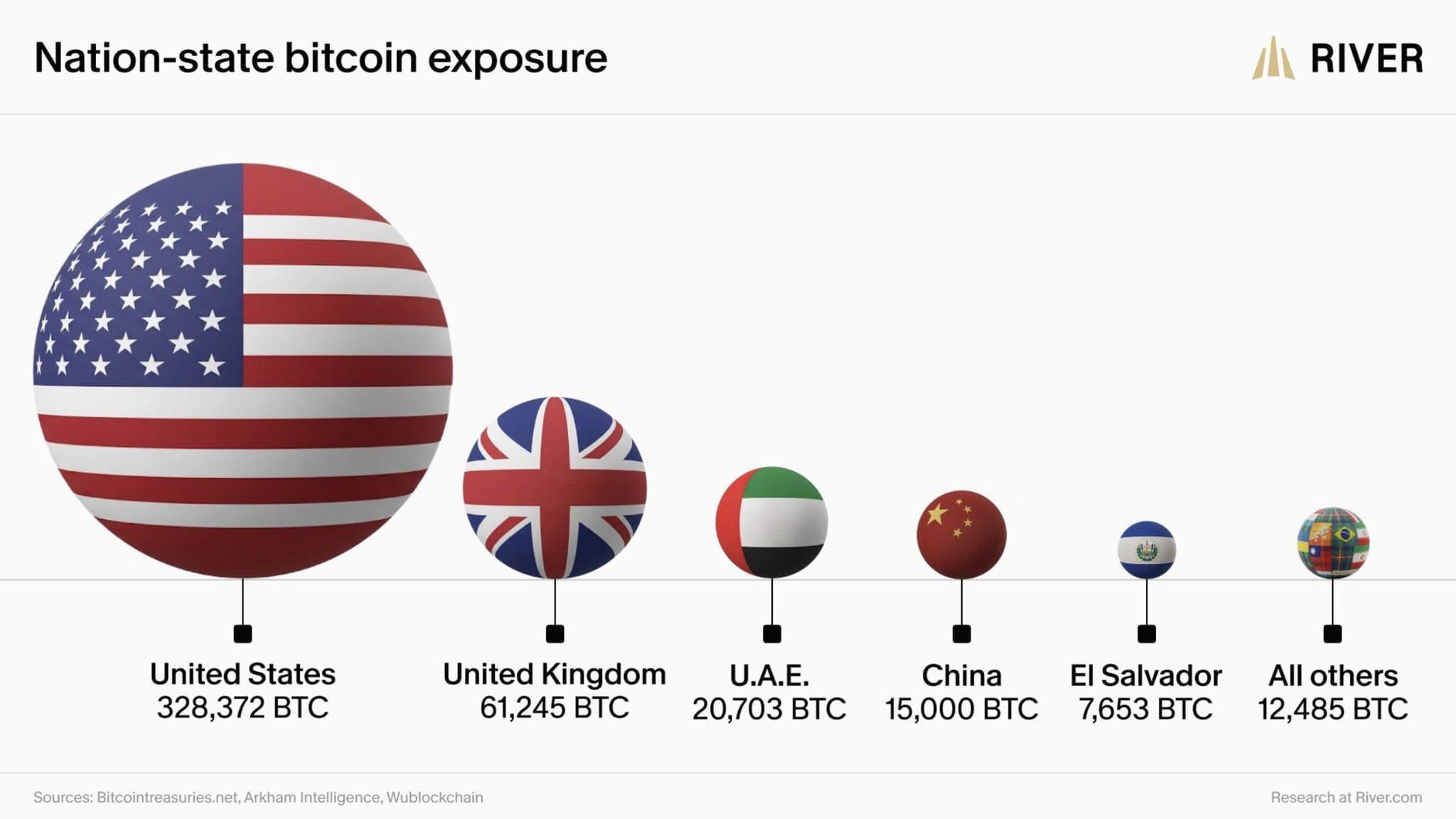
Key Highlights
- U.S. government holds over 198,000 BTC, valued at approximately $24 billion.
- Bitcoin holdings primarily stem from law enforcement seizures and asset recovery.
- The concentration of Bitcoin in U.S. hands raises market impact concerns.
The United States continues to assert its dominance in global Bitcoin holdings, with recent estimates indicating that the U.S. government controls over 198,000 BTC, valued at around $24 billion. This figure significantly surpasses the combined reserves of many other countries, reinforcing the U.S.'s leading position in sovereign cryptocurrency ownership.
The majority of these Bitcoin holdings originate from law enforcement actions, including seizures linked to cybercrime, fraud, and other illegal activities. Over the years, U.S. authorities have confiscated substantial amounts of cryptocurrency through various operations, including forfeiture proceedings and asset recovery efforts. This trend underscores the growing importance of Bitcoin within the global financial landscape, transitioning from an experimental digital currency to a recognized asset class.
Supporters of Bitcoin argue that the U.S. government's substantial holdings reflect the asset's increasing legitimacy and strategic significance. Many believe that sovereign ownership indicates a recognition of Bitcoin's value as a digital asset, despite ongoing regulatory debates surrounding its use and classification. The U.S. has periodically sold portions of its confiscated Bitcoin through public auctions, yet it has retained significant reserves, leading to speculation about future policy decisions regarding these assets.
International comparisons reveal a stark contrast between the United States and other nations regarding Bitcoin holdings. While several countries have begun to invest in Bitcoin, few approach the scale of American reserves. This concentration of Bitcoin ownership has sparked discussions about the potential market impact of future government transactions, particularly as the cryptocurrency market continues to evolve.
Bitcoin's inherent scarcity, with a fixed maximum supply of 21 million coins, remains a critical factor driving interest in the asset. Proponents often liken Bitcoin to digital gold, arguing that its limited availability enhances its long-term value proposition. The growth of institutional adoption, including exchange-traded funds and corporate treasury allocations, has further solidified Bitcoin's position in the financial ecosystem, expanding its reach beyond its original user base.
However, government ownership of Bitcoin also raises important policy questions. Regulators face the challenge of balancing law enforcement responsibilities with market stability concerns and broader digital asset strategies while managing substantial cryptocurrency reserves. As Bitcoin matures as an asset class, the implications of sovereign holdings will likely remain a focal point for investors seeking insights into future regulatory and market developments.
Published by Banx Network. This article is part of the Banx decentralized media programme, powered by the BXE token on the XRP Ledger.