

Key Highlights
- UN Secretary-General António Guterres emphasizes the need for responsible AI development.
- International cooperation is deemed essential for ethical AI governance.
- The UN warns of potential risks associated with rapid AI advancements.
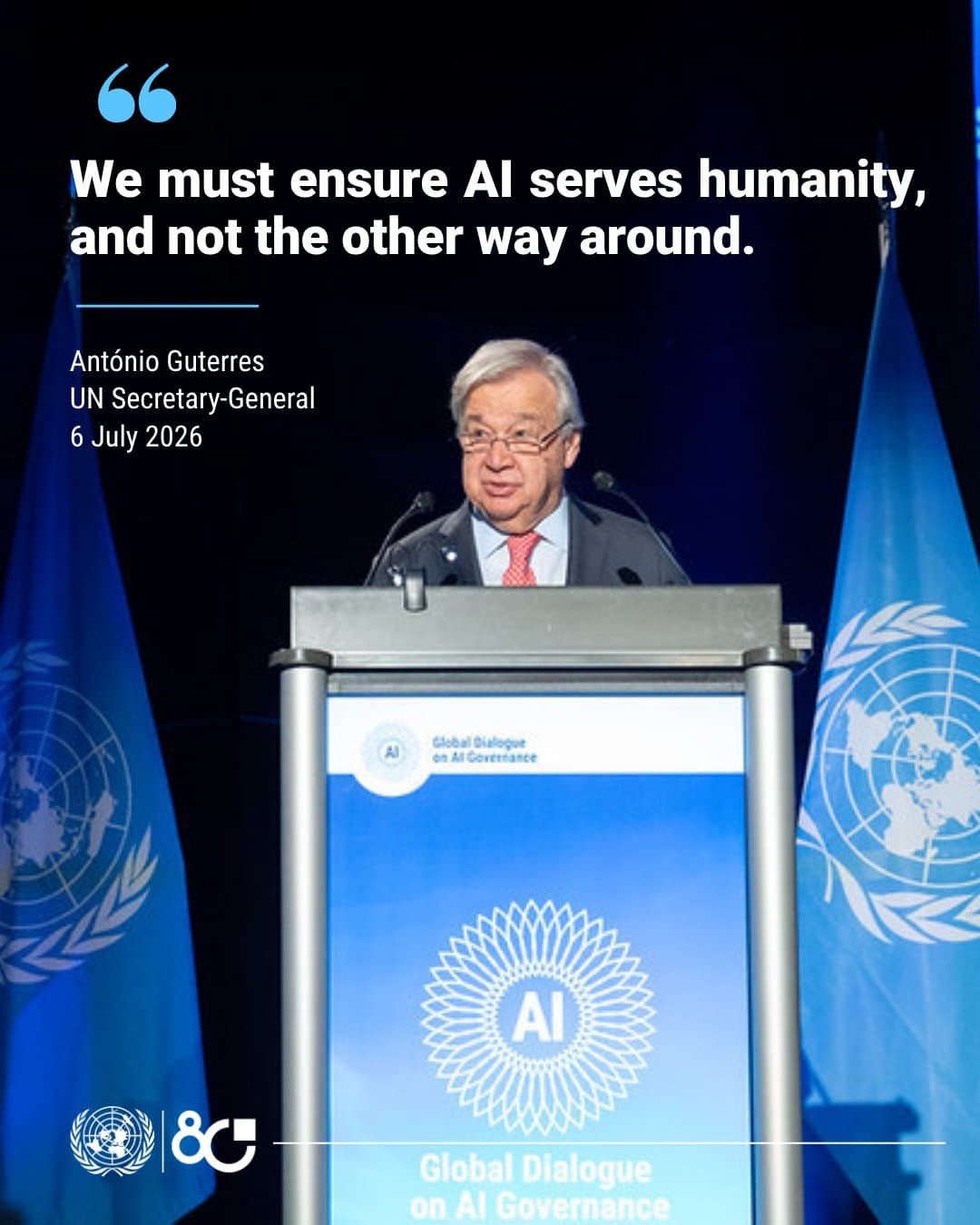
The United Nations has renewed its calls for stronger international cooperation on artificial intelligence, emphasizing that the world may be approaching a pivotal moment in determining how humans and advanced AI systems will coexist. During discussions on global AI governance, UN Secretary-General António Guterres stressed that artificial intelligence must remain focused on benefiting humanity rather than creating new risks.
Guterres's comments were made in the context of a broader dialogue involving policymakers, researchers, and technology leaders who examined the rapid pace of AI development. The UN argues that international coordination is necessary to establish ethical standards, improve transparency, and reduce potential harms associated with increasingly capable AI systems. This call for action comes as AI technologies continue to evolve and permeate various sectors.
Artificial intelligence is already transforming industries such as healthcare, education, manufacturing, finance, and scientific research. While these advancements offer significant economic and social benefits, experts also warn about challenges involving misinformation, cybersecurity, privacy, employment, and autonomous decision-making. The UN's position highlights the dual-edged nature of AI technology, where the potential for innovation must be balanced against the risks it poses.
To address these challenges, the United Nations supports the creation of international governance frameworks that encourage innovation while ensuring AI systems remain safe, accountable, and aligned with human values. Cooperation between governments, technology companies, and academic institutions is considered essential for achieving these goals. The UN's advocacy for a collaborative approach underscores the complexity of AI regulation and the need for diverse stakeholder engagement.
Major AI developers have similarly acknowledged the importance of thoughtful regulation, although opinions differ regarding implementation. Policymakers worldwide continue to debate licensing systems, transparency requirements, and safety testing for advanced AI models. This ongoing discourse reflects the urgency of establishing a regulatory environment that can keep pace with technological advancements.
As investment in artificial intelligence accelerates globally, the need for internationally recognized standards is becoming increasingly urgent. Many experts believe that decisions made during the coming years will shape AI's long-term impact on economies, societies, and global security. The UN's latest appeal reinforces a growing international consensus that artificial intelligence should be developed responsibly to maximize benefits while minimizing risks for future generations.
The UN's call for responsible AI development is not just a plea for caution; it is a recognition of the transformative power of AI and the responsibility that comes with it. As nations grapple with the implications of AI technology, the UN's emphasis on cooperation and ethical governance serves as a guiding principle for navigating this complex landscape.
Published by Banx Network. This article is part of the Banx decentralized media programme, powered by the BXE token on the XRP Ledger.




