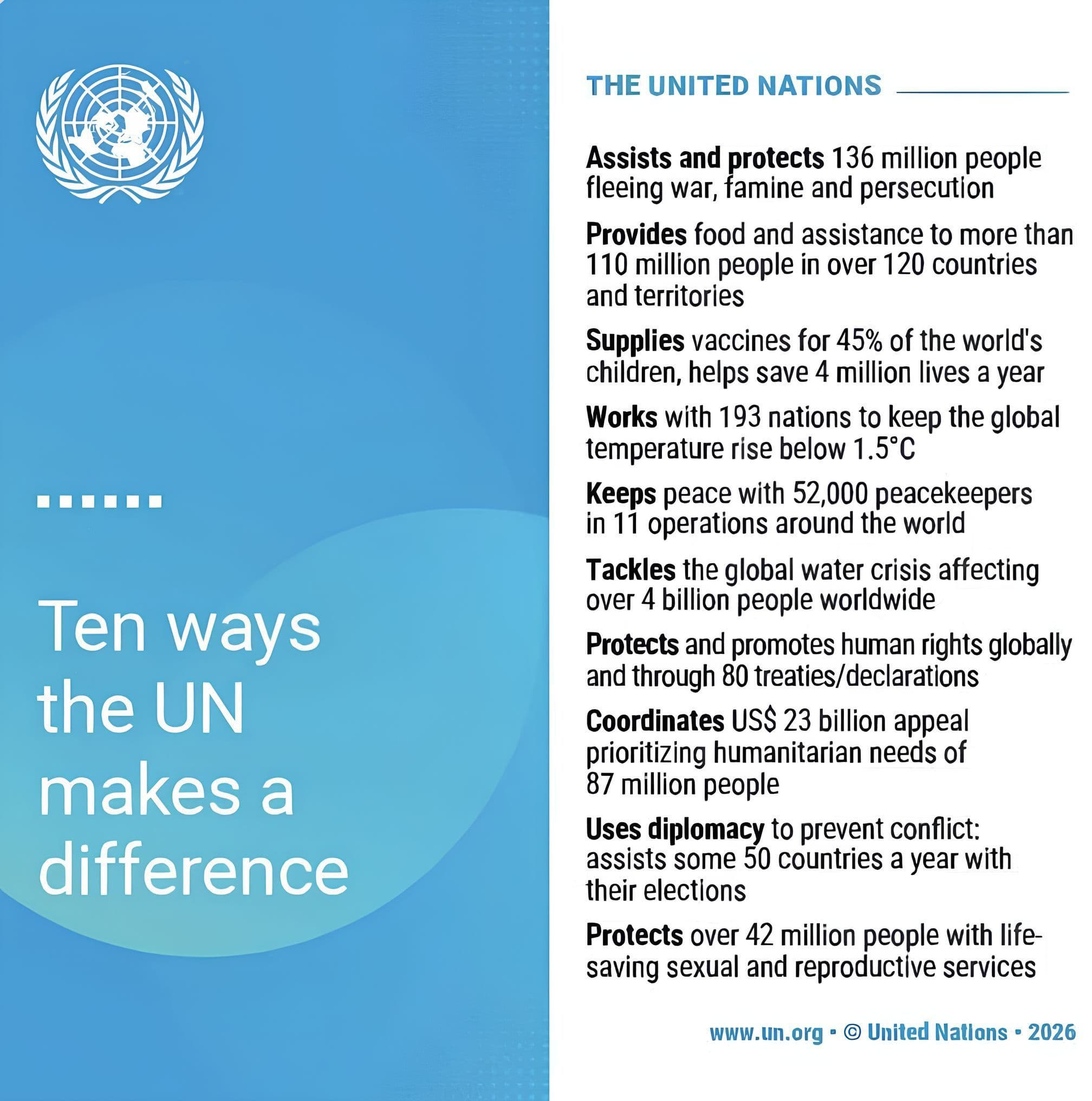
The United Nations has renewed its message promoting peace, dignity, equality, and sustainable development while highlighting the organization's broad humanitarian mission. Through its Geneva office and global network, the UN continues supporting millions of people affected by conflict, poverty, natural disasters, displacement, and climate-related challenges across more than 190 member states. UN agencies coordinate emergency food assistance, refugee protection, peacekeeping missions, disease prevention, education initiatives, and development programs. Organizations such as the World Food Programme, UNICEF, UNHCR, WHO, and UNDP collectively provide humanitarian support to vulnerable populations while working alongside governments and non-governmental organizations. In addition to emergency relief, the United Nations promotes long-term development through initiatives focused on healthcare, education, climate resilience, clean water, economic opportunity, and human rights. Many of these efforts contribute toward achieving the Sustainable Development Goals established by member states. Despite ongoing challenges involving funding shortages and complex geopolitical conflicts, the UN remains one of the world's largest multilateral institutions dedicated to international cooperation. Peacekeeping operations continue operating in several regions while diplomatic efforts seek negotiated solutions to armed conflicts and humanitarian crises. The organization's latest communications emphasize that lasting progress depends upon cooperation among governments, international institutions, civil society, and local communities. As global challenges become increasingly interconnected, coordinated international responses remain central to the UN's mission.
Published by Banx Network. This article is part of the Banx decentralized media programme, powered by the BXE token on the XRP Ledger.