On that fragile edge where sky meets ice, there is often a stillness that invites reflection — like the moment before dawn when the world seems to hold its breath. In Antarctica’s far south, at the serene realm of Lake Untersee, this quiet is not silence alone but a backdrop rich with stories written in ice and water. Underneath a perennial cover of frost, life persists in unlikely places, and drawing closer to its hidden rhythms is something that demands patience, care, and reverence.
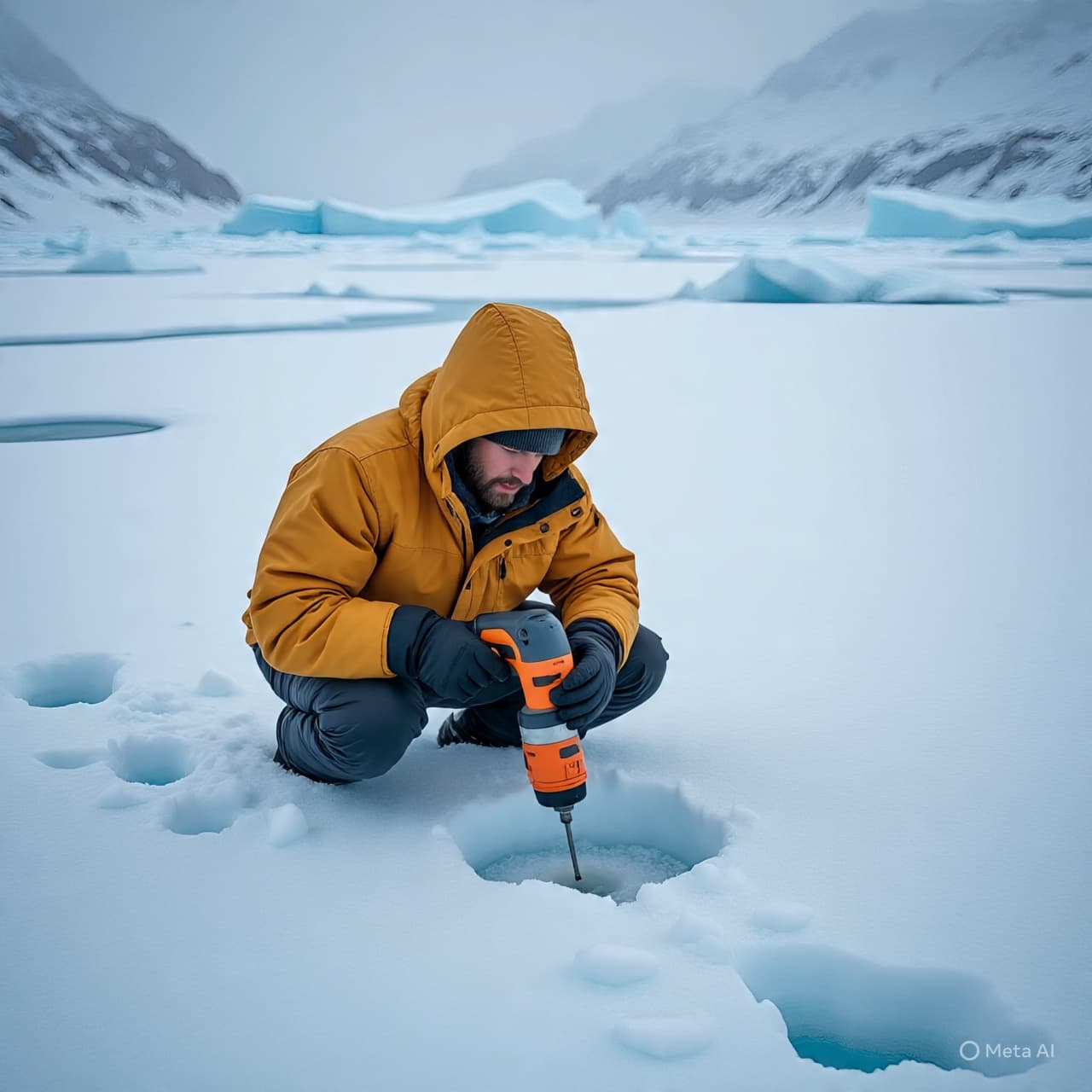
This February, astrobiologist Dale Andersen and his team once again made that slow approach beneath the ice, penetrating a realm as distant in character as it is in geography. After navigating drifting snow and gusty winds that seemed to test both gear and spirit, they returned to hard, clear ice that served as the gateway to one of Earth’s most secluded aquatic ecosystems. With careful preparation, they melted a dive hole through meters of solid ice — an act that felt less like breaching a barrier than like turning a page in a long unread book.
When Andersen stepped through that fragile opening into the dim world below, it was as if time itself softened its march. The water bore a calm deep‑blue hush, illuminated gently by carefully placed lights, revealing contours of microbial mats and towering stromatolites — structures shaped by life long before larger creatures wandered Earth’s surface. In those shapes and textures, there is an uncanny echo of ancient biospheres, hinting at strategies of adaptation that have endured for eons.
Yet this was not exploration for spectacle; it was meticulous science carried out with both curiosity and respect. Sediment cores and microbial mat specimens were collected — tangible threads that connect the frozen present to the biological past, and that offer clues about how life might persist under other icy worlds in our solar system. Beneath the ice, the gentle rhythm of life seemed to stretch time, reminding us that living systems can flourish even where sunlight barely reaches.
The team’s work extended beyond the lake itself. Colleagues gathered ice samples from the Anuchin Glacier, scanned air for microscopic genetic traces, and mapped subtle shifts in ice surfaces and water levels. These efforts are part of a broader tapestry, weaving together questions about dispersal, survival, and the hidden boundaries of habitability in extreme environments.
As the season transitions toward its close and the camp begins to shrink back toward the logistical airbase, the quiet urgency of discovery remains with them. What they have learned beneath the ice will travel far beyond these windswept plains — into laboratories, into conversations about the nature of life on Earth and beyond, and into the imagination of those who ponder what lies beneath the ice of distant worlds.
AI Image Disclaimer Illustrations were produced with AI and serve as conceptual depictions.
Sources Astrobiology (field report) NASA Watch Astrobiology Field Reports archives
Published by Banx Network. This article is part of the Banx decentralized media programme, powered by the BXE token on the XRP Ledger.