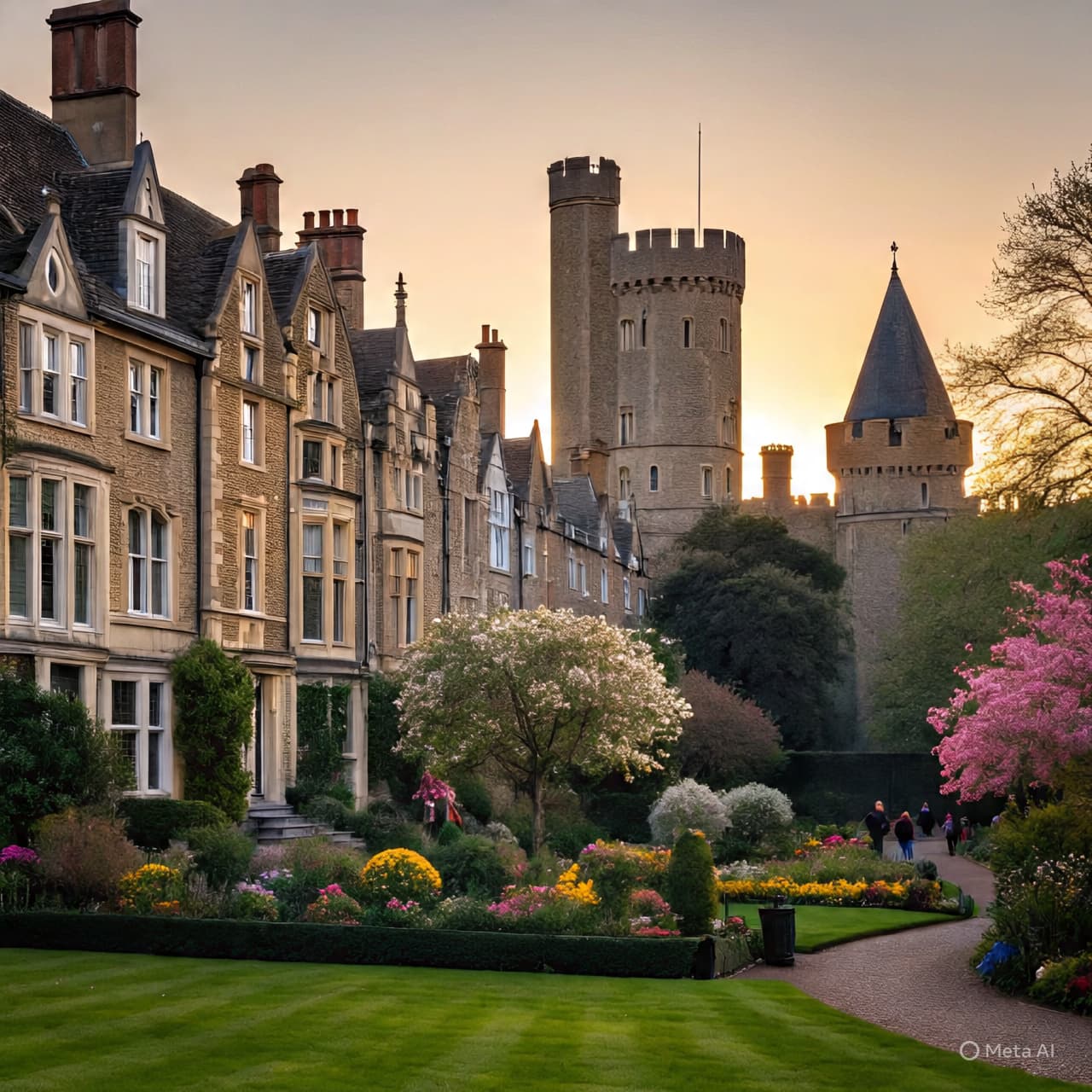
Morning mist lingers over the lawns of Windsor, softening the outlines of stone walls and clipped hedges. The town wakes gently—school runs, café doors opening, the distant chime of church bells—while, not far from the castle’s familiar silhouette, a different kind of watch continues. Police vans remain parked along a quiet stretch of road, their presence subdued but unmistakable.
For a third consecutive day, officers have been conducting a search at the former residence of Prince Andrew in Windsor. The property, long associated with the Duke of York before he stepped back from public duties, has become the focus of an active investigation. Authorities have confirmed the ongoing operation but have offered limited detail about its scope, citing the integrity of inquiries still underway.
The search has unfolded methodically. Forensic teams have been seen entering and exiting the gated grounds, equipment carried in measured procession. Tents have been erected in parts of the garden, shielding areas from public view. Neighbors describe a steady rhythm rather than urgency—officers working in shifts, the perimeter maintained with quiet efficiency.
Prince Andrew, who withdrew from official royal responsibilities in 2019 amid controversy surrounding his associations, no longer resides at the Windsor home in question. In recent years, he has reduced his public profile significantly, relinquishing military titles and royal patronages and refraining from the use of “His Royal Highness” in official contexts. The current search, however, is not framed by officials as a revival of earlier controversies but as part of a separate investigative process.
Police statements have emphasized that no arrests have been made in connection with the search and that inquiries are ongoing. Under British law, such operations may extend over several days when properties are large and documentation extensive. Legal analysts note that prolonged searches do not in themselves signal conclusions; they often reflect procedural thoroughness rather than dramatic discovery.
In Windsor, where the presence of the royal family has long shaped the town’s cadence, the spectacle is subdued. Tourists continue to gather near the castle gates, cameras raised toward battlements that have stood for centuries. Yet a few streets away, the modern machinery of law enforcement moves carefully through rooms once furnished for private life.
The intersection of monarchy and investigation has always carried a particular resonance in Britain. The Crown stands at the symbolic center of the nation’s constitutional order, yet individual members of the royal family remain subject to the same legal processes as any citizen. That balance—between reverence and rule of law—often reveals itself most clearly in moments like these, when procedure proceeds without commentary.
Officials have not disclosed what prompted the search or how long it may continue. As the third day draws toward evening, floodlights illuminate sections of the grounds while officers confer near marked vehicles. Inside the property, evidence technicians catalog and document, their work deliberate and largely unseen.
For now, the facts remain limited: a police search entering its third day, a former royal residence at its center, and an investigation still unfolding. In Windsor, dusk settles over stone and lawn alike, and the town resumes its familiar quiet. Whatever conclusions may eventually emerge will come in statements and filings. Until then, the scene remains one of patience—an inquiry conducted in the shadow of history, steady and unresolved.
AI Image Disclaimer Illustrations were created using AI tools and are not real photographs.
Sources BBC News Sky News The Guardian Reuters Thames Valley Police
Published by Banx Network. This article is part of the Banx decentralized media programme, powered by the BXE token on the XRP Ledger.