
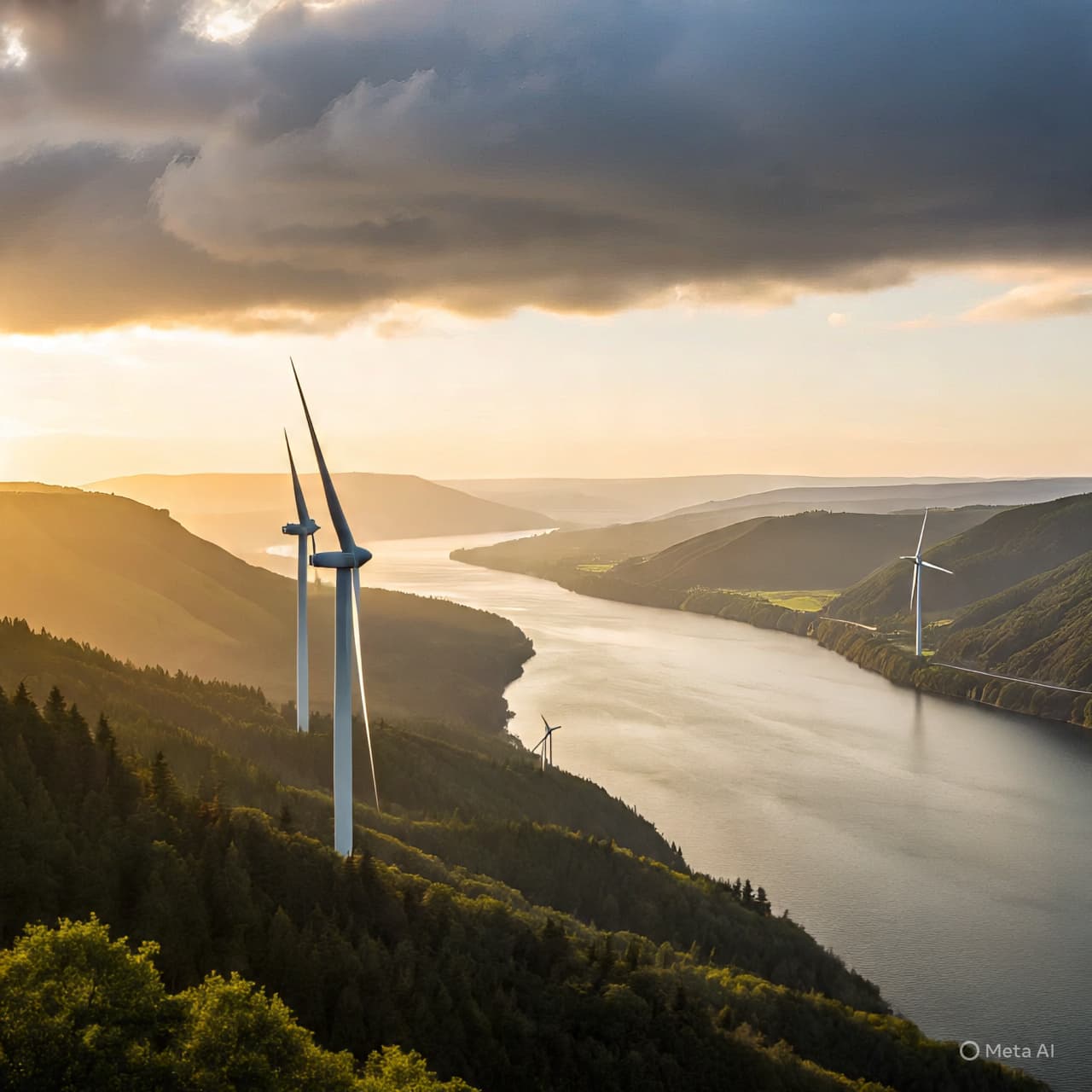
In the early light over Portland’s skyline, transmission lines stretch east toward the Columbia River Gorge, where wind moves almost constantly between basalt cliffs. South of the city, rooftops catch the pale glow of morning sun. The Pacific Northwest has long lived with the presence of power — in rivers harnessed by dams, in turbines turning against gray skies — and this week, that quiet current took on a new momentum.
Portland General Electric announced what it describes as the largest single expansion of renewable energy resources in its history, adding hundreds of megawatts of new wind, solar, and battery storage capacity to its portfolio. The move marks a significant step in the utility’s long-term plan to reduce emissions and meet Oregon’s clean energy mandates.
The additions include new solar installations in eastern Oregon, expanded wind capacity in established energy corridors, and large-scale battery systems designed to store excess electricity for use during periods of peak demand. Together, the projects represent one of the most substantial clean energy buildouts in the utility’s decades-long operation.
Oregon law requires major utilities to eliminate greenhouse gas emissions from retail electricity sales by 2040, a timeline that has accelerated planning across the state’s energy sector. For PGE, which serves more than 900,000 customers, that transition has meant steadily retiring coal-fired power sources, increasing renewable procurement, and modernizing grid infrastructure.
Battery storage, once a niche technology, now plays a central role in that strategy. Solar and wind generation fluctuate with weather and daylight; batteries allow utilities to smooth those variations, storing surplus energy and releasing it when clouds gather or demand rises on winter evenings. In recent years, falling battery costs and improved performance have made large installations economically viable at scale.
Company officials say the new projects will provide power equivalent to hundreds of thousands of homes annually, while also supporting local construction jobs and long-term operations roles. The investments come amid broader regional efforts to integrate renewable resources across the Western grid, where states are increasingly coordinating transmission planning to accommodate growing clean energy capacity.
Yet the transition is not without complexity. Expanding renewable generation requires careful siting to balance environmental protection, agricultural land use, and community concerns. Transmission lines must be upgraded to carry power from remote wind and solar farms to urban centers. Utilities must also maintain reliability during extreme weather events, which climate change has made more frequent.
For customers, the transformation may be subtle at first — reflected in utility filings, rate discussions, and the gradual reshaping of the landscape beyond city limits. Wind turbines continue their measured rotation; solar arrays extend in orderly rows across open ground. Batteries, often housed in unassuming containers, hum quietly at substations.
The scale of this latest addition signals both ambition and necessity. Electricity demand is expected to grow in coming years as transportation and heating systems electrify. Data centers, heat pumps, and electric vehicles will draw more from the grid, even as policymakers push for lower emissions.
In that context, PGE’s announcement feels less like a single milestone and more like a waypoint in an ongoing rebalancing of how power is made and delivered. The Northwest’s rivers will continue to run, and winds will sweep through the Gorge. Increasingly, the region’s energy future will be written in sunlight and stored in steel-lined batteries.
As the day brightens and the city stirs, the flow of electricity remains invisible, moving through cables and circuits with steady persistence. What changes is its origin — a gradual shift from combustion to current, from smoke to motion — carried forward on the same lines that have long defined the landscape.
Published by Banx Network. This article is part of the Banx decentralized media programme, powered by the BXE token on the XRP Ledger.


.jpg&w=3840&q=75 "India Says First Phase of U.S. Trade Deal Is Nearly Done, Seeks Edge Over Rivals")