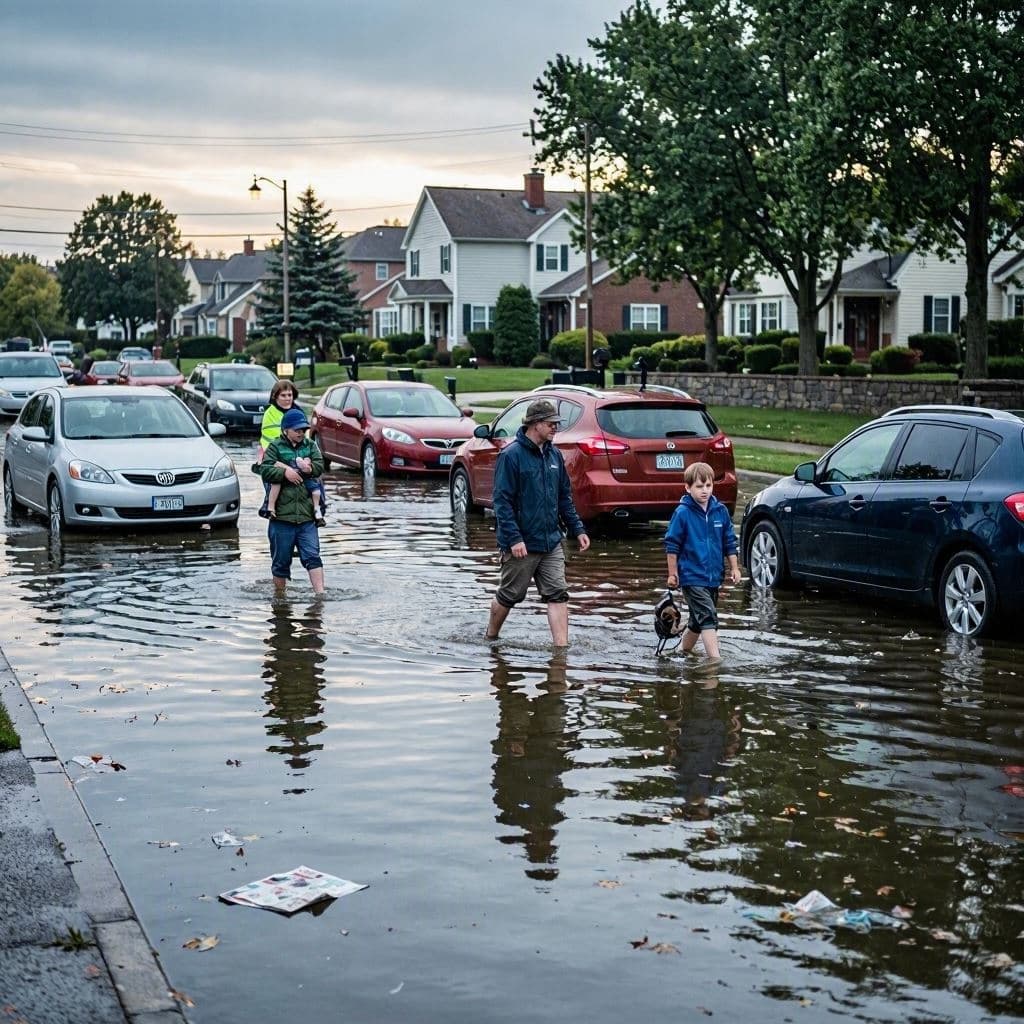
In coastal Connecticut, where the rhythm of life is often dictated by the tides and the seasons, a sudden deluge transformed familiar streets into rushing rivers. Westport, a town known for its charm and proximity to the Long Island Sound, was hit hard by flash flooding after five to six inches of rain fell in just a few hours. The intensity of the storm overwhelmed drainage systems, leaving residents wading through water and dealing with the aftermath of nature’s unexpected fury.
The rainfall, which occurred over a short period, exceeded the capacity of local infrastructure. Roads became impassable, basements filled with water, and some vehicles were stranded in rising currents. Emergency responders worked tirelessly to assist those in distress, performing rescues and ensuring that no lives were lost. The speed at which the water rose caught many off guard, highlighting the vulnerability of even well-prepared communities to extreme weather events.
Climate scientists note that such intense precipitation events are becoming more frequent due to climate change. Warmer air holds more moisture, leading to heavier downpours when storms occur. For towns like Westport, this means adapting to a new normal where flood risks are higher and more unpredictable. The recent storm serves as a practical example of why infrastructure upgrades and emergency planning are increasingly critical.
Local officials have declared a state of emergency in affected areas, mobilizing resources for cleanup and recovery. Public works crews are clearing debris and repairing damaged roads, while utility companies work to restore power to any outages. The community has rallied together, with neighbors helping each other pump out basements and share supplies. This spirit of cooperation is a hallmark of small-town resilience.
For businesses along Main Street, the flooding caused significant disruption. Shops had to close temporarily, and inventory was damaged by water intrusion. The economic impact, while temporary, is felt deeply by local entrepreneurs who rely on daily foot traffic. Insurance claims are expected to rise, adding financial pressure to those already dealing with the physical cleanup.
Environmental advocates are using this event to push for greener infrastructure solutions, such as permeable pavements and expanded wetlands, which can absorb excess rainwater. They argue that investing in natural defenses is not just an environmental imperative but an economic one, reducing the cost of disaster recovery in the long run. The conversation around sustainability is gaining urgency in the wake of such storms.
As the waters recede, Westport begins the process of drying out and rebuilding. The memory of the flood will likely influence future zoning and construction decisions, aiming to make the town more resilient to similar events. For now, the focus is on restoration and supporting those who suffered losses. In the face of nature’s power, the community stands firm, ready to adapt and endure.
AI Image Disclaimer: The visual content in this article is AI-generated to depict the effects of flash flooding and community response.
Sources: CT Post, NBC Connecticut, Weather Channel
Published by Banx Network. This article is part of the Banx decentralized media programme, powered by the BXE token on the XRP Ledger.