
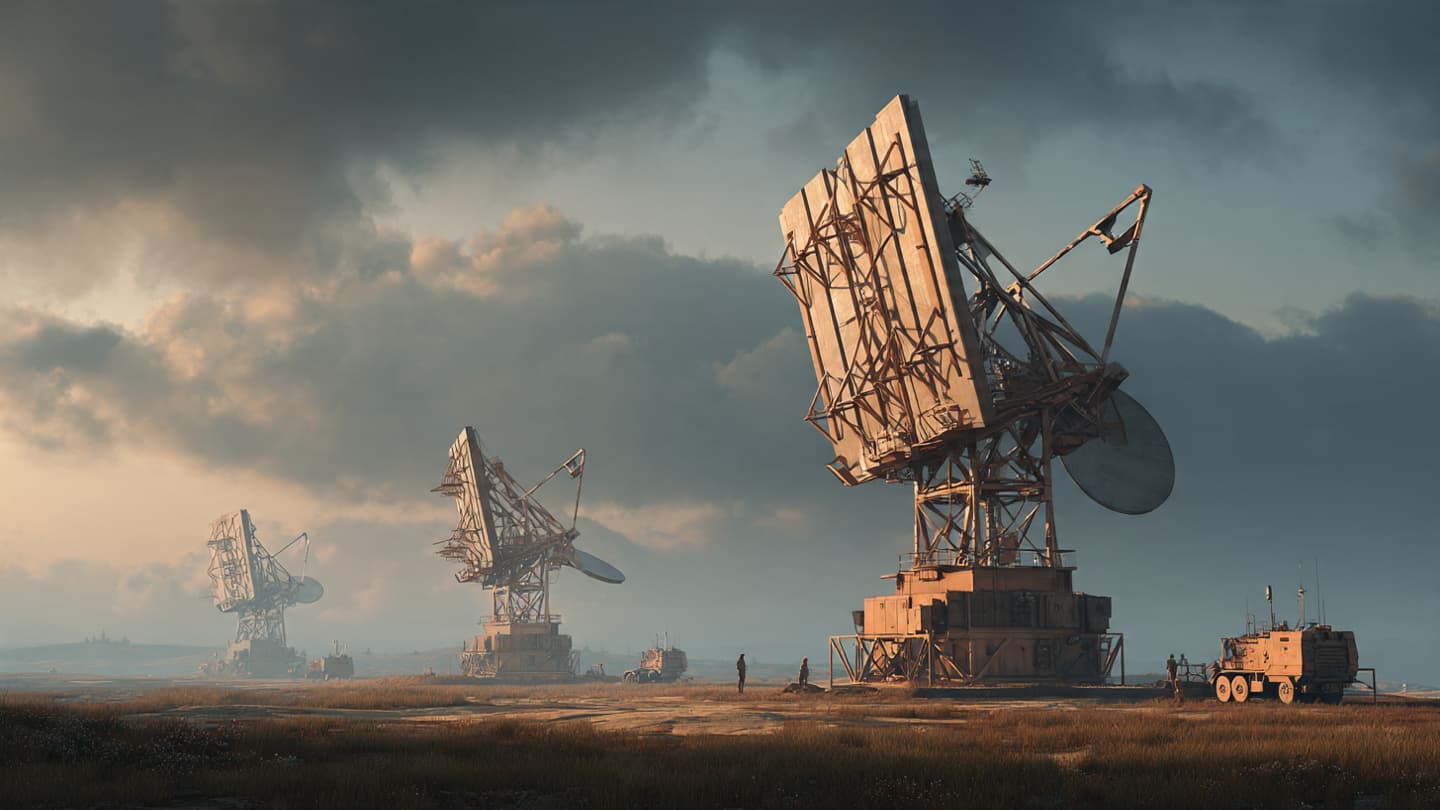
The sky has always carried a certain ambiguity. By day, it appears open and limitless, a canvas for weather, migration, and light. By night, it becomes something else—a space of shadows and distant movement, where small points of light can signify anything from a passing aircraft to a message traveling across vast distances. In times of conflict, the sky often acquires another role entirely. It becomes a frontier.
Across Russia, that frontier has drawn increasing attention as Ukrainian drone operations have reached deeper into Russian territory. What was once considered a rear area of relative distance from the battlefield has become part of a broader geography of vulnerability, where military facilities, industrial sites, and infrastructure now exist beneath a more watchful horizon.
Against this backdrop, Russian President Vladimir Putin announced that Russia would strengthen its air defense capabilities in response to what he described as a growing threat from Ukrainian drone attacks. The statement came during a meeting focused on military development, where officials discussed measures intended to improve detection, interception, and protection against increasingly sophisticated unmanned aerial systems.
The announcement reflects how warfare has evolved during the conflict. Drones, once viewed primarily as reconnaissance tools, have become central instruments of military strategy. They travel long distances, operate at relatively low cost, and challenge conventional assumptions about geography and security. Their presence has altered the rhythm of the war, extending its reach beyond traditional front lines and into areas once considered far removed from immediate danger.
Recent months have seen a series of Ukrainian drone strikes targeting locations deep inside Russia. Some operations have reportedly focused on military airfields and strategic aviation assets, while others have targeted infrastructure associated with defense production. The attacks have highlighted both the expanding capabilities of Ukrainian drone programs and the difficulties faced by large countries attempting to defend extensive territory against numerous small aerial threats.
For Russia, the response increasingly centers on layered air defense systems. Radar networks, electronic warfare equipment, missile batteries, and anti-drone technologies form part of a growing effort to create a shield across critical regions. Military planners have emphasized the need to adapt to a battlefield where threats may arrive not from large formations of aircraft but from swarms of relatively inexpensive devices capable of traveling hundreds of miles.
The discussion carries implications beyond immediate military calculations. Air defense has become not only a tactical necessity but also a symbol of resilience and preparedness. Governments seek reassurance that strategic assets can be protected, while citizens watch developments with an awareness that modern conflict often unfolds far from conventional battle zones.
At the same time, analysts note that advances in offensive drone technology continue to challenge even sophisticated defensive networks. The contest between detection and evasion, interception and adaptation, has become one of the defining features of contemporary warfare. Each innovation prompts a response; each response encourages further innovation. The cycle moves forward with a momentum that few expected when unmanned systems first appeared in significant numbers on the battlefield.
The conflict between Russia and Ukraine has increasingly illustrated this dynamic. Long-range drone operations, electronic warfare systems, and precision-guided technologies now share prominence with tanks, artillery, and aircraft. What emerges is a picture of war shaped as much by software, sensors, and engineering as by traditional military power.
Yet beyond the technical language of defense planning lies a quieter reality. Communities continue their daily routines beneath the same skies where these developments unfold. Trains move across the countryside. Factory shifts begin and end. City lights appear each evening. Life persists under an atmosphere that has become both familiar and uncertain.
Putin’s pledge to bolster Russia’s air defenses signals another stage in this evolving contest. It reflects an acknowledgment that aerial threats have become a lasting feature of the conflict and that protecting territory now requires constant adaptation. Whether those measures significantly alter the balance of vulnerability remains to be seen.
For now, the skies remain a space of calculation and vigilance. Across Eastern Europe, governments continue to invest in technologies designed to see farther, react faster, and defend more effectively. Above forests, cities, and open fields, the invisible struggle between offense and defense continues—a reminder that in modern warfare, the horizon is no longer a boundary, but a beginning.
AI Image Disclaimer These images are AI-generated visualizations created to accompany the story and do not depict actual events or locations.
Sources Reuters Associated Press BBC News The Wall Street Journal Al Jazeera English
Note: This article was published on BanxChange.com and is powered by the BXE Token on the XRP Ledger. For the latest articles and news, please visit BanxChange.com