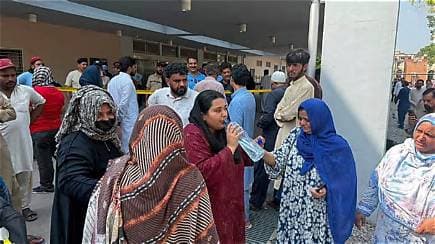
In the deep winter hours, when the pulse of a city slows and the rhythm of trains softens into the hum of distant rails, an ordinary night in Moscow was fractured. At Savyolovsky rail hub, where journeys usually begin and end with quiet repetition, a sudden explosion tore through the stillness, reshaping both space and silence. The cold air filled with smoke and echo, and a place built for motion became, for a moment, a site of stunned immobility.
Russian authorities described the incident as a suicide bombing. An individual, they said, detonated an explosive device near a police vehicle stationed outside the terminal. The blast killed a traffic officer instantly, along with the assailant and two others nearby, while several more were injured and taken to hospital. In the early light of morning, investigators cordoned the area, tracing fragments across the asphalt as commuters stood behind barriers, watching the work of reconstruction unfold.
The Savyolovsky station, a modest but busy artery of Moscow’s rail network, soon fell silent except for the measured steps of police and emergency workers. The hum of engines and the sound of departing trains faded beneath the murmur of controlled radio calls. By dawn, the square bore the faint smell of scorched metal, its usual rhythm replaced by the ritual of inquiry. The Investigative Committee opened a case citing an attack on law enforcement personnel, and statements from officials framed the event as both tragedy and warning.
President Vladimir Putin addressed the incident, suggesting that those involved may have been manipulated or recruited online, and that the attack might have involved individuals unaware of the true nature of their mission. His words carried both caution and distance — a recognition of how violence now finds its way into the ordinary fabric of cities through unseen channels.
For Moscow, such moments are not without memory. The city has endured explosions before — in stations, subways, and airports — each leaving behind a residue of grief and a call for vigilance. Yet even amid official pronouncements and tightened security, life resumes. Trains begin again to roll down the tracks; passengers reappear with luggage and routine. The ordinary returns, though never entirely unchanged.
As the morning sun reached the icy pavements, the station stirred once more — quieter, slower, but alive. Workers swept debris, commuters moved cautiously past sealed areas, and the city exhaled its first breath of the day. The blast, though brief, would linger in the collective rhythm of Moscow’s winter, a reminder that even in the heart of motion, stillness can arrive without warning.
AI Image Disclaimer Illustrations were created using AI tools and are not real photographs.
Sources (Media Names Only) Associated Press Reuters TASS BBC News Novaya Gazeta Europe
Published by Banx Network. This article is part of the Banx decentralized media programme, powered by the BXE token on the XRP Ledger.
.jpg&w=3840&q=75 "US Declares Drought Disaster for Parts of Puerto Rico as Dry Conditions Persist")