
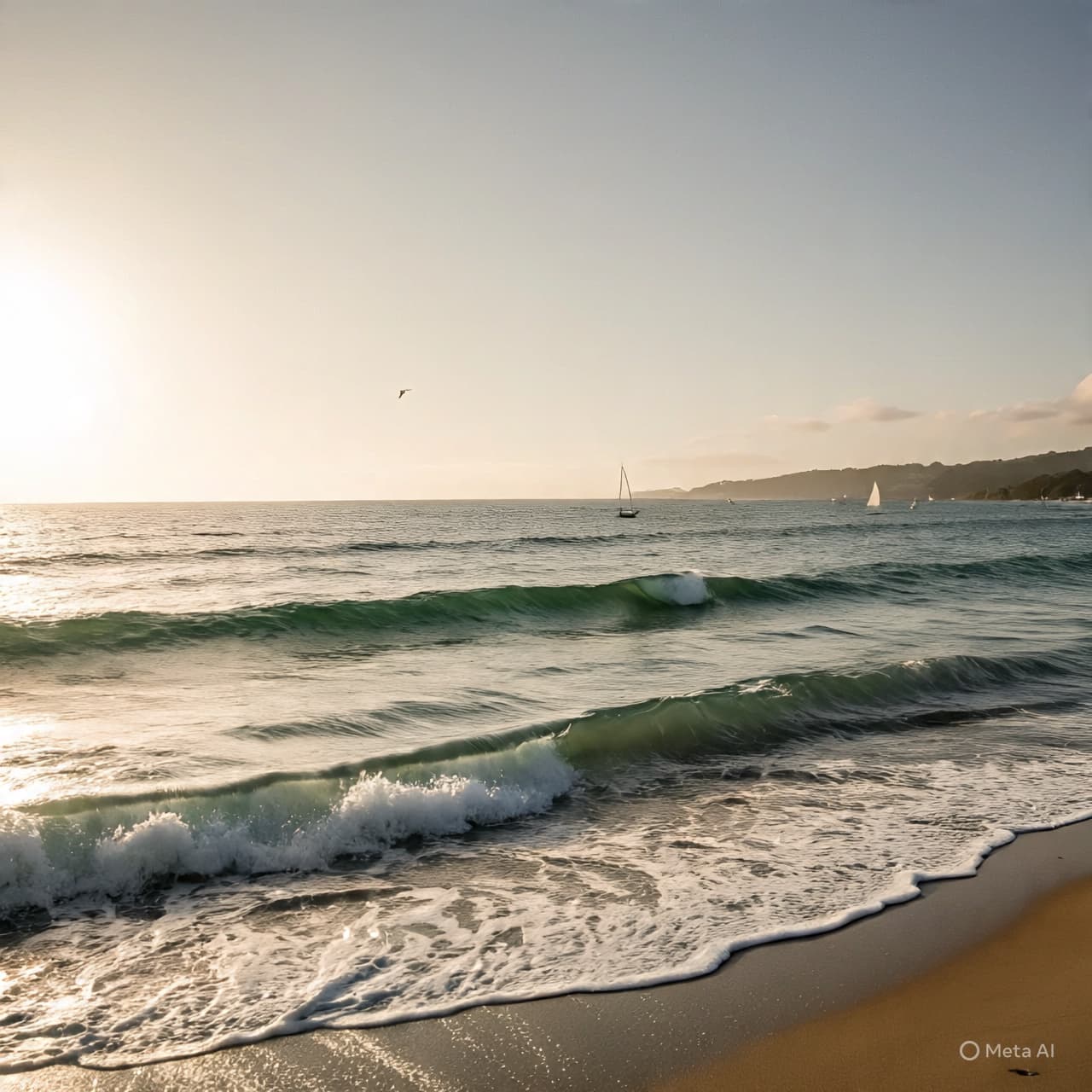
In the slow shimmer of afternoon sunlight on the Indian Ocean, when the water’s breath seems fresh with promise and the horizon seems deceptively calm, there are moments when the sea’s quiet rhythm becomes something else entirely. For one family from Western Australia, a seaside outing that began as a simple brush with sun and saltwater drifted into a struggle against the ocean’s deep pulse. In that shifting expanse between shore and open water, decisions were made that would stretch not only bodies but belief.
The Appelbees — a mother and her three children — set out from Quindalup on a summer morning with paddleboards and a kayak, the kind of carefree arrangement familiar to many who seek relief in the embrace of waves. But winds strengthened without warning, and before long the inflatable boards and kayak were drawn far from the beach into the open sea. Where there had been laughter and light, there came a current that seemed intent on carrying them away from the safety they had known.
As hours passed and the family drifted, Joanne, the mother, faced a question that no parent wishes to encounter: how to keep her children alive amid a landscape that was turning quietly, inexorably hostile. With her younger son and daughter holding on to a paddleboard, she made what she later described as “one of the hardest decisions” of her life — to send her 13‑year‑old son, Austin, back toward shore where land, and perhaps rescue, still held its outline against the sky. The boy had never planned to swim for hours that day, but the sea’s pull left him little choice but motion and resolve.
Austin’s path to land was not swift in the way one imagines a swimmer moving in calm waters. The ocean was choppy and cold, and for much of the four‑hour journey he fought the waves with a focus born not of certainty but necessity. At first he tried to paddle an inflatable kayak toward the distant line of beach, but as water rushed into it and slowed his progress, he shed both vessel and life jacket, opting to swim unencumbered toward the promise of shore. In his own words later, he kept telling himself simply to “just keep swimming,” a mantra that carried him through exhaustion, fear, and uncertainty.
When land finally rose before him, he sank to the sand, spent and trembling, but not defeated. With the last of his strength he ran a couple of kilometres to find a phone and alert authorities, his voice carrying a message that would soon set in motion a rescue. Back on the water, a search found his mother and siblings many kilometres offshore, exhausted but alive, their spirits sustained in part by shared determination and the belief in one another.
There is a quiet poetry in survival — in the way human will bends to circumstance without snapping, in the way small choices can shape enormous outcomes. For the Appelbee family, the ocean that had seemed to pull them away also became a measure of their collective endurance. None of them required hospital treatment after the ordeal, a detail that underlines both their fortunate escape and the astonishing nature of what they endured.
At its close, this story is not merely of waves and distant shores, but of a family’s quiet negotiation with fear and hope, of a mother’s anguished choice and a son’s long return through water and wind. In straightforward terms, a 13‑year-old boy swam for about four hours through rough ocean waters off Western Australia to get help after his family was swept out to sea, and his actions helped lead to the rescue of his mother and two younger siblings.
Visuals are AI-generated and serve as conceptual representations.
Sources (Media Names Only)
The Guardian ABC News People France24 Associated Press
Published by Banx Network. This article is part of the Banx decentralized media programme, powered by the BXE token on the XRP Ledger.


