They say the sea remembers every drop of rain — but this week, the rains came not to whisper, but to roar. Across hills, fields, and valleys of Sri Lanka, skies opened, and waters rose like a tide of sorrow. Homes that once stood on solid ground found themselves drifting in floodwaters as the storm — named Ditwah — carved a trail of destruction through the island’s heart.
From the coast inward, torrential rains brought more than 300 mm over a short span — enough to unsettle earth, topple slopes, and shatter lives. In the eastern and central regions, landslides struck without warning, burying roads, houses, and hopes. Officials confirm that at least 46 people have died, while 23 remain missing, as floodwaters and mud continue to surround entire communities.
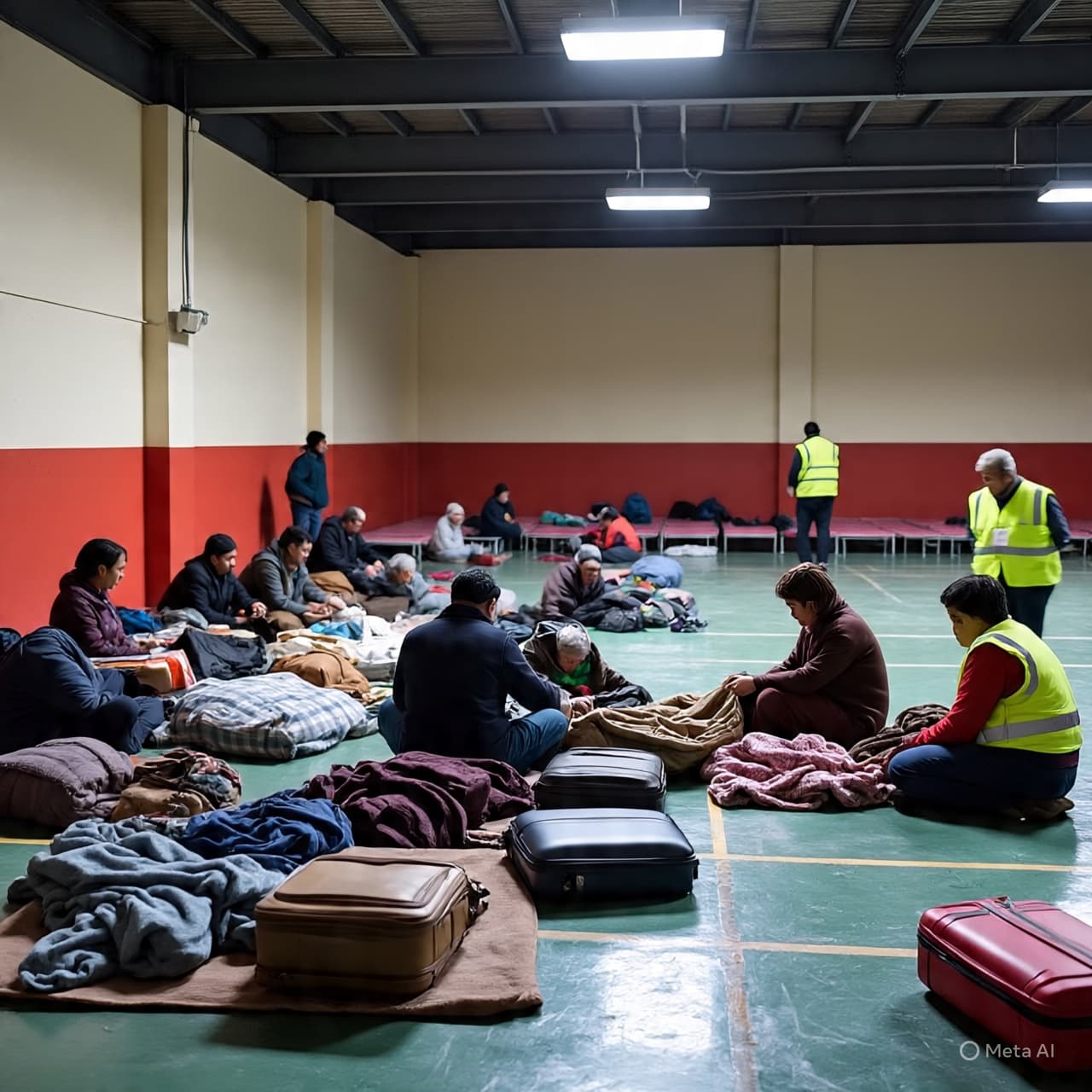
Nearly 44,000 people have been uprooted from their homes, seeking refuge in schools and public shelters made into temporary havens. In towns and villages across the island, entire streets are submerged: vehicles wade through waterlogged roads, homes stand half-submerged, and what was once everyday life — commuting, work, school — is put on hold.
In Colombo and other urban centres, the disruption is visible. Train services have been suspended; the national stock exchange halted early trades. Airports rerouted flights. Authorities warn that this may only be the start — floodwaters are expected to keep rising.
Rescue efforts are underway — military, police, and civil teams working against time. Some families were plucked from rooftops or even from coconut trees; others rescued from submerged bridges. But with roads blocked, rivers overflowing, and rain continuing, many regions remain hard to reach.
Inside shelters, the displaced grapple with loss: loss of homes, of community, of certainty. Children peer through rain-streaked windows; elders sit in damp corridors, clutching what little they could salvage. As night falls, the soft glow of candlelight reveals grief, but also solidarity — neighbours comforting neighbours, strangers offering blankets, shared meals, quiet prayers for safety.
Sri Lanka braces itself as the cyclone moves on: the threat is not yet over. Forecasts warn more rain, more flooding. The rivers are restless; the earth remains unstable. And so, in this fragile hour, the question slices through the roar of wind and water: when the waters recede, who will be left to rebuild?
AI Image Disclaimer: Illustrations were produced with AI and serve as conceptual depictions.
Sources: Reuters, Dawn, Arab News, The Business Standard, AsiaOne.
Published by Banx Network. This article is part of the Banx decentralized media programme, powered by the BXE token on the XRP Ledger.