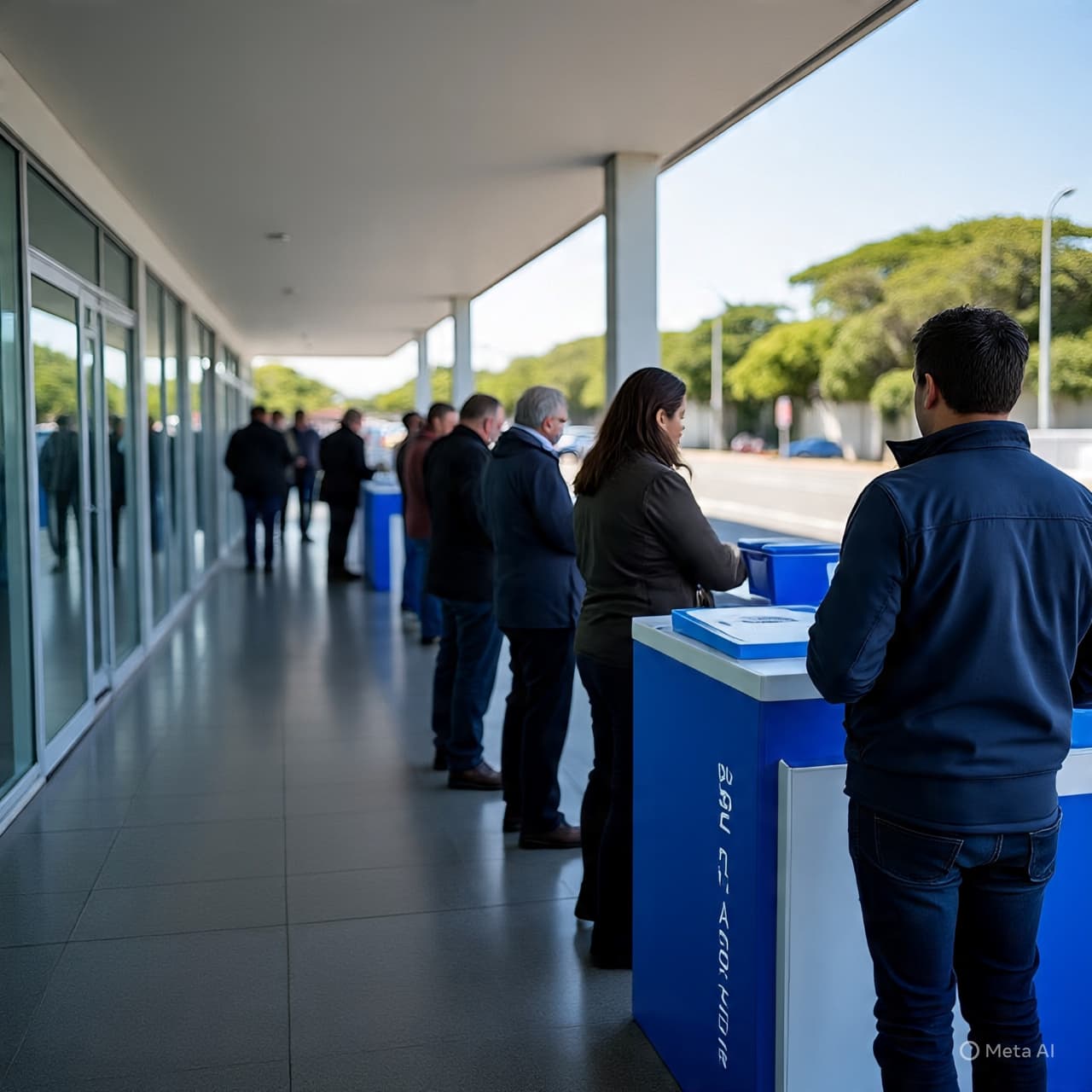
At dawn in San José, the city opened its eyes beneath a sky brushed with gray calm, as though bracing for a day that might carry the weight of something both familiar and new. In neighborhoods woven with bougainvillea and the quiet rumble of morning buses, conversations lingered on the same questions that had followed Costa Ricans to the polls: what direction, and for whom, would the nation’s compass now point?
Sunday’s vote, tallied under the watchful gaze of the Supreme Electoral Tribunal, brought clarity and a measure of surprise. Laura Fernández, a 39-year-old political scientist and protégé of outgoing President Rodrigo Chaves, claimed the presidency in a first-round victory that eluded so many of her predecessors. With roughly 48 percent of the vote—well above the 40 percent threshold needed to avoid a runoff—she rose above a crowded field of twenty candidates, her nearest rival trailing by some fifteen points.
To walk through the plazas and parks of Costa Rica now is to feel the juxtaposition of continuity and change. Supporters see in Fernández’s triumph a continuation of a political project that began with Chaves: a promise of decisive governance in a time marked by rising crime, economic unease, and a sense that the old certainties are no longer enough. Critics, in turn, hear in her campaign’s discourse echoes of leadership models abroad that have prized order over deliberation, reform over tradition. Such tensions are woven into the broader tapestry of Latin America’s current political moment, one where conservative currents have pressed forward from Chile to Argentina, reshaping expectations about governance and the boundaries of reform.
For many Costa Ricans, the rhythm of daily life carries on under the same tropical light as always: vendors set out fresh fruit at dawn, children walk to school beneath mango trees, and the pulse of Sunday traffic gives way to Monday’s steady routine. Yet in quiet cafés and on front porches, there is talk of what lies ahead—a new chapter Fernández has termed the birth of a “third republic,” a phrase that carries both promise and uncertainty. Her speeches have woven threads of firm action against crime and pledges to renew institutions, even as observers note the delicate balance between decisive leadership and robust democratic safeguards.
The results also shaped the Legislative Assembly, where Fernández’s Sovereign People’s Party is poised to command a significant presence, though it still falls short of the supermajority that would ease sweeping constitutional changes. In this nuance lies a reminder that democracy, in Costa Rica as elsewhere, is neither monolithic nor immutable. It is a work of communities and debates, of ballots counted and voices heard.
As the sun sets over the Central Valley, the quiet of another day closing might seem undisturbed, but beneath that calm there is an unfolding narrative: of a country facing its challenges with the rhythms and textures that are uniquely its own, and of a moment in time where choices cast at the polls join the long arc of history. Whether this chapter will deepen or redefine Costa Rica’s democratic traditions will become clearer with the slow turning of months, seasons, and years.
AI Image Disclaimer Visuals are AI-generated and serve as conceptual representations.
Sources Agence France-Presse Reuters The Guardian Supreme Electoral Tribunal (Costa Rica) Sovereign People’s Party information (PPSO)
Published by Banx Network. This article is part of the Banx decentralized media programme, powered by the BXE token on the XRP Ledger.