
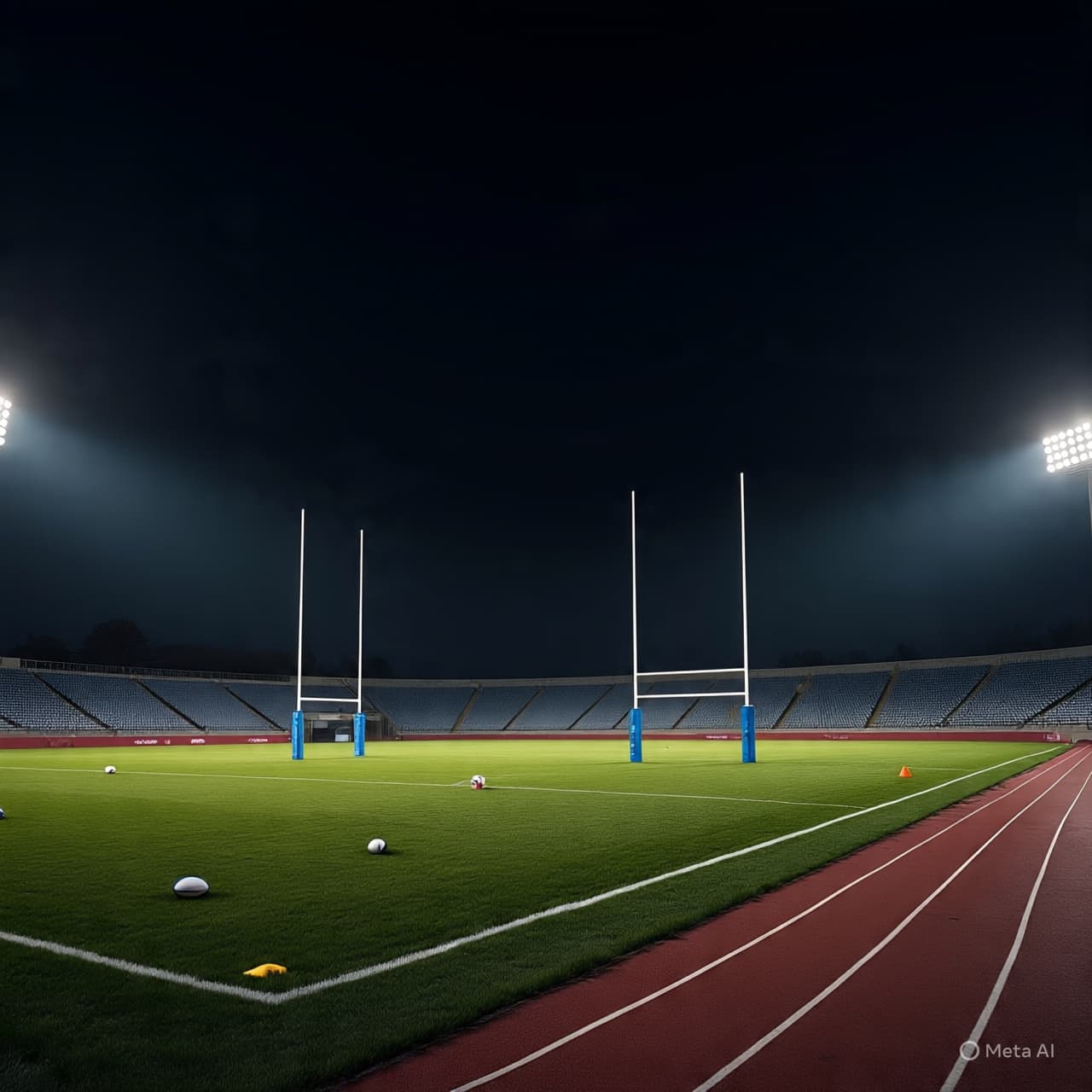
In the lingering dusk over Paris, when the lights of the city seem to breathe into the night and the rhythm of traffic feels distant to those inside the Stade de France, there was a moment that belonged less to scoreboard and more to the quiet art of weathering a storm. On this evening of rugby’s grand spectacle, Ireland’s team found itself drawn into a game that felt, from the first whistle, like a conversation with a higher tide. The wind of competition, crisp and unyielding, moved through the lines and over the turf, carrying with it the cadence of England’s hopes and France’s storied confidence.
Against France, Ireland’s championship defense unraveled in the first half, a sequence of missed tackles and unanswered motion that allowed their hosts to build a commanding lead. By the interval, France’s strikes had taken root deep in Irish territory, and the visiting side, so often a bastion of composure, seemed to encounter more shadows than light as the clock advanced. Ireland rallied in the later stages, two tries giving a hint of their storied resilience, but the measure of the night’s journey was already etched in the course of those early exchanges. For Ireland, this was a humbling that spoke less of single moments than of a pattern of intensity, timing, and collective momentum not yet aligned with the promise of their own ambitions.
Such matches — when one side’s synthesis of pace, poise, and precision finds purchase against another — leave behind a texture of reflection rather than simple regret. Ireland’s head coach acknowledged the absence of the urgency he had hoped to see from the outset, the subtle impatience in defensive cohesion and the lapses in contesting possession that whispered of energy and intent not fully realized against a champion side on home soil. These are not merely tactical footnotes, but deeper markers of how a team breathes together under pressure, how it measures itself against the day’s defining moments.
For the Irish supporters who made the journey to Paris and those at hearth and home from Dublin to Galway, the game’s first stanza folded into a broader canvas of anticipation and hope that has characterised this team’s recent years. Here too, there was the reminder that every cycle of competition holds its own reckoning, that the clock of international sport turns with an impartial hand, and that the work of refinement — in choice, in timing, in collective breath — never pauses simply because the sun has set on a single day’s contest.
When the whistle finally sounded and the lights dimmed low upon the pitch, the night’s narrative was neither fractured nor whole, but in motion. The Six Nations campaign ahead still unfurls its chapters, and Ireland’s next steps toward Italy and beyond will carry the quiet residue of both challenge and potential. In the measured silence after a Paris defeat, there is room not only for contemplation but for the simple, resolute practice of bettering what has been shown. This is the news at the close of this match: Ireland must reassess, regroup, and seek the forward motion that every team born of winds as changeable as sport must eventually embrace.
Visuals are AI‑generated and serve as conceptual representations.
Sources (Media Names Only)
Reuters The Guardian Yahoo Sports The Irish Examiner The Sun (sport)
Published by Banx Network. This article is part of the Banx decentralized media programme, powered by the BXE token on the XRP Ledger.


