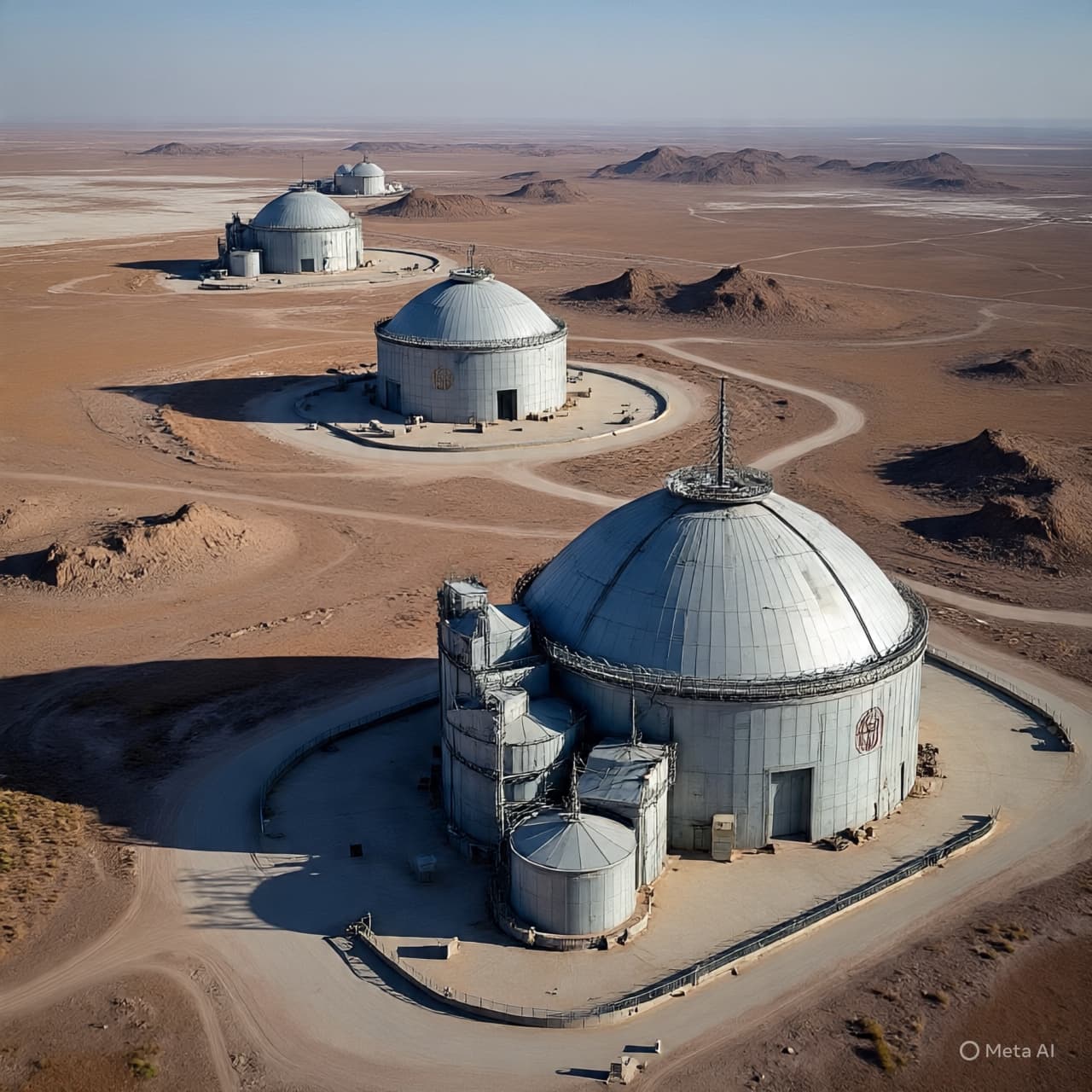
In the high, unfolding quiet of a desert horizon where dawn’s light meets the farthest edge of the Iranian plateau, there are stories visible only from above — slow, subtle shifts in earth and stone that unfold like tides across sand. Satellite images, taken from the silent orbit of distant observation, have captured one such story in recent months: the gentle, deliberate reshaping of ground once scarred by blasts and the quiet re‑weaving of landscape around sites of strategic significance.
From these lofty viewpoints, analysts watching the shifts see what looks like a transformation taking place across several locations long etched into the Middle East’s fraught geography. At Parchin, a military complex southeast of Tehran known for its history of testing and sensitive work, freshly poured concrete and layers of soil now cloak a new facility that once stood unprotected against the wide sky. Where structures had weathered the effects of past attacks, the earth itself has been offered as a buffer — a cap beneath which walls and machinery might be obscured from distant eyes and potential strikes.
Northward, in Isfahan’s nuclear research area, the patterns of light and shadow captured in these orbital photos tell of tunnel entrances that have been carefully buried beneath soil, their familiar outlines smoothed out and folded back into the terrain. Near the uranium enrichment site at Natanz, further measures have taken shape as well — entrances fortified, outlines hidden, as though each ridge and hollow is being coaxed back into quiet anonymity.
Elsewhere, images show structures buffed and repaired at missile bases near Shiraz and Qom, each new roof and rebuilt wall a whisper of continuity after the disruptive seasons of conflict. The aftermath of strikes — by air or otherwise — has left its mark, yet what unfolds now is a different kind of work: a return to form, an intention to harden and safeguard.
These are the quiet laborings of geography, seen only from high above, where the refuse of war is smoothed like clay. They unfold in the wider context of talks and tempers below: negotiations between Tehran and Washington that weave through capitals and meeting rooms, punctuated by indirect diplomacy and the distant rumble of naval drills in the Strait of Hormuz. Recent discussions in Geneva have yielded modest steps toward “guiding principles” on nuclear constraints, yet the earth’s surface — folded, buried, fortified — seems to tell its own story of caution and preparation even as diplomats talk.
Civil engineers and imagery analysts pore over these vistas, tracing the lines of concrete and soil like lines of a text that speaks of concealment and endurance. Beneath the arc of the sun, the silhouettes of fortified sites cast new patterns across parched fields and foothills, as though the land itself has drawn a new breath and learned an added patience. What the future holds — whether dialogue will yield to accord or tension will give way to a broader storm — remains unsettled, but in the quiet of these high images there is a lesson in persistence, shaped by stone and time.
AI Image Disclaimer Visuals were created using AI tools and are not real photographs.
Sources Reuters, i24NEWS, Times of Israel, Hindustan Times, Reuters via L’Orient Today.
Published by Banx Network. This article is part of the Banx decentralized media programme, powered by the BXE token on the XRP Ledger.