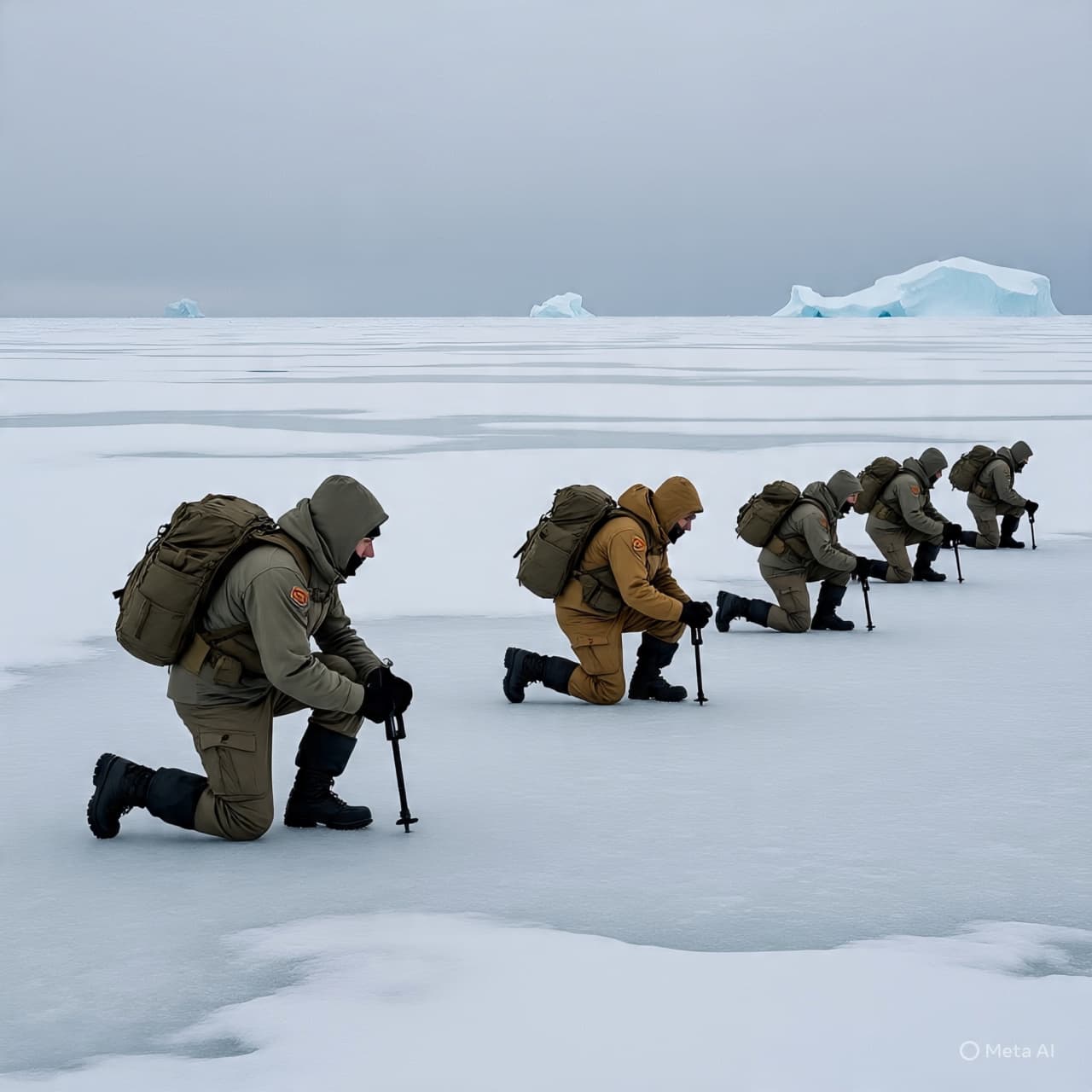
In the vast stretches where the Arctic wind carries both whisper and roar, a quiet tension threads through the icy expanse. The frozen seas, reflecting the soft glow of the polar sky, have long been a realm of solitude, punctuated only by the rhythms of nature and the slow drift of pack ice. Now, human motion threads its way across these still waters, an organized presence moving with precision through a landscape that seems both eternal and fragile.
This February, NATO launched its “Arctic Sentry” mission, a coordinated effort to monitor, secure, and operate across the northern reaches where sea lanes, resources, and strategic corridors converge. The initiative draws together troops, ships, and aircraft from member nations, moving with deliberation over waters that shimmer with ice floes and shadowed fjords. Military officials describe it as a preventive, stabilizing presence — a series of maneuvers intended to maintain observation and readiness rather than confrontation.
Despite the stark cold, personnel speak of the subtle rhythms of their environment: the hush of snow-laden forests, the distant cry of seabirds, and the slow, methodical slide of ice against hull. Exercises involve mapping the waters, maintaining supply lines, and honing interoperability among forces whose languages, equipment, and traditions differ, yet who share the common task of vigilance in a region increasingly seen as geopolitically significant. The Arctic, long imagined as a silent frontier, now hosts an intricate choreography of human intention moving across its austere stage.
Observers note that “Arctic Sentry” also carries diplomatic resonance. It signals the alliance’s attentiveness to developments in the Far North — from shipping lanes opening due to changing ice conditions to the strategic postures of nearby nations. Yet for many involved on the ground, the mission is as much about endurance as it is about deterrence. Camp routines, navigational exercises, and environmental monitoring unfold with an awareness that in these extreme latitudes, both nature and strategy demand patience and observation.
As the sun arcs low across the horizon, casting long, golden streaks over the ice, the operation’s activity is measured, almost meditative. Crews adjust radar arrays, pilots sweep skies with careful observation, and naval vessels trace paths through channels of shifting ice. The movement is purposeful but restrained, a reflection of both the environment’s immutable presence and the alliance’s intent to assert stability without unnecessary provocation.
Reports from NATO officials indicate that the operation involves air, sea, and land components from multiple member nations, aiming to enhance readiness in the High North, ensure freedom of navigation, and demonstrate the alliance’s capacity for rapid deployment in Arctic conditions. Analysts highlight the growing strategic importance of the Arctic, citing resource access and emerging shipping routes as factors that make such coordinated missions increasingly significant. NATO describes “Arctic Sentry” as routine, yet the broader message is one of sustained vigilance and preparedness.
AI Image Disclaimer
Visuals are AI-generated and serve as conceptual representations.
Sources (Media Names Only)
Reuters BBC News The Guardian Al Jazeera Defense News
Published by Banx Network. This article is part of the Banx decentralized media programme, powered by the BXE token on the XRP Ledger.