
Key Highlights
- Tarique Rahman was sworn in as Bangladesh's new prime minister on February 17, 2026.
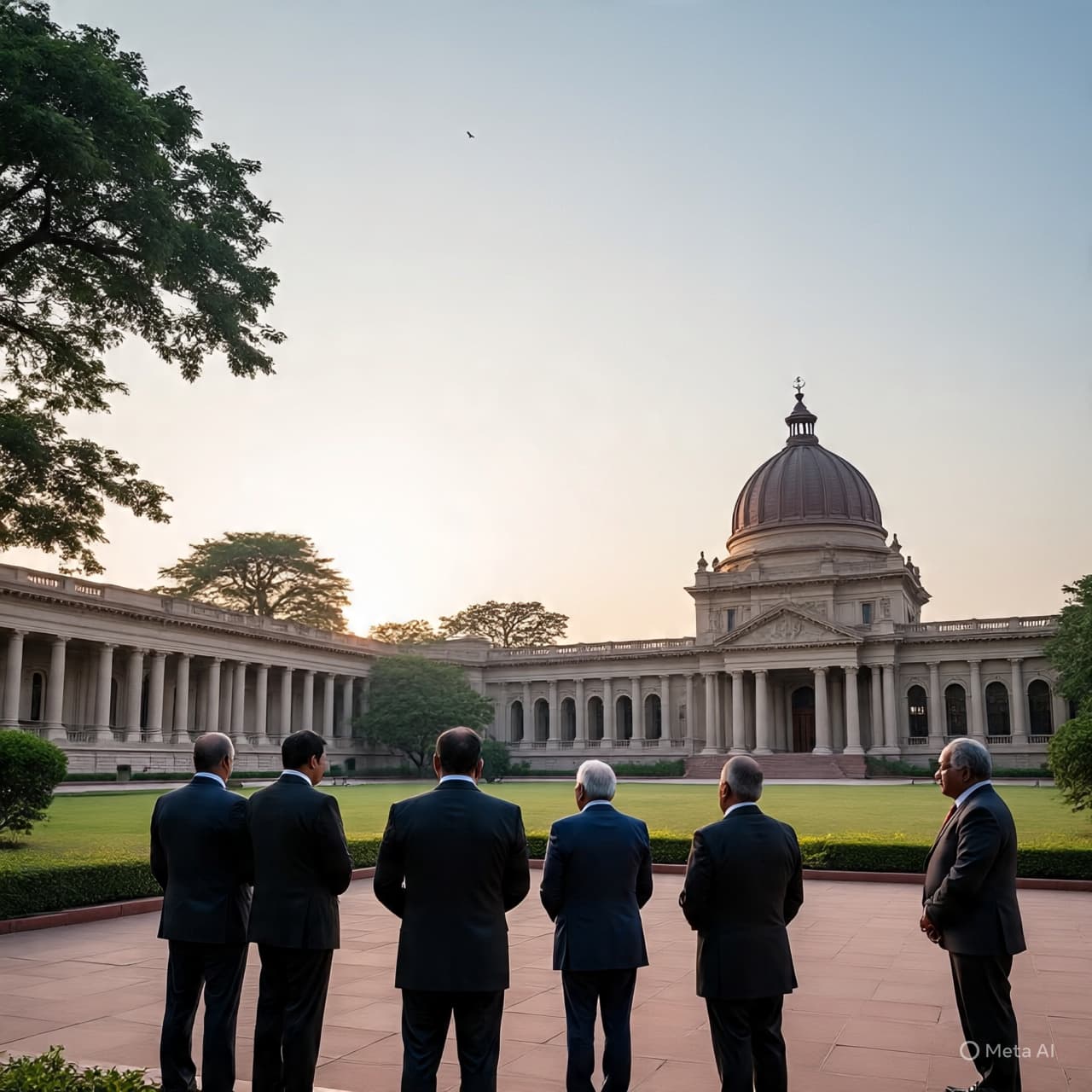
- The ceremony took place at the South Plaza of the National Parliament building in Dhaka.
- Rahman's party, the Bangladesh Nationalist Party, won a commanding majority in recent elections.
On February 17, 2026, in a significant political event for Bangladesh, Tarique Rahman was sworn in as the new prime minister. The ceremony took place at the South Plaza of the National Parliament building in Dhaka, attended by dignitaries, civil servants, and citizens eager to witness this moment of change. Rahman, who returned from years of self-imposed exile, took the oath of office officiated by President Mohammed Shahabuddin, marking a new chapter in the nation’s political landscape.
Rahman's ascension to the premiership follows a tumultuous period in Bangladeshi politics, characterized by intense rivalry and upheaval. His party, the Bangladesh Nationalist Party (BNP), recently secured a commanding majority in the parliamentary elections, which were seen as a pivotal moment for the country. This election was the first since the mass protests of 2024 that led to the ousting of the previous government and the establishment of a caretaker administration led by Nobel Peace Prize laureate Muhammad Yunus. The results of this election have been interpreted as a sign of democratic renewal, offering a fresh opportunity for Bangladesh to redefine its political future.
The choice of the South Plaza for the swearing-in ceremony was symbolic, reflecting a blend of tradition and modernity. Unlike the more formal setting of the presidential residence, the open-air venue allowed for a more inclusive atmosphere, where the cool breezes of Dhaka mingled with the sounds of the city. Alongside Rahman, a new cabinet was formed, comprising both seasoned party leaders and new technocrats, all tasked with addressing the pressing issues facing the nation.
As Rahman embarks on his leadership journey, he faces a myriad of challenges that have long plagued Bangladesh. The country must navigate economic recovery, stabilize markets, and tackle inflation, all while rebuilding trust in its institutions. The urgency of these tasks is amplified by a youthful population eager for stability and opportunity. Citizens across the nation are hopeful for swift progress, aware that the path to recovery is often fraught with obstacles.
Amidst these challenges, the day of Rahman's swearing-in carried a deeper significance. It served as a reminder of the intricate relationship between politics and the everyday lives of the Bangladeshi people. As families walked home along streets adorned with blooming jacaranda trees, the atmosphere was filled with a sense of cautious optimism. The swearing-in was not just a political event; it was an unspoken promise of continuity and change, a moment where history gently nudged toward the future.
In conclusion, the inauguration of Tarique Rahman as prime minister represents a pivotal moment for Bangladesh, one that carries the hopes and aspirations of its citizens. As the nation stands at a crossroads, the new administration's ability to address the challenges ahead will be crucial in shaping the future of Bangladesh.
Published by Banx Network. This article is part of the Banx decentralized media programme, powered by the BXE token on the XRP Ledger.



