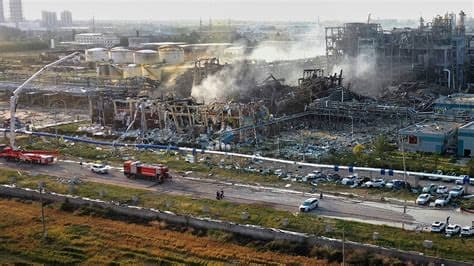
The wind moved gently across the Île-de-France plain, bending winter grasses in slow, deliberate waves. Beyond the quiet fields, the silhouette of Paris stood steady — domes and towers outlined against a pale sky that seemed almost translucent in the cold morning light. In the stillness, the nation felt suspended between memory and possibility, mindful of its long history of power and its careful choreography with the future.
It was in this tempered atmosphere that President Emmanuel Macron outlined a shift in France’s nuclear posture, describing plans to modernize and expand elements of the country’s atomic arsenal while extending a renewed pledge of protection to European neighbors. The announcement did not arrive with fanfare, but rather as a measured declaration in a moment when the continent’s security architecture feels newly unsettled. Across Europe, conversations about deterrence — once largely theoretical — have regained a sharpened clarity.
France has long maintained an independent nuclear deterrent, built on the twin pillars of submarine-launched ballistic missiles and air-delivered nuclear weapons. Known as the force de frappe, it was conceived in the mid-twentieth century as a sovereign guarantee of national survival, distinct from but complementary to NATO’s collective shield. Macron’s recent address reaffirmed that independence while suggesting a broader role: that France’s deterrent could serve as a stabilizing umbrella for European partners facing uncertainty.
The proposed expansion centers less on raw numbers than on modernization and readiness. Officials have pointed to the next-generation ballistic missile submarines already under development, the refinement of warhead systems, and upgrades to the Rafale fighter aircraft that form the airborne component of the deterrent. These steps, Macron indicated, are meant to ensure credibility in a strategic environment marked by renewed great-power competition and rapid technological change.
Beyond France’s borders, the message was unmistakable. In Berlin, Warsaw, and other European capitals, leaders have increasingly debated how to secure the continent amid shifting alliances and the ongoing strain of war in Ukraine. Macron’s vow to protect neighbors signals a willingness to deepen France’s role as a central pillar of European defense — a notion he has advanced repeatedly in calls for “strategic autonomy” within the European Union.
Yet the expansion also stirs familiar questions. Nuclear deterrence rests on paradox: it promises security through the capacity for devastation, peace through the shadow of unimaginable force. In French political discourse, the deterrent is often framed as purely defensive — a guarantee that no adversary could contemplate an existential strike without consequence. Critics, meanwhile, caution that even defensive modernization can ripple outward, encouraging parallel investments elsewhere.
On the streets of Paris, life continues in its practiced cadence. Students cluster outside universities along the Left Bank; trains hum beneath the city; café doors swing open to the scent of coffee and rain. Few daily routines visibly shift when nuclear doctrines evolve. And yet, in the quiet spaces between headlines, the knowledge settles: decisions made in polished halls of state reverberate across generations.
Macron’s commitment to shielding neighboring countries reflects a broader European reckoning with vulnerability and interdependence. While NATO remains the cornerstone of collective defense, France’s gesture suggests that continental security may rely increasingly on layered guarantees — national capabilities intertwined with shared responsibility. The French president has proposed strategic dialogues with interested partners, inviting discussions on how such protection might be formalized.
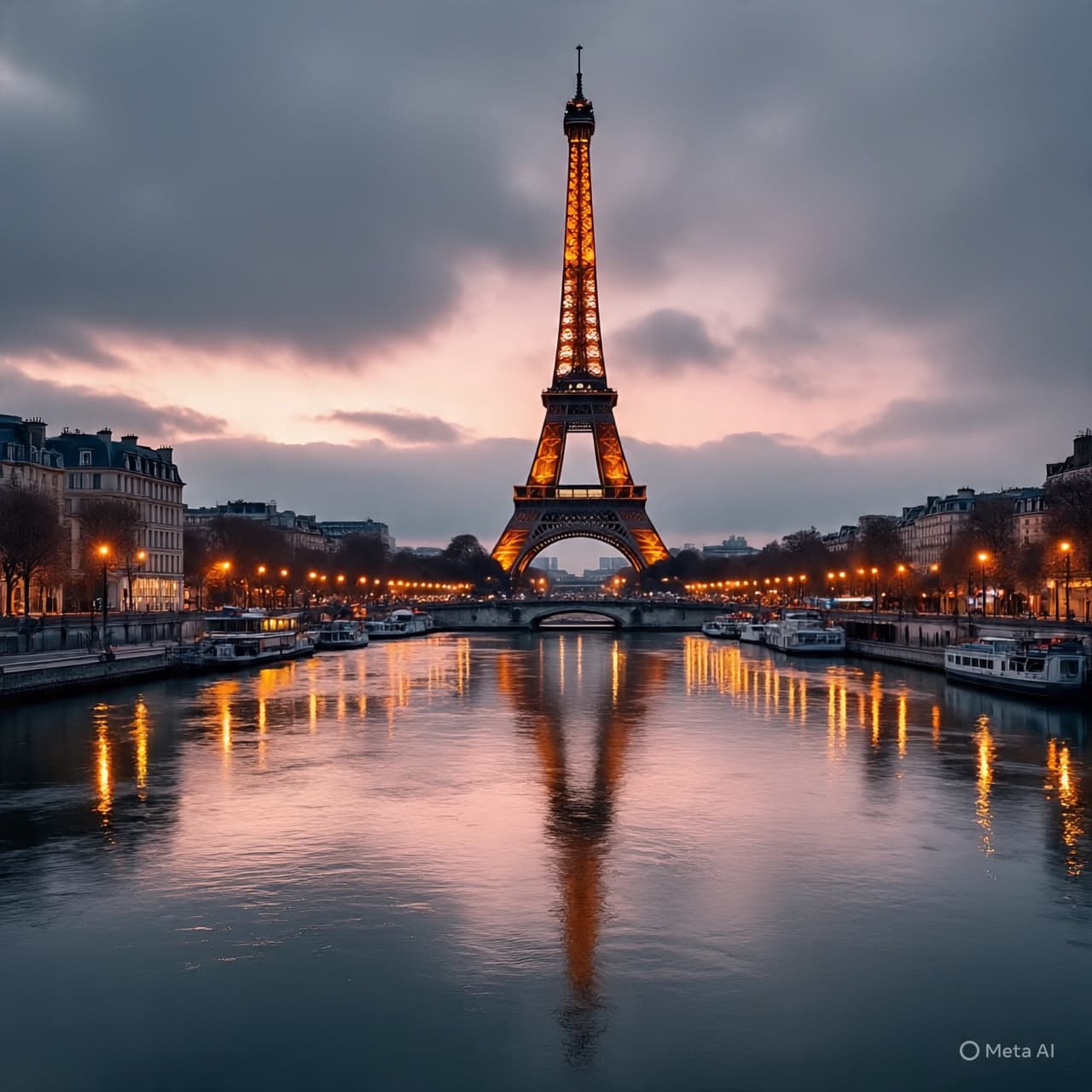
As dusk settles over the Seine, lights shimmer on the water’s surface, small constellations mirrored in motion. France’s nuclear arsenal, hidden beneath oceans and secured within fortified bases, remains unseen yet central to the country’s identity as a global power. With this latest expansion and pledge, Macron has reaffirmed that identity — not in defiance, but in declaration.
In the coming months, parliamentary debates and allied consultations will shape the practical contours of this vision. For now, the message is clear: France intends to keep its deterrent strong, modern, and, if necessary, protective beyond its own borders. Beneath the quiet Parisian sky, the balance between sovereignty and solidarity finds new expression — steady, deliberate, and aware of the weight it carries.
AI Image Disclaimer Visuals are AI-generated and serve as conceptual representations.
Sources
Reuters BBC News Le Monde Associated Press Financial Times
Published by Banx Network. This article is part of the Banx decentralized media programme, powered by the BXE token on the XRP Ledger.