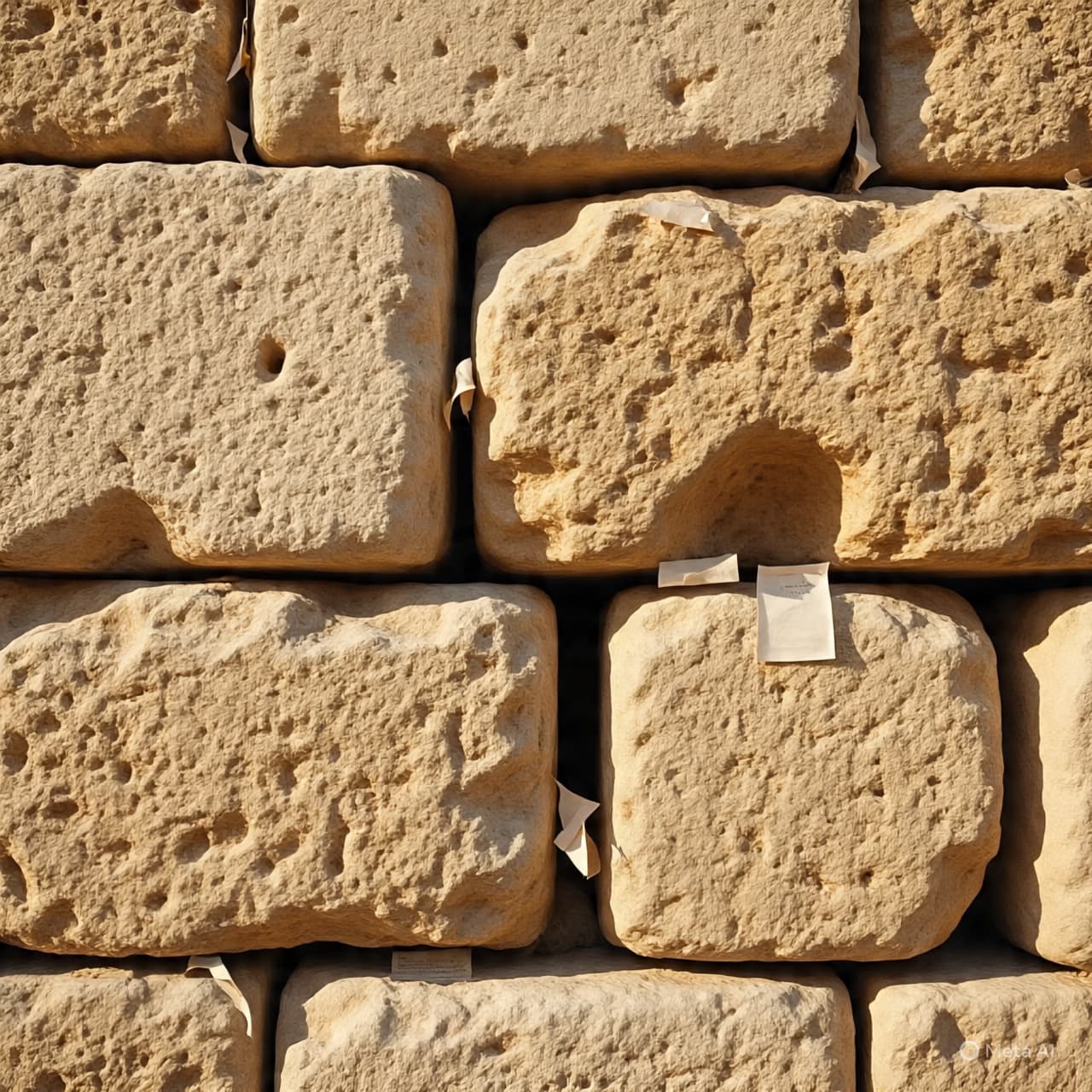
Late winter light drapes the Old City of Jerusalem in muted gold, brushing the ancient stones of the Western Wall with a softness that feels at once timeless and fragile. Here, the echo of centuries of prayer seems embedded in every crevice, a quiet pulse beneath the feet of visitors slowly making their way through the paved plaza. The Wall, a remnant of a long-fallen sanctuary, has long been a place where silence and devotion meet—a place meant to hold whispered hopes carried across continents.
In recent days, that stillness has taken on another texture, shaped not by wind or worship alone but by legislation. Israel’s parliament, the Knesset, has advanced a bill that would place the entire Western Wall complex under the exclusive authority of the Orthodox Chief Rabbinate. The measure seeks to amend the Protection of Holy Places Law, clarifying that conduct at the site—including in the area designated for egalitarian prayer—would be governed solely by Orthodox rabbinic directives.
Supporters describe the proposal as a reinforcement of long-standing religious tradition at one of Judaism’s holiest sites. Critics, however, see something narrower in its outline. Progressive Jewish movements in Israel and across the diaspora have voiced alarm, warning that the legislation could restrict non-Orthodox forms of worship and potentially classify certain egalitarian practices as violations subject to penalty. For communities where mixed-gender prayer and diverse liturgical customs are the norm, the bill carries implications that extend far beyond the plaza’s limestone stones.
The debate touches a fault line that has long run quietly beneath Israeli public life: the relationship between state authority and religious pluralism. Years earlier, a compromise plan sought to formalize and upgrade a space for egalitarian prayer adjacent to the main prayer area, a move welcomed by Reform and Conservative groups worldwide. That compromise has since stalled, and the new bill signals a different direction—one that would more firmly entrench Orthodox administrative control.
Across North America, Europe, and Australia, leaders of Reform and Progressive Jewish organizations have expressed concern that the proposed change narrows recognition of diverse Jewish identities at a site widely regarded as a shared spiritual inheritance. For many diaspora Jews, the Western Wall is not only a symbol of ancient resilience but also a contemporary meeting point between tradition and modernity. To see access defined through a single interpretive lens feels, to them, like a contraction of a space that once promised broader embrace.
Within Israel, the issue unfolds amid coalition politics and longstanding debates over the balance between secular governance and religious authority. The bill has passed a preliminary reading and is expected to move through committee discussions and additional votes. Its final shape remains uncertain, as does the response it may generate within Israeli society and abroad.
In the plaza itself, daily rhythms continue. Worshippers approach the stones with folded notes and murmured prayers. Visitors stand back to take in the vastness of history. The ancient wall absorbs it all without distinction—tradition and reform, agreement and dissent—its surface unchanged even as the meaning attached to it evolves.
The legislation will proceed through further parliamentary stages in the coming weeks. Lawmakers will debate its wording and scope before any final vote. For now, the discussion reflects an ongoing conversation within Israel and the wider Jewish world about authority, inclusion, and the character of one of Judaism’s most sacred spaces.
AI Image Disclaimer
Illustrations were created using AI tools and are not real photographs.
Sources (Media Names Only)
The Times of Israel Associated Press Haaretz The Jewish Chronicle Religion News Service
Published by Banx Network. This article is part of the Banx decentralized media programme, powered by the BXE token on the XRP Ledger.