In the cold and softened shimmer where sea meets ancient ice, machines become whisperers of what the ocean hides. Some are like curious birds, mechanized and humming, sent by human endeavor to probe the places we cannot see. One such machine — a pioneering robotic submarine named Ran — ventured beneath the ice shelves of Antarctica, sliding through unseen corridors where ocean and glacier embrace in silent, slow dance. There, in a world without sunlit motion, it drew contours of melting edges and mapped the fretwork of concealed structures that scientists had only dared imagine. The slow ballet of currents and ice become its data; its hum became part of the ocean’s muted voice.
But then, as with many long stories told in vast emptiness, the voice faded. Ran did not return. In the wide and unmarked waters beneath the Antarctic ice, communication and physical contact were lost. Without sudden rupture or dramatic signal, the submarine slipped beyond the reach of its operators — and, for now, beyond human gaze. It was a disappearance that belonged more to the gentle persistence of ocean forces than to abrupt catastrophe, an unanswered echo drifting with the currents.
This loss, coming after a season of fruitful discovery, offers a quiet reminder of the ocean’s depth and unfathomable scope. Ran had uncovered complex melt patterns and vent‑like features that hint at how warmer waters shape the underside of great ice shelves. Its work contributed to a richer understanding of how the planet’s frozen margins are changing and whispered new clues into scientific discourse. That it vanished on a return mission — possibly due to grounding, equipment strain, or an unpredicted encounter in the harsh under‑ice realm — does not diminish the value of what it had already shared with those who listen beneath the waves.
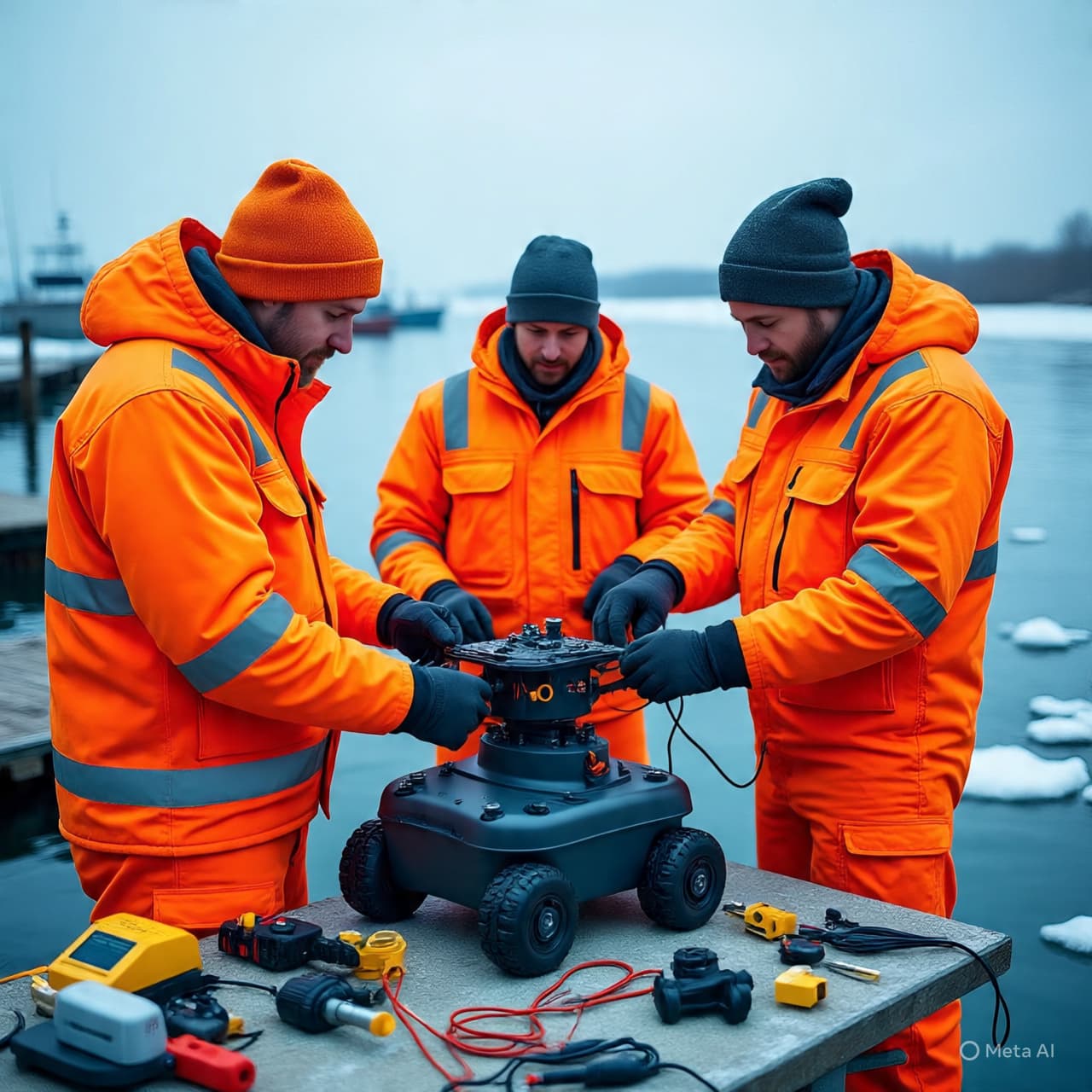
In recent months, engineers and researchers have not allowed silence to become an end. Plans are now underway for a successor to Ran — an evolved submersible that carries forward both the mission and the lessons learned. This new craft, often referred to in scientific reporting as Ran II, is slated for delivery and deployment in the coming Antarctic season. Its design reflects refinements intended to improve navigation, sensing, and resilience in the extreme conditions where ice and ocean meet. Scientists hope that by returning to these hidden spaces — with a vehicle shaped by both past triumphs and challenges — they can continue to chart the delicate currents that speak of global climate dynamics.
Underwater explorers and deep‑sea technologists are accustomed to a certain threshold of uncertainty; it is inherent in any venture into realms beyond normal human reach. From the earliest submersibles to contemporary autonomous vehicles, the act of sending instruments into remote waterspaces always carries risk. Yet within that risk dwells discovery: new patterns of melt, unexpected landforms beneath ice, and a deeper comprehension of how the coldest places on Earth are changing. Thus the preparations for a return are both practical and emblematic — an acknowledgment that understanding often requires persistence amid silence.
In news terms, a cutting‑edge robotic submarine deployed to explore beneath the Dotson Ice Shelf in West Antarctica has been lost during or after a mission. The vehicle had contributed valuable sonar and environmental data about glacial structures and melt behavior before losing contact. Plans are being developed to bring an enhanced replacement submersible, Ran II, into operation in the 2026–2027 Antarctic expedition season to continue scientific investigation of the ice‑ocean interface.
AI Image Disclaimer
Visuals are AI‑generated and serve as conceptual representations.
Sources
SciTechDaily Phys.org
Published by Banx Network. This article is part of the Banx decentralized media programme, powered by the BXE token on the XRP Ledger.