At certain hours before dawn, airports feel detached from geography itself. Travelers move beneath white terminal lights carrying passports, uniforms, and quiet intentions that reveal little to strangers passing nearby. Departure boards flicker. Engines rise into the dark. And somewhere beyond the ordinary choreography of global transit, conflicts unfolding far away continue drawing invisible lines across deserts, coastlines, and air routes.
This week, a human rights organization accused the United Arab Emirates of serving as a transit point for mercenaries traveling toward Sudan, adding another layer of scrutiny to the regional dimensions of the country’s devastating civil war. The allegations, which the UAE has repeatedly denied in broader accusations surrounding the Sudan conflict, reflect growing international concern over the external networks believed to be sustaining violence inside the fractured nation.
Sudan’s war, now stretching through months of destruction and displacement, has transformed cities once filled with crowded markets and Nile-side traffic into landscapes marked by shelling, shortages, and displacement camps. Fighting between the Sudanese Armed Forces and the paramilitary Rapid Support Forces has drawn increasing attention not only because of its humanitarian toll, but because of the number of regional and international actors accused of influencing the conflict from beyond Sudan’s borders.
The rights group alleged that foreign fighters have passed through Emirati territory or logistical channels before entering Sudan, where the conflict has become intertwined with wider geopolitical rivalries, resource competition, and shifting alliances across the Horn of Africa and the Gulf. UAE officials have consistently rejected accusations that they are supporting armed factions in Sudan, insisting instead that their role centers on diplomacy and humanitarian assistance.
Still, the persistence of such allegations reflects how modern wars rarely remain confined within national boundaries. Arms, funding, intelligence, and fighters often move quietly across airports, ports, and remote borderlands long before their presence becomes visible on battlefields. Sudan, situated between North Africa, the Sahel, the Red Sea, and the Horn of Africa, occupies a strategic geography that has historically drawn outside influence.
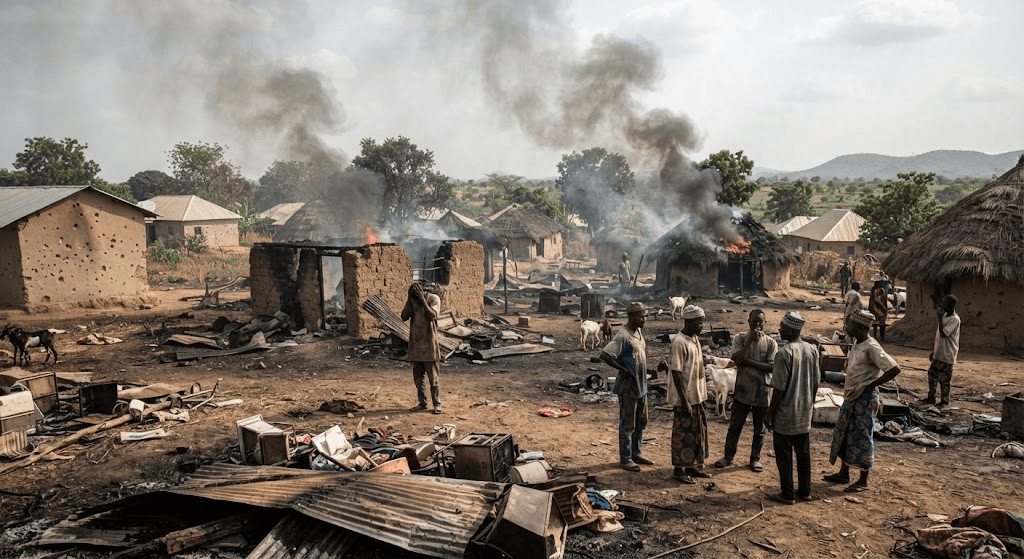
In Khartoum and Darfur, however, geopolitical calculations translate into deeply personal realities. Families flee neighborhoods at night carrying only small bags and documents. Aid agencies struggle to deliver food and medicine. Hospitals operate with intermittent electricity while international relief efforts confront damaged infrastructure and insecurity along transport routes.
The allegations surrounding mercenary transit also emerge amid broader concerns about foreign involvement in African conflicts through private military networks and irregular armed groups. Across several regions in recent years, wars have increasingly blurred distinctions between state actors, militias, contractors, and transnational fighters. Conflict now moves through hidden financial systems and informal alliances as much as through formal declarations.
For Gulf states like the UAE, Sudan holds strategic importance tied to trade routes, agricultural investment, Red Sea security, and regional influence. The country’s instability therefore reverberates far beyond its borders, affecting migration flows, commercial shipping, and diplomatic relations across neighboring regions.
At the United Nations and within humanitarian organizations, attention continues focusing on the mounting civilian cost of the war. Millions have been displaced internally or across borders into Chad, South Sudan, Egypt, and Ethiopia. Famine warnings have intensified in some areas, while aid officials describe one of the world’s largest but least visible humanitarian crises.
Yet international attention often arrives unevenly. Sudan’s suffering unfolds largely beyond the continuous spotlight directed at other global conflicts, despite the scale of devastation. Reports about mercenary routes and external involvement reveal how deeply interconnected the crisis has become with broader regional systems of power and commerce.
In Abu Dhabi, diplomatic offices continue their measured routines beneath polished towers and coastal heat. In Sudan, meanwhile, entire communities wait through nights interrupted by gunfire and uncertainty. Between those worlds lies an invisible corridor of logistics, influence, and accusation that investigators, diplomats, and humanitarian observers continue trying to understand.
And as aircraft continue crossing the Red Sea beneath vast desert skies, Sudan’s war remains a reminder that modern conflicts rarely belong to one nation alone. They travel quietly through supply chains, alliances, and ambitions, leaving ordinary civilians to carry the heaviest burden long after the routes themselves disappear from view.
AI Image Disclaimer: Visual representations in this article were created using AI-generated imagery and are intended for illustrative purposes only.
Sources:
Reuters Human Rights Watch United Nations Al Jazeera Associated Press
Published by Banx Network. This article is part of the Banx decentralized media programme, powered by the BXE token on the XRP Ledger.