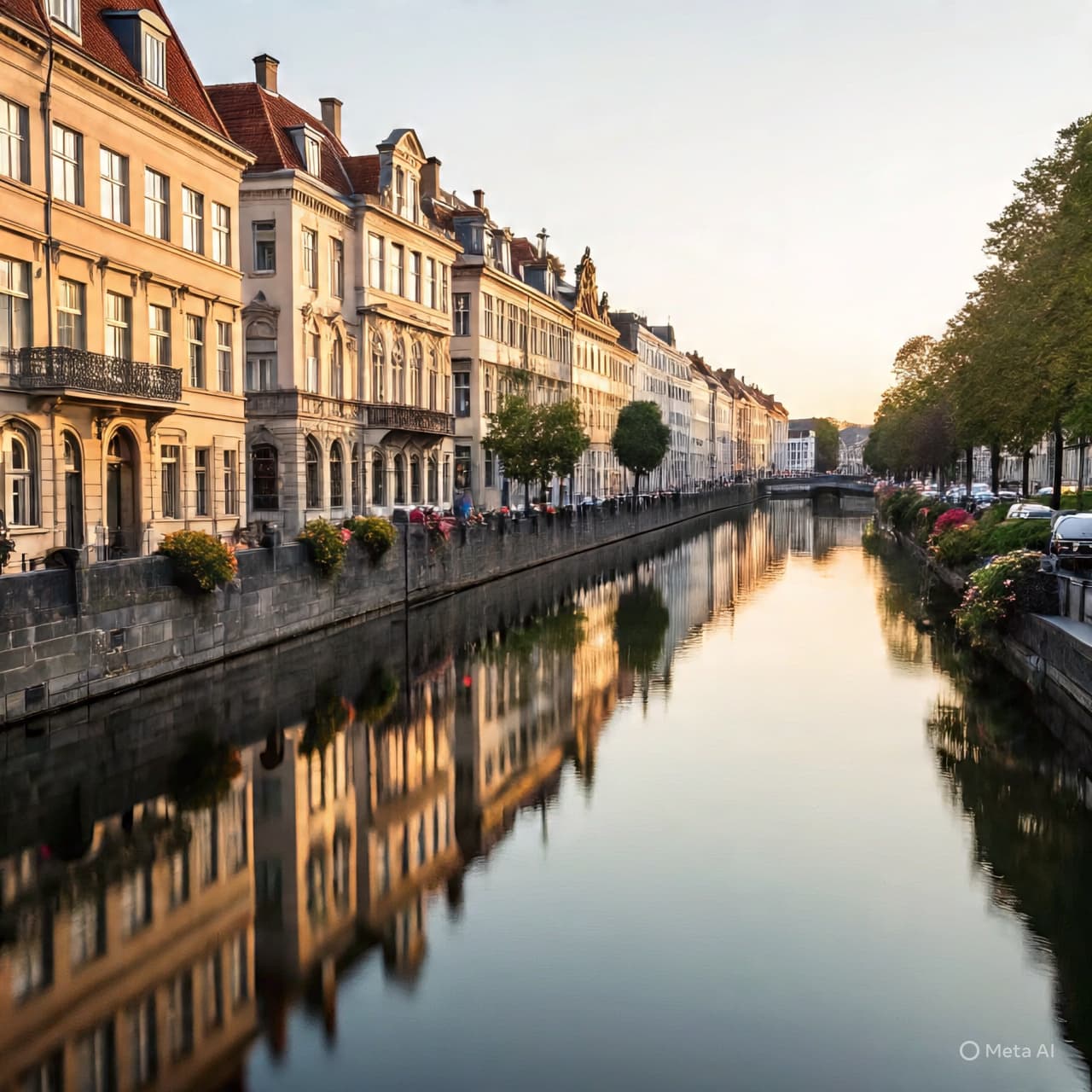
In the faint, silver light just before dawn, Copenhagen’s canals are still and reflective, as though pausing to consider the day ahead. The red‑tiled roofs and graceful facades of Christiansborg Palace, where Denmark’s parliament convenes, catch the first glimmers of morning, whispering of history and continuity. Walking those cobbled streets at this hour, one can sense the slow, deliberate rhythm of public life — a rhythm that now feels poised at a quiet but important inflection point.
This week, Denmark’s Prime Minister Mette Frederiksen formally opened talks to form a new government after an election that left no clear majority in the 179‑seat Folketing. Although her Social Democrats remain the largest party, they recorded their worst result since 1903, securing just 38 seats — a stark reminder of the shifts reverberating through Danish politics. Neither the traditional left‑leaning “red bloc” nor the right‑leaning “blue bloc” secured the 90 seats needed to govern outright, leaving the path to power dependent on negotiation, compromise and the delicate art of coalition‑building.
Frederiksen’s task derives from a centuries‑old feature of Denmark’s constitutional monarchy: the king invites a leading political figure to explore whether a new government can be formed. In this case, King Frederik X asked Frederiksen to serve as formateur, effectively placing her at the head of upcoming talks among parties large and small, from the Green Left and Social Liberals to the centrist Moderates — themselves poised to play kingmaker with their 14 seats.
In the golden hour outside Parliament, small cafés begin to fill with patrons nursing their first cups of coffee, and the city’s bicycles clatter over bridges that span quiet waterways. Inside Christiansborg’s venerable halls, however, there is a different kind of hum: the rhythm of negotiation. Frederiksen has spoken of the “troublesome” result, acknowledging that voters delivered a message of frustration over issues like the cost of living and welfare, even as the Social Democrats sought to steady a government that has already navigated a global pandemic and shifting geopolitical currents.
The mechanics of coalition‑talks in Denmark are both granular and profound. Parties will gather around negotiating tables to build a working majority capable of sustaining a coalition through votes of confidence and proposed legislation. For Frederiksen, the near‑term goal is to marshal support among left‑aligned parties like the Green Left and Social Liberals, while also seeing whether the Moderates might lend crucial votes without alienating core Social Democratic supporters. Yet the political landscape is fractured, with several smaller parties holding discrete priorities that could tip the balance one way or another.
As the sun spills fully over the city’s rooftops, the clocks in Copenhagen’s churches toll in measured cadence — reminders that time in politics moves both forward and in loops, marked by deliberation as much as by urgency. In the shadows of these monuments to civic life, debate and discussion unfold not as spectacles but as the day‑to‑day work of governance: who will back which policies, what concessions must be made, and how a majority can be woven from threads that are not yet fully aligned.
Frederiksen’s turn at the negotiation table follows an election in which Danes made clear their appetite for change even as they entrusted her party with the largest share of seats. In that paradox lies the heart of the moment: a country seeking both continuity and renewal, stability and responsiveness. How this interplay resolves — whether in a broad left‑leaning alliance or a novel centrist compromise — will shape Denmark’s policy trajectory for years to come.
By afternoon, the city’s life gains faster pace: trams gliding over rails, pedestrians stepping confidently onto plazas, and the quiet bustle of markets mingling with the distant song of sea birds above the harbor. In those everyday motions, the larger rhythms of public choice find their grounding: in routine, in negotiation, in the shared space that lies between sunrise and decision.
AI image disclaimer Visuals are AI‑generated and serve as conceptual representations.
Sources Reuters, Al Jazeera, The Guardian, Wikipedia.
Published by Banx Network. This article is part of the Banx decentralized media programme, powered by the BXE token on the XRP Ledger.