
Key Highlights
- Incident:Emergency crews respond to a hazardous tank situation in Southern California.
- Evacuations:Nearby communities were evacuated as a precaution.
- Monitoring:Engineers are assessing pressure levels and structural integrity.
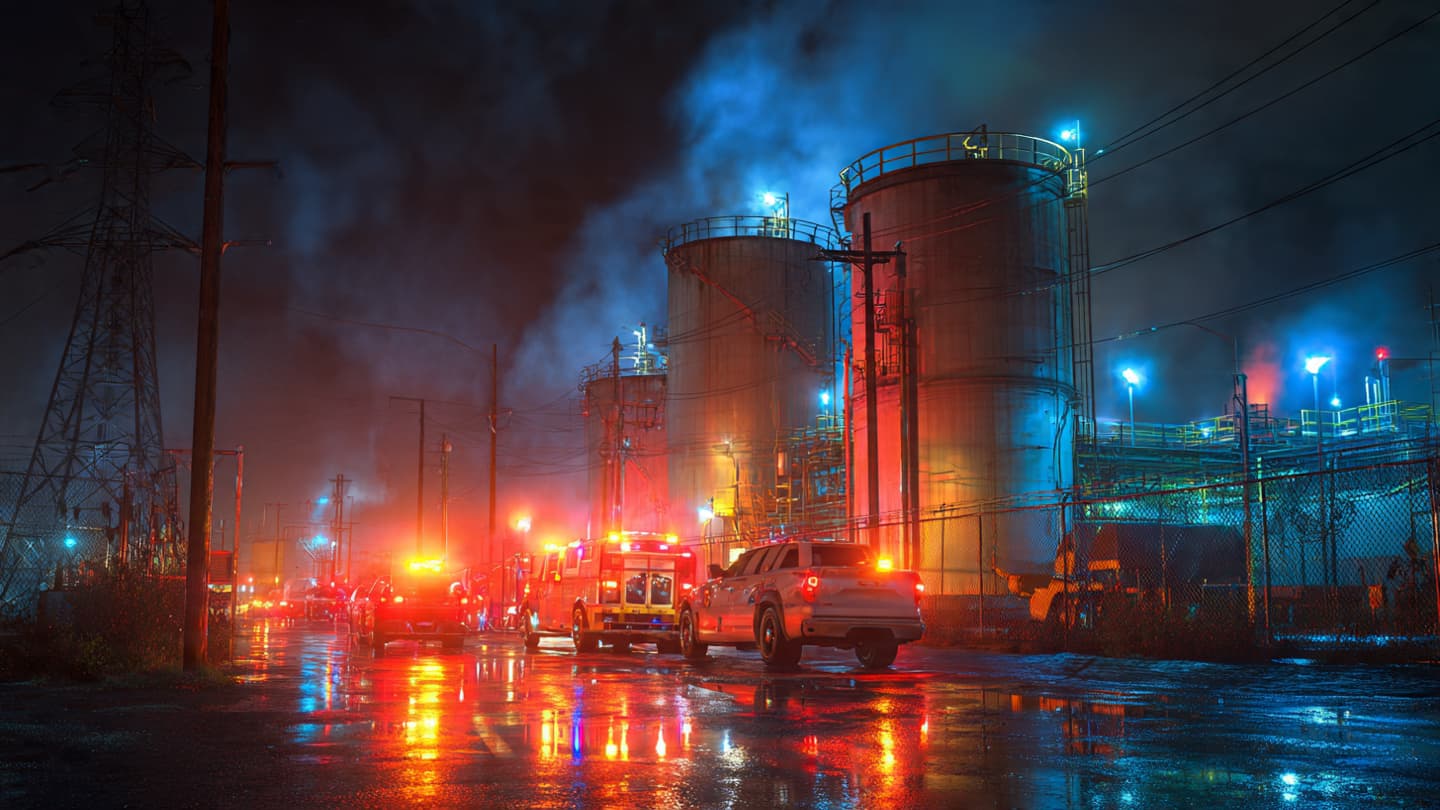
Emergency responders in Southern California are on high alert this week as they manage a potentially dangerous situation involving a large tank containing hazardous chemicals. The incident has raised concerns about a possible explosion, prompting officials to take swift action to ensure the safety of nearby residents. As engineers monitor the tank's temperature and structural integrity, reports indicate that a crack may have developed, allowing internal pressure to ease slightly, shifting the focus from immediate alarm to cautious observation.
The situation escalated quickly, leading to evacuations and emergency warnings for communities in proximity to the facility. Firefighters, hazardous materials specialists, and industrial safety teams have been working tirelessly under floodlights to stabilize the site. Their efforts include studying thermal readings and containment systems to determine whether the tank's condition is improving or merely changing under strain.
Local officials have expressed concerns about the risks posed by the chemicals inside the tank, particularly if they were to be released explosively or under unstable conditions. Emergency planners are wary that rising heat and pressure could lead to a catastrophic rupture, potentially releasing toxic materials into the surrounding areas. Residents have been urged to remain vigilant, with some temporarily displaced from their homes as road closures and emergency perimeters expand around the facility.
Amid the tension, engineers have observed what appears to be a small fissure or crack that may have allowed pressure to escape gradually. In a different context, such a fracture would signify failure; however, in this case, it could serve as an unintended release valve, providing a glimmer of hope in a precarious situation.
The incident highlights the delicate balance that modern industrial systems must maintain with invisible forces. Pressure builds quietly, and temperatures rise behind sealed walls, often without the awareness of nearby communities. The safety of these systems relies heavily on valves, gauges, calculations, and the vigilance of trained professionals who monitor potential dangers before they escalate into visible crises.
California's landscape is often associated with its picturesque coastlines and vibrant culture, yet it is also home to a complex network of heavy industry, logistics, and chemical infrastructure. While these systems typically operate without public scrutiny, emergencies like this one reveal the hidden architecture that supports daily life. Witnesses near the evacuation zone reported empty streets and helicopters circling overhead as emergency crews worked diligently to manage the situation.
As dawn approached, there was no explosion, and the feared rupture had not occurred. Instead, crews continued their careful work under portable lights, assessing the tank's condition and ensuring the safety of the surrounding community. The language used during such crises may seem clinical—terms like structural compromise and thermal expansion—but beneath these words lies a profound human element: uncertainty. Families await updates, workers monitor screens, and residents wonder when it will be safe to return home.
Environmental concerns also loom large in the background of this incident. The potential for toxic chemical releases carries long-term consequences that can affect air quality, waterways, and ecosystems already strained by urban expansion and climate change. California has spent decades navigating the challenging intersection between industrial necessity and environmental vulnerability, and moments like this expose just how narrow that balance can be.
As the situation continues to unfold, the community remains on edge, hoping for a resolution that ensures safety and stability in the face of uncertainty.
Published by Banx Network. This article is part of the Banx decentralized media programme, powered by the BXE token on the XRP Ledger.



