
Key Highlights
- New Research:Mars-like exoplanets around M-dwarfs may lose atmospheres.
- Stellar Activity:Intense flares and radiation contribute to atmospheric erosion.
- Implications:Findings challenge long-held assumptions about habitability.
In the dim glow of distant stars, worlds orbit quietly around small, red suns, their paths traced in narrow orbits. These M-dwarfs, cooler and fainter than our own sun, emit a flickering light that can be both nurturing and destructive. For years, these systems have captivated scientists, as M-dwarfs are the most common stars in our galaxy and host a multitude of rocky planets. Many of these planets lie within the habitable zone, where conditions could theoretically support liquid water, raising hopes for potential life.
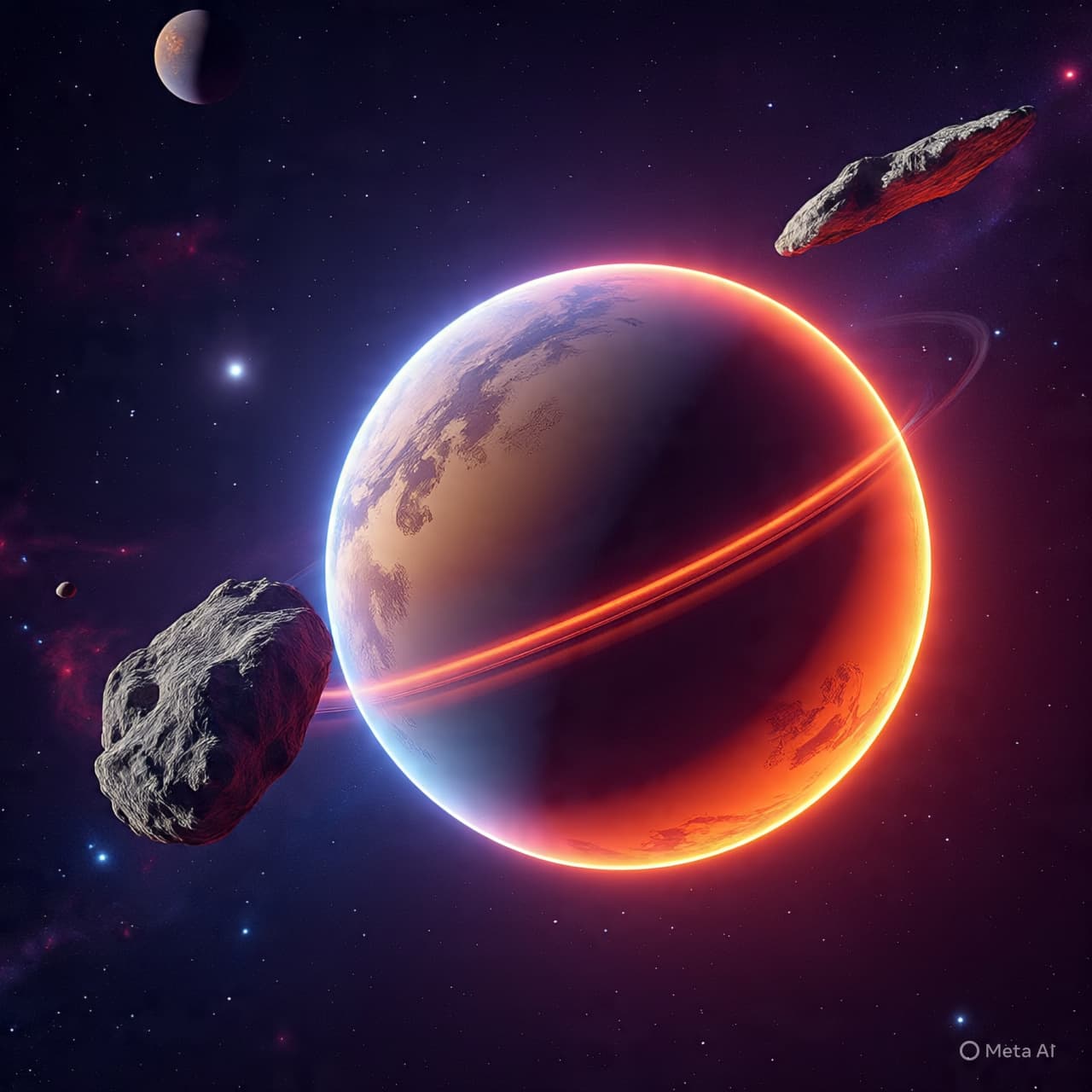
However, recent research has unveiled a more fragile reality regarding these Mars-like worlds. Scientists have discovered that their atmospheres may not endure for long on a cosmic timescale. Instead, they may be stripped away within millions of years due to the intense stellar activity of the M-dwarfs they orbit. This activity includes flares, radiation bursts, and streams of charged particles that can erode planetary atmospheres.
The mechanism of atmospheric loss is subtle yet relentless. For planets that orbit close enough to their stars to remain warm, the effects of stellar activity become unavoidable. Without strong magnetic fields or sufficient gravitational hold, these planets begin to lose their atmospheres as molecules are pushed upward by radiation and energetic particles, eventually escaping into space. This slow loss transforms dense gas envelopes into thinner layers, leading to a significant reduction in atmospheric pressure.
The comparison to Mars is particularly relevant. Once believed to have a thicker atmosphere and flowing water, Mars is now a cold, dry world with a significantly diminished atmosphere. The processes affecting these distant exoplanets mirror Mars' history, albeit under more extreme stellar conditions. This raises important questions about the long-term habitability of planets within the habitable zones of M-dwarfs.
What emerges from this research is not a complete dismissal of habitability but rather a refinement of our understanding. The presence of a planet within a habitable zone does not guarantee that it can maintain a stable atmosphere. Time becomes a critical factor—how long an atmosphere can persist, how quickly it is eroded, and whether conditions can remain favorable long enough for complex life to develop.
There are variations among these planets. Some may possess protective magnetic fields that shield their atmospheres from the worst effects of stellar activity. Others may start with thicker gaseous layers, allowing them to withstand longer periods of erosion. In some cases, volcanic outgassing could replenish lost gases, providing a potential buffer against atmospheric loss. The outcomes are not uniform but depend on a delicate balance of forces unique to each planetary system.
The significance of these findings is profound, especially considering that M-dwarfs comprise the majority of stars in the galaxy. Their planetary systems represent a substantial portion of potentially habitable worlds. Understanding the limits of atmospheric survival in these environments reshapes our expectations and deepens the questions surrounding the search for extraterrestrial life.
Observational efforts are ongoing, with advanced telescopes and instruments designed to detect atmospheric signatures from afar. Each measurement offers insights into conditions that cannot be directly explored, revealing spectral lines that hint at the presence or absence of specific gases and changes in light that indicate the composition of distant atmospheres.
As research continues, the image of these worlds becomes increasingly nuanced. They are not static possibilities but dynamic environments shaped by the dual forces of nurturing and disruption from their stars. Their atmospheres exist in a constant state of negotiation with the cosmic forces around them, highlighting the complexity of planetary habitability in the universe.
In conclusion, the facts remain clear: Mars-like planets orbiting M-dwarf stars may lose their atmospheres within millions of years due to intense stellar activity, challenging long-held assumptions about their long-term habitability. The search for life beyond Earth continues, guided not only by the locations of these planets but also by the duration they can maintain the conditions necessary for life.
Published by Banx Network. This article is part of the Banx decentralized media programme, powered by the BXE token on the XRP Ledger.



