This week in science unfolded like a map unrolled across epochs — one corner brushing the rust-colored stillness of Mars, another tracing the cautious return of striped life to the grasslands of Kazakhstan, and a third bending gently toward a skull whose darkened teeth have carried their secret for two millennia.
On Mars, orbiting instruments captured patterns etched into the southern polar terrain — dark, branching formations that from afar resemble delicate spiderwebs stretched across the planet’s surface. Scientists describe these shapes as seasonal formations created when sunlight penetrates translucent layers of carbon dioxide ice. As spring approaches in the Martian south, trapped gas builds beneath the frozen surface, eventually escaping through fissures and carving radial channels into the ground. The result is a lacework of dark lines spreading outward like ink in water. Though the phenomenon has been studied for years, new high-resolution imagery has provided some of the clearest views yet of these intricate designs, refining understanding of how Mars’ thin atmosphere and extreme seasonal cycles continue to shape its terrain. The patterns do not signal life, but they speak of motion — of a planet still sculpted by energy and change.
Back on Earth, in the wide river valleys and reed-lined wetlands near Lake Balkhash, another kind of pattern is re-emerging. Kazakhstan has begun reintroducing tigers to regions where they vanished decades ago. The species being restored is closely related to the extinct Caspian tiger, once native to Central Asia’s riparian corridors. Conservation efforts now center on the relocation and breeding of the Amur tiger, chosen for its genetic similarity and resilience in cold climates. Wildlife specialists have spent years restoring prey populations and stabilizing habitats in anticipation of the return. The project is gradual and carefully monitored, intended not as spectacle but as ecological repair. Where reeds once fell silent, conservationists hope that in time, movement will return — soft, deliberate, and striped against the pale grass.
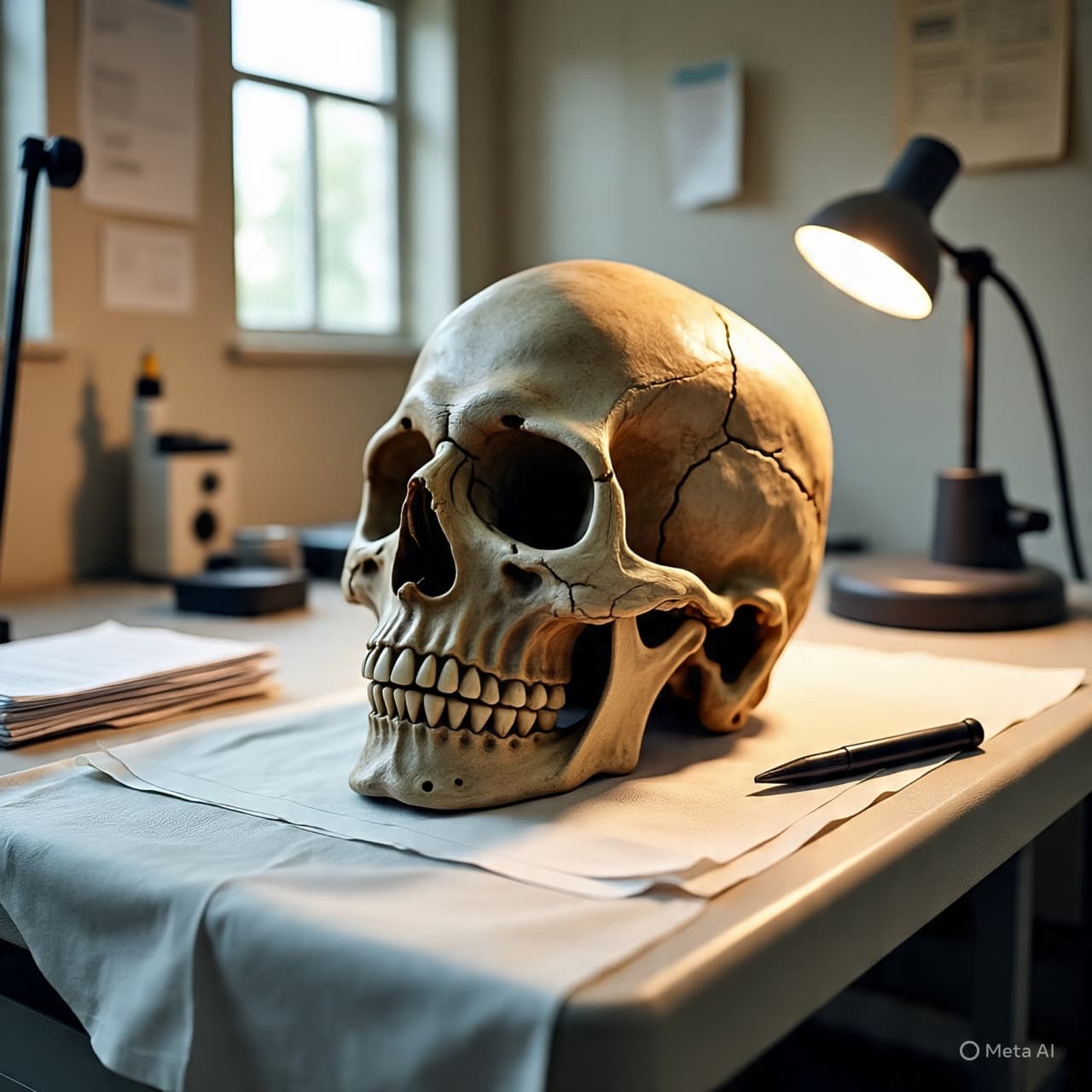
Meanwhile, archaeologists studying a 2,000-year-old burial uncovered a skull whose teeth were permanently blackened, the discoloration so uniform that it appeared intentional rather than the product of decay. Laboratory analysis suggests the staining may be linked to cultural practices involving plant-based substances, possibly related to betel nut chewing or other ritual applications common in parts of ancient Asia. The chemical residues absorbed into enamel over years, leaving a lasting mark that survived long after soft tissue disappeared. What first seemed unusual — even alarming — instead offers a glimpse into daily life and social customs long past. The skull does not narrate its owner’s story outright, but the teeth carry evidence of habits, tastes, and traditions embedded into bone itself.
Taken together, these discoveries share a quiet thread. On Mars, gas carves patterns into frozen soil. In Kazakhstan, human hands attempt to restore a predator once erased. In an ancient grave, plant compounds alter enamel for centuries. Each story traces interaction — between sunlight and ice, between species and landscape, between culture and the body.
Science news often arrives in fragments, scattered across disciplines and distances. Yet in their own restrained way, these findings reveal continuity: planets evolving under distant suns, ecosystems slowly healing, and human customs leaving subtle signatures in the archaeological record.
This week’s reports come from planetary scientists analyzing new Martian imagery, conservation officials overseeing tiger reintroduction programs in Kazakhstan, and archaeologists conducting laboratory examinations of ancient remains. Together, they reflect ongoing research into planetary geology, wildlife restoration, and cultural practices from antiquity.
Illustrations were created using AI tools and serve as conceptual representations.
Sources (Media Names Only)
BBC Live Science Reuters Smithsonian Magazine CNN
Published by Banx Network. This article is part of the Banx decentralized media programme, powered by the BXE token on the XRP Ledger.