
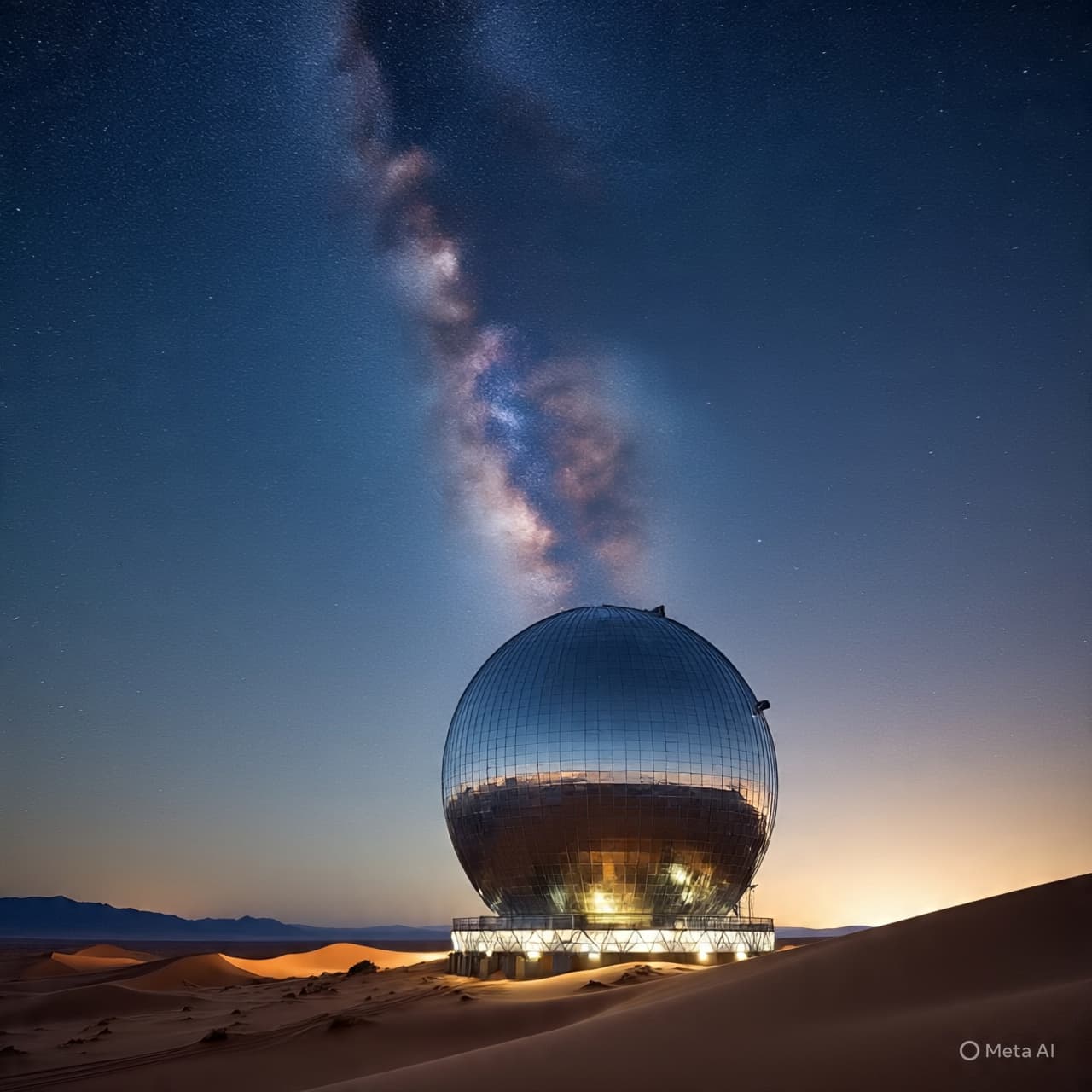
High in the dark, quiet deserts of Arizona, a monumental instrument peers into the heavens, waiting. The Rubin Observatory, perched on a plateau where the night sky seems infinite, is poised to capture the slow choreography of the cosmos, recording light from billions of stars, galaxies, and mysterious transient events that flicker and fade with the cadence of the universe itself.
Astronomers and enthusiasts alike are preparing for what has been called a “deluge of discoveries.” The observatory’s Large Synoptic Survey Telescope is designed not just to observe, but to map the sky repeatedly, revealing movement and change in ways previously impossible. From supernovae that flare briefly in distant galaxies to near-Earth asteroids tracing quiet paths across the void, every photon carries a story, and the Rubin’s instruments are ready to listen.
The significance extends beyond scientific curiosity. By observing these cosmic events systematically and continuously, researchers hope to better understand dark matter and dark energy, the elusive scaffolding of the universe. The data promises to illuminate patterns of cosmic evolution and even provide early warning of celestial objects that might one day approach our planet. For the casual stargazer, it is a reminder that the night sky is alive, not static — a place of constant motion and surprise.
As the first images and datasets begin to arrive, the astronomical community waits with a mixture of anticipation and awe. Each scan of the heavens holds the possibility of reshaping our understanding, revealing phenomena that challenge current theories, or confirming the delicate frameworks that underpin decades of research. In this quiet desert, under a vast canvas of stars, humanity stands on the brink of seeing the universe in a way it has never seen before — a flood of insight that promises both knowledge and wonder.
Published by Banx Network. This article is part of the Banx decentralized media programme, powered by the BXE token on the XRP Ledger.



