Before recorded history casts its first shadows, two human lineages once walked across the same landscapes, their paths crossing not only in footsteps but in the most private gestures of closeness. In our bodies today, silent fragments of DNA — imperceptible yet persistent — carry the faint echo of those encounters. These genetic traces, woven into the fabric of modern human genomes, are reflections not just of survival but of ancient motion and mingling.
Neanderthals, our closest extinct relatives, lived in parts of Europe and western Asia tens of thousands of years ago. Long after they vanished as distinct communities, their genetic imprint remained, subtly tucked into the genomes of people today — especially those with ancestry outside sub‑Saharan Africa, where two to four percent of one’s DNA still comes from those ancient encounters. In recent years, geneticists have begun to read this story anew, not as a simple tale of random mating but as one with direction and pattern.
New research published in Science offers evidence that when Neanderthals and Homo sapiens interbred, it was more often male Neanderthals pairing with female modern humans. This conclusion arises not from bones or tools, but from the very structure of our chromosomes. Most of the human genome contains scattered Neanderthal segments, but large regions, including much of the X chromosome, are bereft of these ancient markers. Such absence might once have been explained by natural selection purging harmful genes, but the patterns in both ancient and modern DNA tell a different story: a consistent directional flow of genes from Neanderthal men into the ancestors of today’s humans. The human X chromosome, with its near‑absence of Neanderthal DNA, reflects this asymmetric history.
The study’s authors examined genomes from several Neanderthal individuals and compared them with DNA from people whose ancestors never interbred with Neanderthals, such as some sub‑Saharan African groups. They found that Neanderthal X chromosomes actually carry a relative excess of human DNA, a result most parsimoniously explained if Neanderthal males mated with Homo sapiens females more frequently than the reverse. In such pairings over generations, the maternal transmission of mitochondrial DNA — passed only through mothers — left little trace of Neanderthal lineages in modern humans, shaping the genetic legacy we see today.
This pattern does not, and cannot, tell us the why behind those ancient unions. Were they ceremonies of social cooperation, alliances in changing worlds, or encounters shaped by entirely different motives and norms? The DNA itself is neutral on intention. All it reveals — with the elegance and caution of a whisper from the past — is that these interactions were more common in one direction than the other. As one researcher put it, talking about genetic influence is a way of approaching the “human dimension” of prehistoric relationships, even if the raw motivations remain beyond direct view.
The genetic contours of these ancient interactions also help explain why we carry only fragments of Neanderthal heritage today. Those small percentages in our genomes are the result of many generations of admixture and recombination, gentle shuffles of genetic material shaped by the constant motion of life — births, deaths, migrations and meanings now lost to time. In this deep rhythm, we find not just data, but a luminous thread of connection, tying our species to those who walked before, long after their final campfires cooled.
In scientific terms, the newly published research indicates that interbreeding between Neanderthals and early modern humans was strongly sex‑biased, with most genetic mixing occurring between male Neanderthals and female Homo sapiens. This asymmetric pattern helps explain why Neanderthal DNA is largely absent from certain parts of the modern human genome — especially the X chromosome — and suggests that these mating events were sustained and repeated rather than isolated. The exact social or biological causes remain subjects of ongoing research.
AI Image Disclaimer
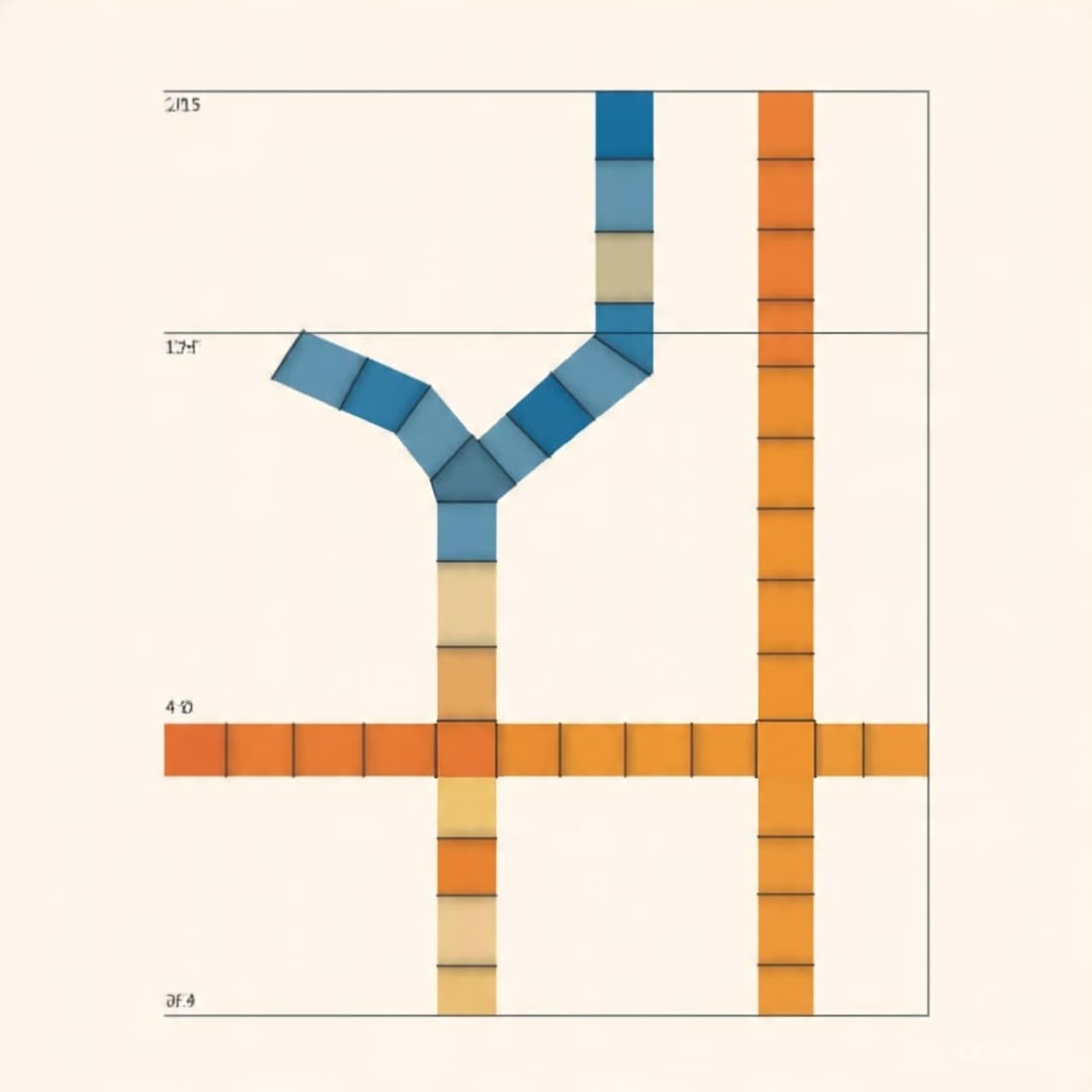
Illustrations were created using AI tools and serve as conceptual representations.
Sources (Media Names Only)
The Guardian Reuters El País Washington Post Scientific American
Published by Banx Network. This article is part of the Banx decentralized media programme, powered by the BXE token on the XRP Ledger.