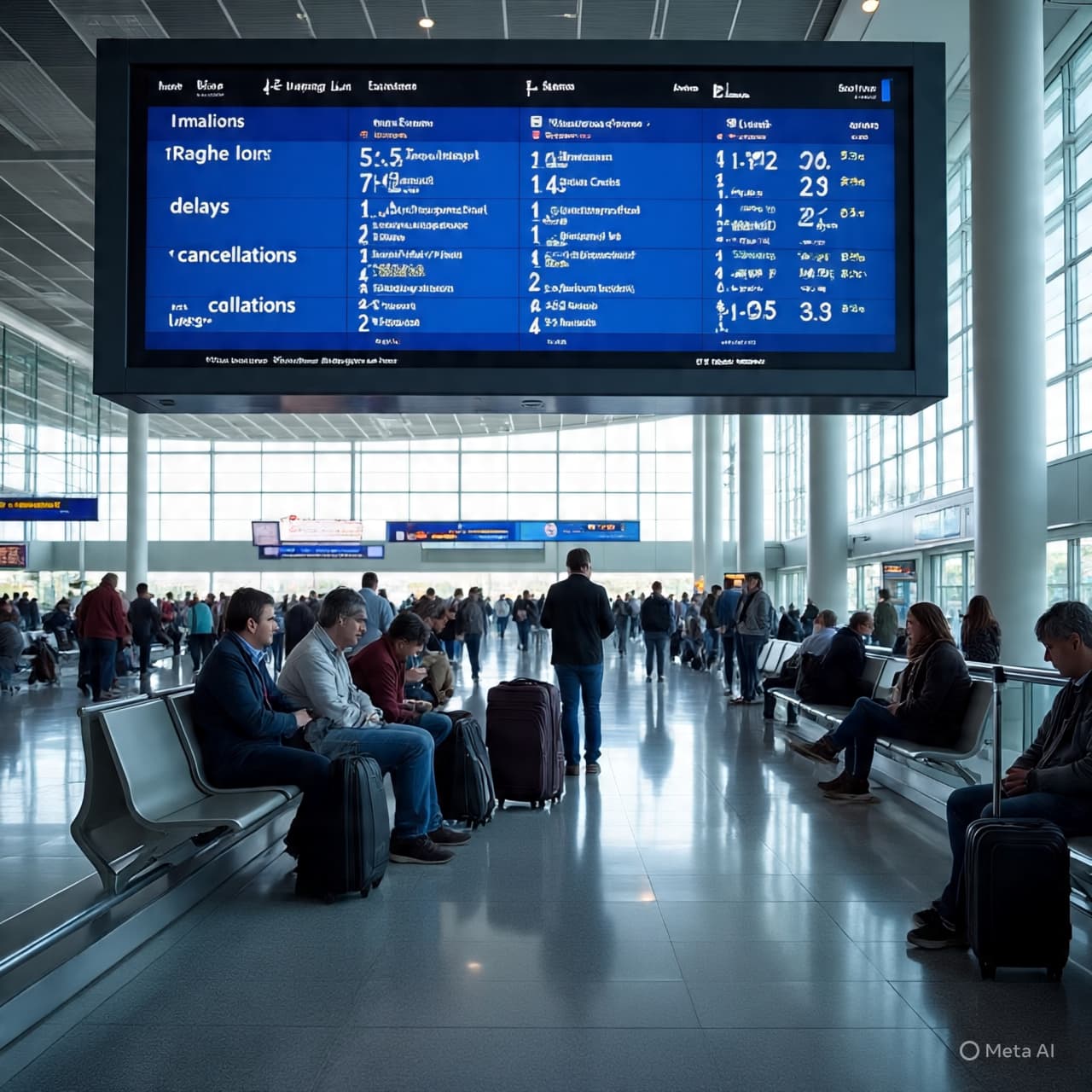
At departure gates across Australia, the light seems harsher than usual, bouncing off polished floors and tired faces. Suitcases sit upright like patient companions. Screens flicker with updates—delayed, rerouted, postponed—each word carrying a quiet weight. The air smells faintly of coffee and uncertainty.
In the wake of an escalating conflict across parts of the Middle East, thousands of Australian travelers have found themselves suspended between destinations. Commercial airlines have altered or canceled routes through affected airspace, as tensions involving Iran and Israel disrupt one of the world’s most heavily traveled corridors. What was once a routine long-haul journey between Europe and Australia has become a logistical puzzle of detours and dwindling seats.
Fares have climbed with startling speed. Some one-way tickets from European hubs to cities such as Sydney and Melbourne have reportedly surged to as high as $15,000, reflecting a sudden imbalance between supply and demand. Aircraft are being rerouted around restricted airspace, adding hours to flight times and increasing fuel costs. With fewer available seats and high demand from those seeking to return home, prices have followed a familiar, if painful, trajectory.
Airlines including Qantas and several Middle Eastern carriers have adjusted schedules, citing safety considerations and evolving advisories. Some flights now trace longer arcs across the Indian Ocean or Southeast Asia, skirting zones deemed high-risk. Others have been temporarily suspended altogether. Each operational shift ripples outward—to tour groups stranded abroad, to families waiting at arrivals halls, to business travelers recalculating urgent plans.
The Australian government has urged citizens in affected regions to monitor official travel advice and remain in close contact with airlines. Consular services have increased their communication efforts, encouraging Australians overseas to register their presence. While authorities have not announced large-scale evacuation operations, they have acknowledged the strain faced by those caught in the turbulence of shifting airspace restrictions.
For many stranded travelers, the numbers on booking screens feel abstract until they are not. A five-figure fare can mean postponed returns, extended hotel stays, or complex itineraries stitched together through multiple cities. Travel insurance policies are being scrutinized for clauses on conflict and force majeure. Some travelers weigh whether to wait for prices to settle; others, bound by work or family obligations, choose the earliest available route regardless of cost.
Behind the scenes, aviation analysts note that even localized conflict can disrupt global networks. The Middle East functions as a central artery for international aviation, linking Europe, Asia, and Oceania. When portions of that artery constrict, traffic diverts into narrower channels. Aircraft availability tightens. Crews face revised duty hours. Airports absorb unexpected surges. What unfolds on distant horizons reshapes the geometry of global movement.
Back in Australia, arrivals boards continue their patient rotation of cities and times. Families scan the glass doors for familiar faces. Some reunions are delayed; others arrive after longer-than-expected journeys. The emotional landscape mirrors the physical one—extended, rerouted, yet still moving forward.
As long as hostilities persist and airspace remains volatile, volatility in pricing is likely to endure. Airlines will continue recalibrating routes in response to security assessments. Government advisories will evolve with events on the ground. For Australian travelers, the immediate choice is practical rather than philosophical: when to fly, how much to pay, and whether to wait.
And so the terminals hum into the night. Outside, aircraft lift into darkened skies, tracing new paths across maps that seem suddenly less fixed. In the quiet between announcements, there is a shared understanding that travel, once taken for granted, now moves to a different rhythm—one set not only by timetables, but by the tremors of a conflict unfolding far from home.
AI Image Disclaimer Illustrations were created using AI tools and are not real photographs.
Sources Reuters Australian Broadcasting Corporation (ABC News) The Guardian Australia BBC News International Air Transport Association (IATA)
Published by Banx Network. This article is part of the Banx decentralized media programme, powered by the BXE token on the XRP Ledger.