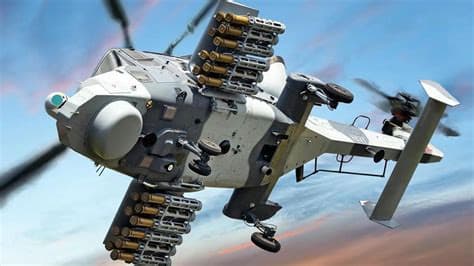
Before dawn, the desert holds its breath. In the hour when cities are only silhouettes and the horizon is a thin line of silver, the air feels suspended between yesterday and whatever comes next. Across the Middle East, from coastal plains to inland plateaus, that quiet has been interrupted by the distant percussion of aircraft and the low murmur of defense systems turning skyward. It is the second day of a coordinated U.S.–Israeli military operation targeting sites inside Iran, and the region wakes beneath a ceiling of uncertainty.
Officials in Washington and Jerusalem have described the strikes as focused and strategic—aimed at military facilities, missile infrastructure, and elements tied to Iran’s nuclear program. The effort, they say, is designed to slow capabilities long viewed as destabilizing and to deter further escalation by Tehran and its network of regional partners. Military spokespeople have emphasized precision, noting the use of advanced aircraft, long-range munitions, and cyber components intended to disrupt command structures without broadening the field of damage.
In Iran, state media has reported explosions near key installations and vowed a response calibrated to what it calls aggression. Air defense batteries have been activated around major cities, and authorities have signaled that retaliation could extend beyond immediate battlefields. The map of possible consequences stretches outward—toward maritime routes in the Gulf, toward allied militias in neighboring states, toward embassies and energy corridors that bind the region to the wider world.
The operation follows months of rising tension: shadow exchanges in Syria, maritime seizures, rocket fire across borders, and a steady exchange of warnings delivered through official channels and public speeches. Analysts have long described the relationship between the United States, Israel, and Iran as a layered conflict—one fought as much in proxies and signals as in open confrontation. What distinguishes this moment is its visibility. The conflict has stepped from the periphery into the open sky.
In Washington, leaders have framed the action as necessary to protect regional security and to reinforce red lines surrounding nuclear development. In Jerusalem, officials have reiterated that preventing Iran from achieving weapons capability remains a central national priority. Both governments have spoken of coordination, of intelligence shared and timing aligned. Their language is measured, but the implications are vast: once aircraft cross borders, the calculus of deterrence becomes a matter of hours rather than years.
Meanwhile, the region’s ordinary rhythms continue, though altered. Markets open cautiously. Oil prices shift with each new headline. Airlines redraw flight paths to avoid contested airspace. In coastal towns along the Gulf, fishermen glance upward at contrails dissolving into the morning haze. The war, though directed at hardened facilities and military assets, casts a longer shadow over civilian life.
Diplomatic channels have not entirely fallen silent. European leaders and regional powers have called for restraint, urging de-escalation before retaliation spirals into a broader confrontation. The United Nations has convened emergency consultations, its chambers echoing with familiar appeals for calm. Behind closed doors, intermediaries attempt to read intentions, to measure how far each side is prepared to go.
By the second day, the initial shock gives way to a different kind of tension—a waiting. Military analysts watch for signs of response: missile launches, cyber disruptions, coordinated actions by allied groups in Lebanon, Iraq, or Yemen. Energy traders monitor the Strait of Hormuz, a narrow passage whose significance widens with every tremor. Governments issue travel advisories and review contingency plans.
Yet beneath the language of strategy and deterrence lies something quieter: the recognition that modern conflict unfolds not only in bursts of force but in long arcs of consequence. Infrastructure can be rebuilt; alliances recalibrated. But mistrust, once hardened, lingers like dust after an explosion.
As night approaches again, the sky will darken over airbases and city rooftops alike. Statements will be drafted, and calculations made. The second day of this operation marks not just a continuation of strikes but a test of limits—how much pressure can be applied before the region tilts into something larger. In the stillness between sorties, the question hangs, as persistent as the desert wind: whether this chapter remains contained, or whether it becomes the prelude to a wider storm.
AI Image Disclaimer Illustrations were created using AI tools and are not real photographs.
Sources Reuters The Associated Press BBC News The New York Times Al Jazeera
Published by Banx Network. This article is part of the Banx decentralized media programme, powered by the BXE token on the XRP Ledger.