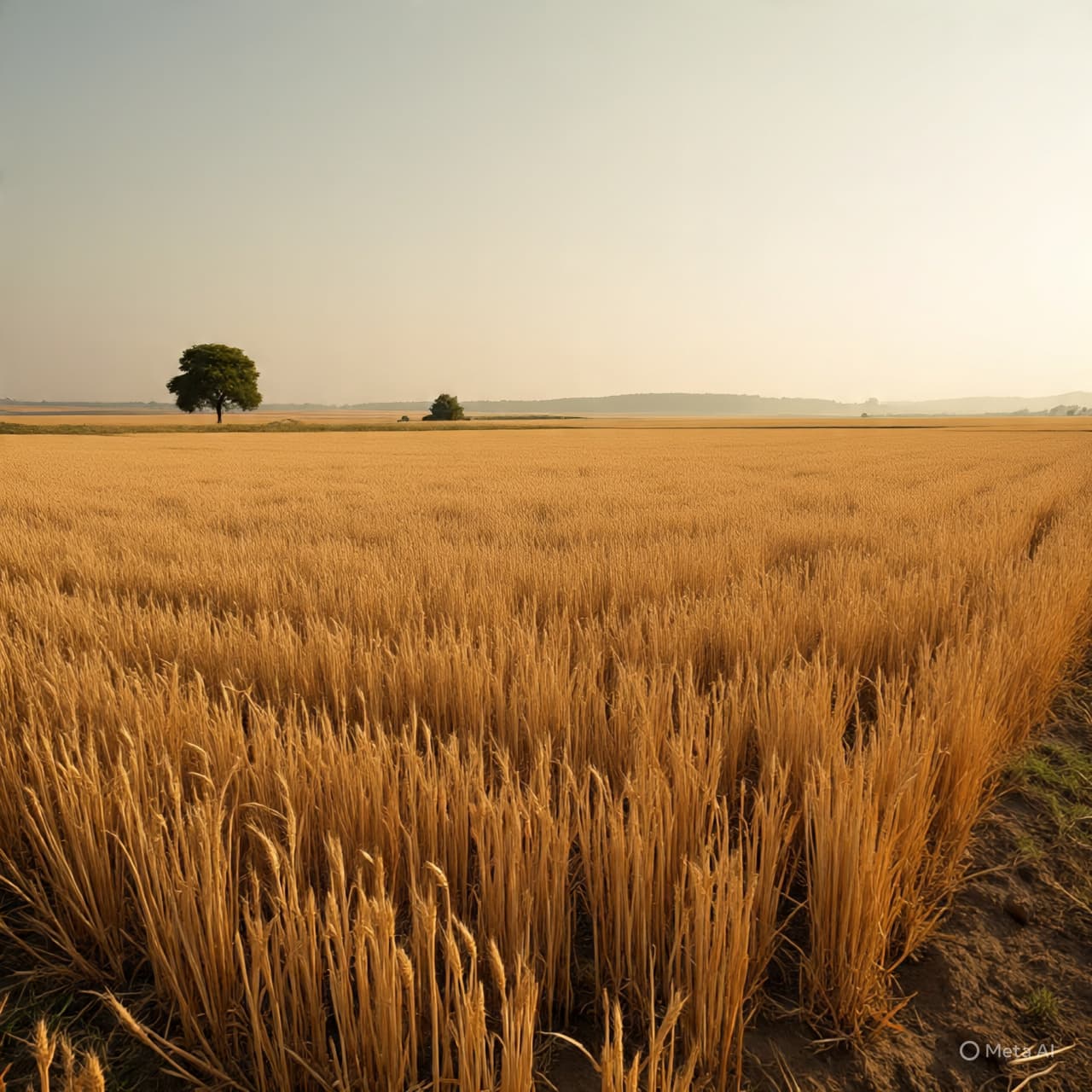
In the early hours, before heat gathers across the land, fields often hold a kind of quiet promise. Rows of wheat stand in stillness, their pale green blades catching the first light, as if rehearsing for a season that has not yet declared itself. But in recent years, the rhythm of that season has grown less certain—arriving sooner, lingering longer, or retreating without warning.
Across many of the world’s wheat-growing regions, rising temperatures and shifting rainfall patterns have begun to reshape the delicate balance that sustains this staple crop. Wheat, long accustomed to predictable cycles of cool growth and measured warmth, now finds itself negotiating extremes—heatwaves that arrive too early, droughts that stretch too long, and soils that struggle to retain what little moisture remains.
It is within this changing landscape that researchers have turned their attention to resilience, seeking varieties of wheat capable of withstanding these new conditions. Advances in plant breeding, alongside genetic research, have begun to yield strains that can tolerate higher temperatures and reduced water availability. Some are designed to maintain grain quality even when exposed to heat stress, a critical factor for foods like pasta, where texture and protein content define both form and flavor.
Durum wheat, the variety most commonly used in pasta production, is particularly sensitive to environmental stress. Excessive heat during key growth stages can affect both yield and quality, altering the structure of gluten and the firmness that gives pasta its characteristic bite. As global demand for wheat-based foods continues, the pressure to preserve both quantity and quality has grown more urgent.
Scientists are exploring a range of approaches, from traditional crossbreeding techniques to more precise genomic selection methods. By identifying traits linked to heat and drought tolerance, they are working to accelerate the development of wheat that can endure harsher climates without sacrificing performance. Field trials in regions already experiencing extreme conditions have provided early indications that such varieties may help stabilize production in the years ahead.
Yet adaptation in the field does not occur in isolation. Farmers, too, are adjusting—shifting planting schedules, experimenting with irrigation practices, and reconsidering how land is managed across seasons. These changes, subtle and cumulative, reflect an understanding that resilience is not found in a single solution, but in the interplay between seed, soil, and stewardship.
The broader implications extend beyond agriculture. Wheat underpins a vast global food system, forming the basis of breads, noodles, and pasta consumed daily across cultures. Ensuring its stability is not only a matter of preserving tradition, but of maintaining food security in a world where climatic uncertainty is becoming a constant.
There is something quietly profound in the effort to adapt a crop so deeply woven into human history. Wheat has traveled with civilizations, shaped diets, and anchored economies. Now, as conditions shift, it is being asked to change once more—guided by research, supported by innovation, and rooted in the enduring relationship between people and the land.
Researchers report ongoing progress in developing climate-resilient wheat varieties, including strains better suited to withstand heat and drought while maintaining grain quality for products such as pasta. Studies and field trials are continuing, with scientists and agricultural organizations working to scale these innovations for broader use.
AI Image Disclaimer
Visuals are AI-generated and serve as conceptual representations.
Source Check (verified coverage exists): Reuters, BBC News, The Guardian, Nature, Financial Times
Published by Banx Network. This article is part of the Banx decentralized media programme, powered by the BXE token on the XRP Ledger.