
Key Highlights
- Discovery:Moths can hear ultrasonic sounds from stressed plants.
- Research:Study published in eLife reveals plant-insect communication.
- Implications:Findings may influence pest management strategies.
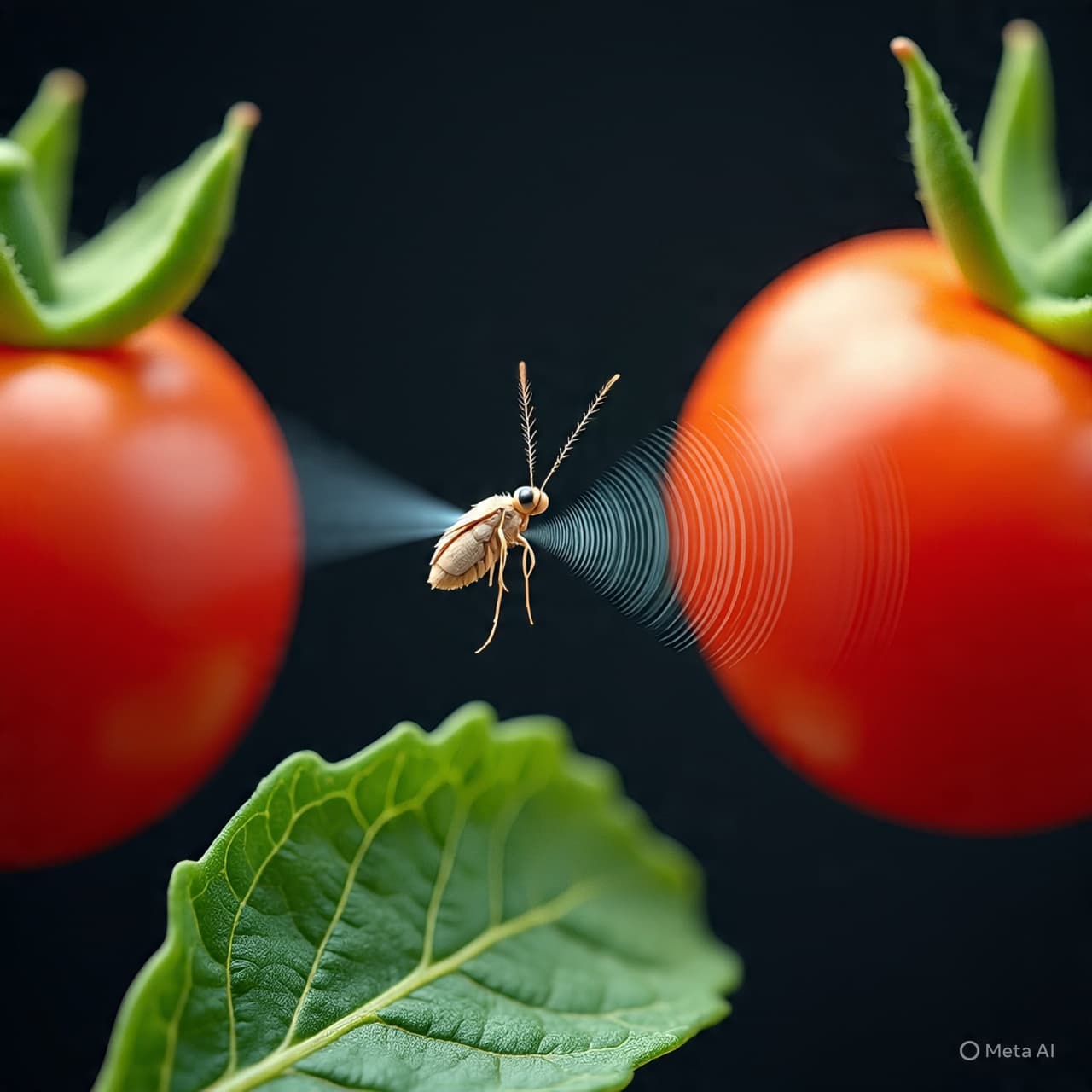
In the quiet hush of a greenhouse at Tel Aviv University, researchers have uncovered a remarkable phenomenon: plants emit ultrasonic sounds that convey distress signals, which certain insects, like the female moths of the Egyptian cotton leafworm, can hear. This groundbreaking study, published in the journal eLife, marks the first documented case of insects responding to the sounds of plants, revealing a hidden dialogue in nature that has profound implications for our understanding of ecological interactions.
The research team, led by Professors Yossi Yovel and Lilach Hadany, conducted a series of meticulously designed experiments to explore how these ultrasonic signals influence the behavior of moths. In one experiment, female moths were presented with two silent boxes—one that played recordings of dehydrated tomato plants emitting stress sounds and another that was quiet. The moths showed a preference for the box emitting the plant sounds, suggesting they could detect the presence of a stressed plant through its acoustic signals.
However, when real tomato plants were introduced, the results were even more telling. The moths chose to lay their eggs on the silent, healthy plant rather than the one emitting distress signals. This behavior indicates that the moths are capable of interpreting these ultrasonic cues as indicators of plant health, which is crucial for the survival of their offspring. The study also included controls that disabled the moths' hearing, confirming that their choices were indeed influenced by sound rather than other sensory inputs.
This discovery significantly expands our understanding of plant communication. For years, scientists have known that plants can signal danger to one another through chemical signals and underground fungal networks. The revelation that they can also emit airborne acoustic signals that affect insect behavior introduces a new layer to the complex interactions within ecosystems. These ultrasonic cues could serve as early warning signs of plant distress, potentially guiding insects away from vulnerable crops and informing innovative pest management strategies.
Despite the promising findings, researchers caution that this field is still in its early stages. The study represents the first clear evidence of auditory interaction between plants and insects, but it raises questions about whether other organisms also engage in similar forms of communication. As scientists continue to refine their methods and tools for studying these interactions, the potential for uncovering more hidden dialogues in nature is vast.
In conclusion, the ability of moths to hear and respond to the ultrasonic sounds of stressed plants opens up exciting avenues for research in ecology and agriculture. Understanding these interactions not only enhances our knowledge of plant-insect relationships but also highlights the intricate web of life that connects all living organisms.
Published by Banx Network. This article is part of the Banx decentralized media programme, powered by the BXE token on the XRP Ledger.



