There is a particular tragedy in a death that follows an act of love—a death that occurs not because of carelessness but because of courage, because one person entered the water to save another and did not come back. On Saturday afternoon, at Els Vivers beach in Guardamar del Segura, on Spain's Costa Blanca, a Ukrainian couple in their mid-twenties drowned together. The woman had been struggling in the water. Her boyfriend went in to save her. Neither survived .
The couple, both 25 years old, were Ukrainian nationals living in Poland. They were visiting friends in Guardamar and had gone to the beach with a group. According to the mayor of Guardamar, José Luis Sáez, two women from the group entered the water and found themselves in difficulty. Their partners went in to help. One man managed to rescue his girlfriend. The other, the 25-year-old Ukrainian man, did not .
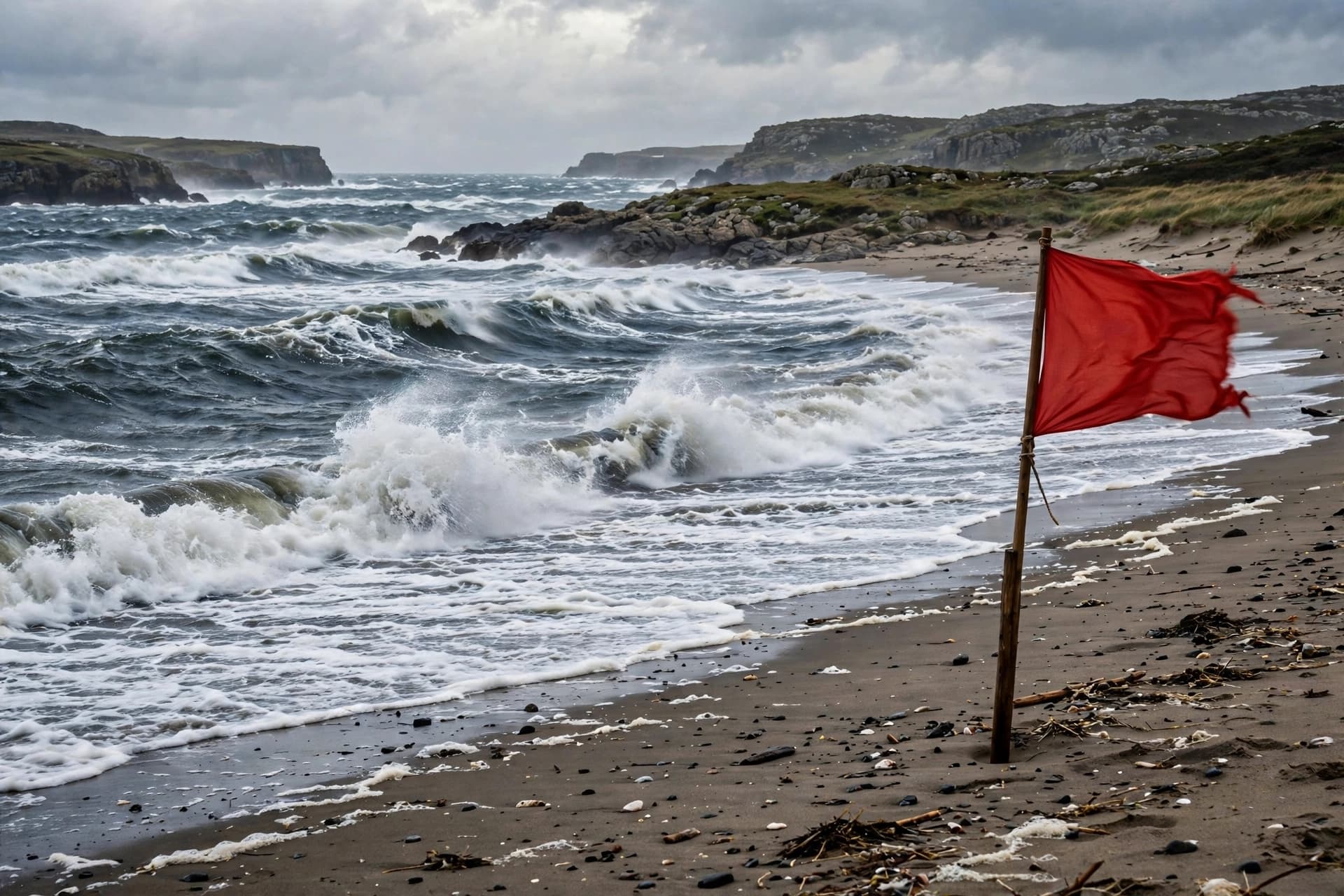
The beach, Els Vivers, is a natural stretch of coastline about two kilometers from the town center. It is not one of the beaches patrolled by lifeguards. The municipality maintains lifeguard services until October 31 on Centro and Roqueta beaches, but not at Els Vivers . More critically, a red flag had been flying at the beach for more than a week—a warning of dangerous sea conditions, strong currents, and powerful waves . The red flag signals that swimming is prohibited.
Emergency services received the call at approximately 2:11 p.m. Two SAMU units and a basic life support team were dispatched. Bystanders had already pulled the couple from the water. Paramedics performed CPR on both, but their efforts were unsuccessful. Both were pronounced dead at the scene .
The mayor explained that currents are common along Guardamar's eleven kilometers of coastline, and that they had been intensified by rough seas over the preceding days. He emphasized that fighting against a current directly can exhaust even strong swimmers quickly. The Guardia Civil has opened an investigation into the circumstances of the deaths. The tragedy has renewed attention on the dangers of swimming in unpatrolled areas and ignoring warning flags—dangers that apply to locals and tourists alike, and that carry a particular poignancy when the person who dies is the one who entered the water to help another.
AI Image Disclaimer: All images in this article are AI-generated and are intended for illustrative purposes only.
Sources: EFE, The Nightly, The Sun, Heraldo, Estrella Digital
Published by Banx Network. This article is part of the Banx decentralized media programme, powered by the BXE token on the XRP Ledger.